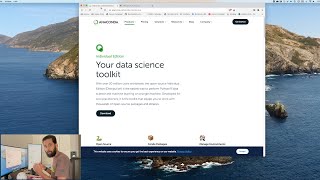
Data Analyst Setup for Productivity - Python, R, SQL
Explore a data analyst's productivity setup, including Miniconda, Python environments, VSCode, R Studio, and essential hardware recommendations for efficient data analysis workflows.
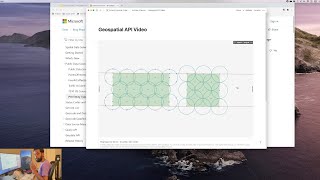
Day in the Life of a Data Analyst - Bing Maps API
Explore a real-world data analysis task using Python and Bing Maps API to gather school location data, showcasing workflow structure and geospatial analysis techniques.
Leveraging Innovation to Improve the Identification of Patients with Hereditary Cancer
Explore innovative techniques in hereditary cancer detection, including RNA genetic testing and AI-powered risk assessment, to improve diagnostic yield and patient identification for genetic counseling.

Deploying the Global Environmental Surveillance Network
Explore the development of a global sensor network for air quality and radiation monitoring, including hardware design, data collection, and real-world applications.
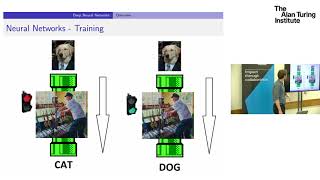
A Review of Machine Learning Techniques for Anomaly Detection - Dr. David Green
Explore machine learning techniques for anomaly detection, covering traditional methods, deep neural networks, and practical applications in various domains.
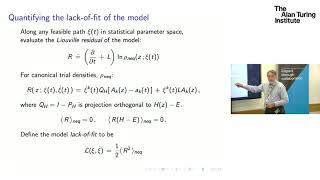
Models That Minimize the Rate of Information Loss
Explore data-driven modeling of complex systems, combining statistical inference, computation, and physical laws. Learn techniques for collective dynamics, molecular modeling, cell biology, and fluid dynamics.
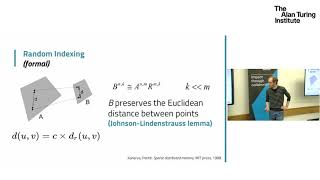
Detecting Semantic Shift in Large Corpora by Exploiting Temporal Random Indexing
Explore semantic shift in large corpora using Temporal Random Indexing. Learn to analyze word meaning evolution over time and see applications in Italian and UK internet archive corpus analysis.
Time Series Class - Part 1 - Dr Ioannis Papastathopoulos, University of Edinburgh
Learn fundamental concepts and advanced techniques for analyzing time series data, including ARMA models, state-space models, and neural networks for forecasting and inference.
Data Science and Data System - Dr. Amy Braveman, NASA Jet Propulsion Laboratory
Explore NASA's Earth observation data systems, statistical challenges in climate science, and innovative approaches to analyzing complex environmental datasets.
Time Series Class - Part 1 - Dr. Ioannis Papastathopoulos, University of Edinburgh
Learn fundamental concepts and advanced techniques in time series analysis, including ARMA models, state-space models, and neural networks for forecasting and inference.
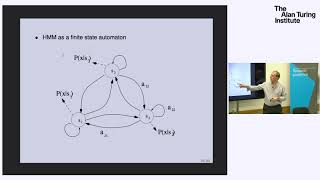
Time Series Class - Part 2 - Professor Chris Williams, University of Edinburgh
Explore time series analysis, from moving average models to advanced state-space techniques and recurrent neural networks. Gain practical skills in parameter estimation, forecasting, and applying models to real-world data.
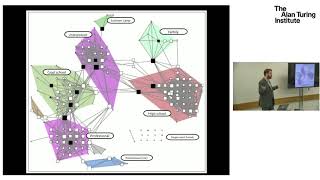
Social Network Analysis - Introduction to Structural Thinking
Explore structural thinking in social network analysis, covering key concepts like preferential attachment, small worlds, and homophily, with applications to modern digital networks and classic theories.
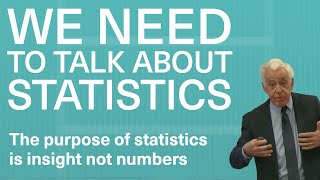
We Need to Talk About Statistics - Neil Sheldon, Teaching Statistics Trust
Exploring how precise language enhances statistical understanding for teachers, students, and citizens. Emphasizes interpretation over calculation, addressing common misunderstandings and the importance of clear communication in statistics.
MOSIP Research Platform - Integrating Anomaly Detection Prototypes into Centralized ID Systems
Explore novel anomaly detection methods for digital identity systems using autoencoders, with a focus on fraud prevention during registration in MOSIP architecture.
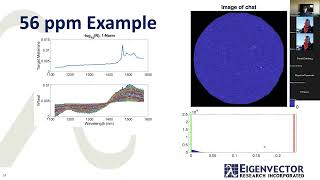
Anomaly Detection in Hyperspectral Imaging - Neal Gallagher
Explore advanced anomaly detection techniques in hyperspectral imaging, focusing on GLS, ELS, and WPCA methods for improved sensitivity and selectivity in detecting minor signals within complex mixtures.
The 10 Equations That Rule the World - With David Sumpter
Explore 10 key mathematical equations and their real-world applications in finance, relationships, social media, and personal development with Professor David Sumpter.

Big Data - They Know Everything About You
Explore the clash between privacy and security in the era of big data, examining its impact on personal information, technological advancements, and potential for preventing terrorism.
Insights from Predictive Policing - Tobias Brandt, Rotterdam School of Management
Explore data-driven decision-support in policing, examining the complex relationship between prediction quality and decision outcomes. Learn about end-to-end frameworks for model selection in smart city operations.
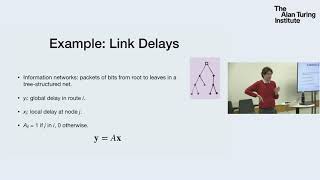
Modelling Passenger Behaviour on the Underground
Explore passenger behavior modeling on the London Underground, covering disruption response and causal models for complex systems with heterogeneous data and practical implications.
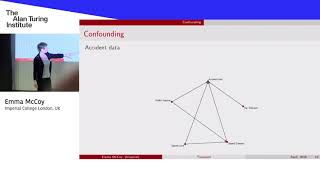
Causal Inference in Observational Studies - Emma McCoy, Imperial College London
Explore causal inference in observational studies with Prof. Emma McCoy. Learn about robust estimation of treatment effects, time-series methodology, and applications in transport settings.
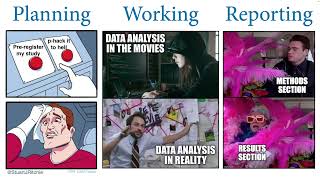
Statistical Rethinking 2023 - Horoscopes
Explore statistical rethinking through horoscopes, covering planning, execution, reporting, and science reform. Gain insights into innovative approaches for statistical analysis and interpretation.