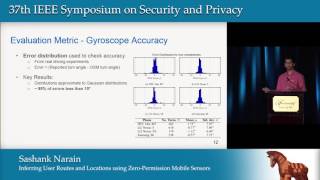
Inferring User Routes and Locations Using Zero-Permission Mobile Sensors
Explore zero-permission mobile sensor vulnerabilities for inferring user routes and locations, highlighting privacy risks and proposing detection methods through maximum likelihood route identification.
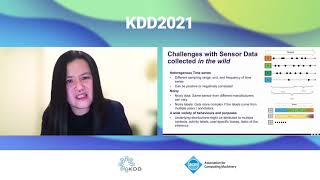
Learning Transferable Human Behavior Representations From Sensor Data - Flora Salim
Explore techniques for learning transferable human behavior representations from sensor data, including challenges, preprocessing, and applications in various domains.
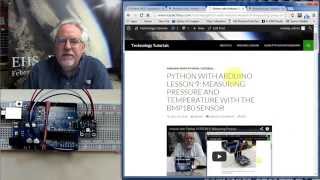
Arduino with Python - Graphing and Plotting Live Data from Arduino with Matplotlib
Learn to graph real-time Arduino sensor data using Python and Matplotlib. Master data streaming, processing, and visualization techniques for temperature and pressure readings from a BMP180 sensor.
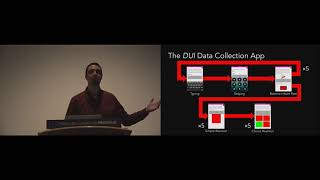
Drunk User Interfaces - Determining Blood Alcohol Level through Everyday Smartphone Tasks
Innovative smartphone interfaces measure blood alcohol levels through user performance, offering a potential alternative to breathalyzers for assessing inebriation in everyday scenarios.
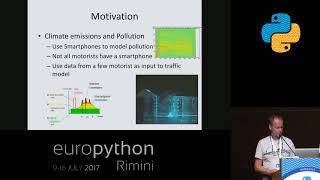
Modelling Pollution from Traffic, Using Smartphone Data and Python
Explore Python-based modeling of traffic pollution using smartphone data, combining traffic assignment, econometric models, and congestion analysis for urban environmental monitoring and mitigation.
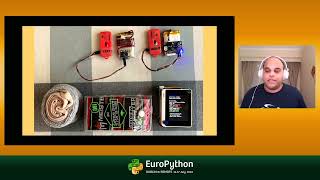
Applying Machine Learning Capabilities to Wearable IoT Devices for Boxing Technique Management
Explore how machine learning algorithms on IoT devices can enhance boxing training using motion sensor data, from problem analysis to algorithm deployment on Arduino.

Building an Azure IoT Pipeline for LoRaWAN Devices - Live Demo
Learn to build an Azure IoT pipeline for LoRaWAN devices, covering long-range communication, data ingestion, decryption, storage, and analysis. Includes live demos with Arduino boards and Raspberry Pi gateways.
ML and the IoT - Living on the Edge
Edge ML in IoT: Explore how machine learning on embedded systems and microcontrollers enables quicker insights, tighter security, and predictive action for IoT devices, bringing ML closer to sensors.

The brain, AI, and mental health | Mariam Khayretdinova | TEDxBerlin Salon
Our brains control everything we do, yet so much about them remains unknown, largely because the data we rely on is catastrophically insufficient. Mariam Khayretdinova, CEO of Brainify.AI, shares why AI has yet to fulfill its promise for neuroscience and how a global data void is holding back our un