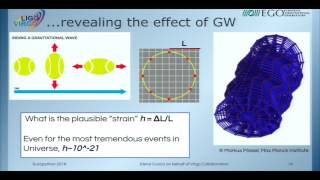
Python in Gravitational Waves Research Communities
Explore gravitational wave detection using Python, focusing on data analysis methods and signal processing techniques used in the LIGO-Virgo collaboration's groundbreaking discovery.
Brainwaves for Hackers 3.0
Explore brain secrets using Python and EEG devices. Interactive Jupyter experiments demonstrate evoked response potentials and neurofeedback training for hands-on brain wave analysis.
Deep Learning with Python & TensorFlow
Explore deep learning with TensorFlow: compare Python ML libraries, create data flow graphs, and learn deployment strategies for production systems.
Python, Data & Rock'n'Roll
Explore rock music lyrics using data science techniques like web crawling, NoSQL, NLP, and visualization to uncover trends, themes, and correlations among legendary bands.
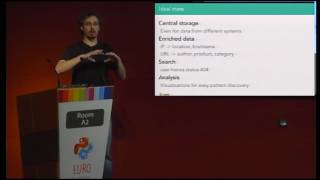
Log All the Things!
Discover how to collect, clean, store, and analyze log data from various systems using the ELK stack, enhancing DevOps practices and gaining valuable insights into your infrastructure.
Scientist Meets Web Dev - How Python Became the Language of Data
Explore Python's evolution as a data science powerhouse, blending scientific computing with web development. Learn how this versatile language empowers researchers and analysts to tackle complex data challenges.
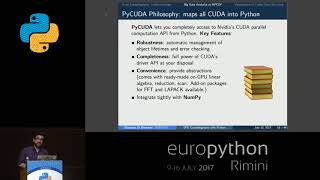
Big Data Analytics at the MPCDF - GPU Crystallography with Python
Explore GPU-accelerated Python for big data analytics in atom probe crystallography, focusing on Fourier spectral analysis, scalability across multiple GPUs, and interactive visualization techniques.
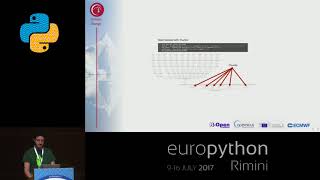
Facing the Challenge of Climate Change with Xarray and Dask
Explore climate data analysis using xarray and Dask, leveraging Python's scientific ecosystem to process and visualize complex climate forecasts and projections from the Copernicus Climate Change Service.
Neat Analytics with Pandas Indexes
Explore advanced Pandas indexing techniques for efficient data analysis, covering index types, time-series resampling, and multi-indexing to enhance your productivity in Python analytics.
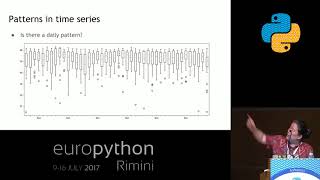
Deep Learning Your Broadband Network at Home
Automate internet speed tests, log data, and analyze time series using Python. Learn data mining, visualization, and anomaly detection techniques like ARIMA and LSTM for broadband network performance.
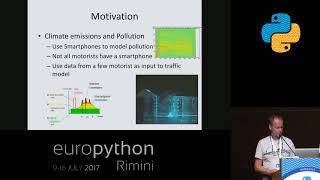
Modelling Pollution from Traffic, Using Smartphone Data and Python
Explore Python-based modeling of traffic pollution using smartphone data, combining traffic assignment, econometric models, and congestion analysis for urban environmental monitoring and mitigation.
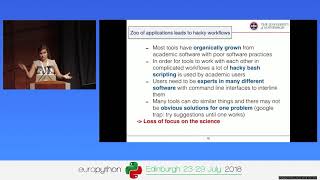
How is Python Used in Biomolecular Sciences?
Explore Python's role in computational molecular biology, including tools and workflows for protein simulations and drug discovery. Learn about BioSimSpace, an open-source library simplifying complex biomolecular problem-solving.
From Zero to Azure with Python, Docker Containers, and Visual Studio Code
Aprenda a criar e implantar aplicativos web Python no Azure usando Docker e Visual Studio Code. Explore notebooks Jupyter hospedados e armazenamento de dados com CosmosDB. Ideal para iniciantes em nuvem e contêineres.
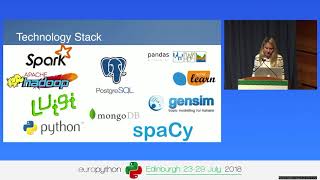
Bad Hotel Again? Find Your Perfect Match
Descubre cómo TrustYou analiza millones de reseñas de hoteles utilizando tecnologías avanzadas para ayudarte a encontrar el alojamiento perfecto basado en tus preferencias y necesidades específicas.
Using Pandas and Dask to Work with Large Columnar Datasets in Apache Parquet
Explore efficient techniques for handling large columnar datasets using Pandas and Dask with Apache Parquet, including partitioning, row group skipping, and optimized data layout for faster queries.
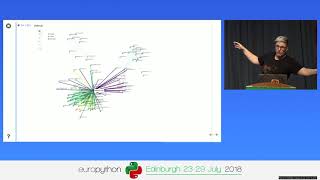
The Web is Terrifying - Using the PyData Stack to Spy on the Spies
Explore online tracking technologies and data visualization using PyData tools. Gain insights into internet privacy, GDPR implications, and the journey of becoming a self-taught data scientist.
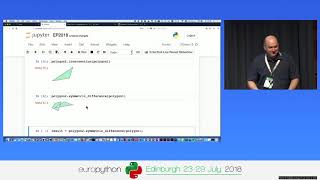
Processing Geodata Using Python and Open Source Modules
Learn to analyze, manipulate, and visualize geospatial data using Python and open-source modules like Shapely, Fiona, rasterio, and GeoPandas. Explore vector and raster data handling, spatial reference systems, and map creation.
Good Features Beat Algorithms
Explore feature engineering and selection techniques to improve machine learning model accuracy. Learn how to develop an ensemble for measuring feature importance in real-world datasets.
Air Quality & Python - Developing Online Analysis Tools
Explore Python-based online tools for analyzing air quality data, integrating libraries like Pandas and NumPy with Django and Plot.ly to create interactive visualizations and support research and education.
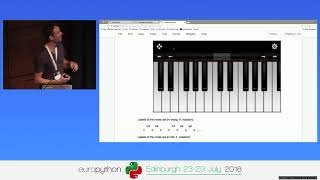
Change Music in Two Epochs
Explore deep learning applications in music: instrument detection, isolation, and generation. Learn to build synthesizers, create datasets, and adapt models for increasing complexity.
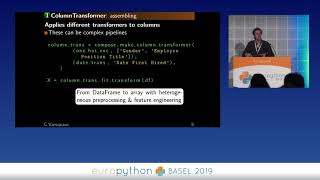
Machine Learning on Non-Curated Data
Techniques for handling missing values and non-normalized categories in machine learning, focusing on practical solutions using scikit-learn and DirtyCat for efficient data analysis without extensive cleaning.