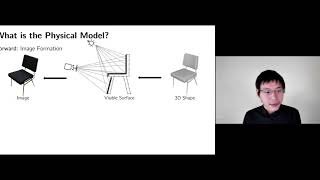
Learning to See the Physical World
Explore physical scene understanding through AI, combining computer graphics, physics, and language with deep learning to create versatile machines that see, reason, and interact with the world.
AI and Robotics: Current Challenges and Future Directions
Explore AI and robotics with Chelsea Finn and Andrew Ng, discussing career paths, current capabilities, challenges, and future prospects in the field. Gain insights into robotics research and learn how to enter this exciting domain.
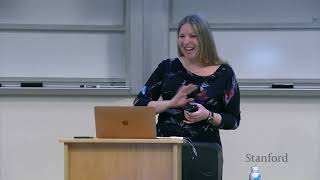
Stanford Seminar - On and Out-of-Body Interactions & Experiences
Explore novel interaction techniques for on-body and out-of-body technologies, including wearables, robots, and drones, to enhance human-machine integration and extend physical abilities.
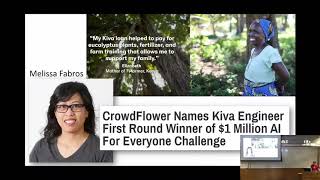
Stanford Seminar - Fastai: A Layered API for Deep Learning
Explore fastai, a deep learning library offering high-level components for quick results and low-level components for research flexibility, built on a layered architecture with Python and PyTorch.
Current Status of TinyML and the Enormous Opportunities Ahead - Panel Discussion
Panel discussion exploring tinyML's current state and future potential, featuring experts from Qualcomm and Google. Covers applications, challenges, privacy concerns, and emerging opportunities in ultra-low power embedded AI computing.
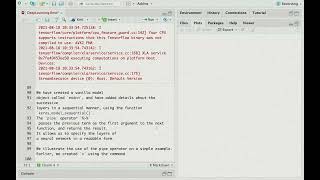
Neural Networks in R and the MNIST Data - Lecture 10.R.1
Explore neural networks using R and MNIST data, learning practical implementation of deep learning techniques for image recognition and statistical analysis.

Stanford Seminar 2022 - DeepMind's Perceiver and Perceiver IO: New Data Family Architecture
Exploring DeepMind's Perceiver architecture for flexible AI processing across diverse data types, offering domain-general solutions comparable to specialized models in various tasks.

Stanford Seminar 2022 - Transformers in Vision: Tackling Problems in Computer Vision
Explore how transformers revolutionize computer vision with Lucas Beyer, covering innovative applications and advancements in representation learning for visual AI tasks.
Create a Better User Experience Through AI - Michael Bernstein
Explore AI-driven UX design strategies with Stanford's Michael Bernstein. Learn industry practices, error mitigation, and user-friendly AI implementation for smarter, more personalized digital interfaces.
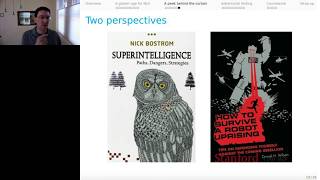
Improving Natural Language Understanding Through Adversarial Testing
Explore adversarial testing in natural language understanding to challenge and improve AI systems. Learn to identify weaknesses and develop robust models for real-world applications.
Deep Learning - Adversarial Attacks and GANs - Lecture 4
Explore adversarial attacks and Generative Adversarial Networks (GANs) in deep learning. Learn from Stanford experts about these advanced techniques and their applications in AI.

Deep Learning Intuition - Lecture 2
Explore deep learning intuition with Stanford experts, covering logistic regression, face verification, neural architectures, and advanced applications in computer vision and image processing.

Deep Learning - Class Introduction and Logistics - Lecture 1
Comprehensive introduction to deep learning, covering key concepts, tools, and applications. Explores course goals, structure, and practical assignments for hands-on experience in AI and machine learning.

Stanford Seminar - PyWren - Pushing Microservices to Teraflops
Explore PyWren, a distributed execution engine simplifying cloud computing for scientists and engineers. Learn about its applications in data science and computational imaging.
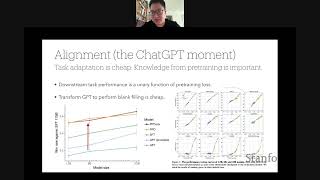
From Large Language Models to Large Multimodal Models - Stanford CS25 - Lecture 4
Explore the evolution from large language models to multimodal AI, focusing on CogVLM and CogAgent. Learn about integrating visual perception with language capabilities and future research directions.
Silicon Valley and the U.S. Government: Vannevar Labs' Innovations in Security and Defense - Stanford Seminar
Explore Vannevar Labs' innovative computer vision and NLP solutions for security and defense, and gain insights into Silicon Valley-government collaborations driving technological advancements.
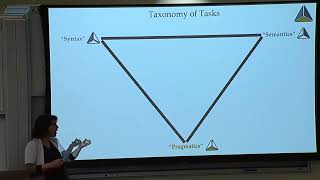
Robot Learning in the Era of Large Pretrained Models - Stanford Seminar
Exploring interactive robot learning with large pretrained models, focusing on visual representations, data collection strategies, and leveraging language models for robotics applications.
Towards Robust Radiogenomic Models for Brain Tumor Characterization - MedAI #123
Exploring stability of radiomics features in brain tumor segmentation and impact on predictive models. Investigates how stable, discriminatory features lead to generalizable radiogenomics for tumor characterization.
Holistic OR Domain Modeling with Large Vision Language Models - MedAI #120
Innovative approach to automated OR modeling using Large Vision Language Models, leveraging semantic scene graphs for comprehensive surgical environment understanding and enhanced decision-making.
AI-Driven Advancements in Mammogram Analysis - MedAI #119
Exploring AI applications in mammogram analysis for cancer screening and cardiovascular risk assessment, addressing challenges in healthcare AI adaptation and extracting actionable clinical insights.
The Task Specification Problem
Exploring challenges in AI task specification, focusing on aligning human communication with machine understanding to improve robustness, transfer, and feature learning in AI systems.