
Introduction to Deep Learning - Full Stack Deep Learning - March 2019
Comprehensive introduction to AI and deep learning, covering key concepts, applications, and historical context. Explores data processing, computational requirements, and course structure.
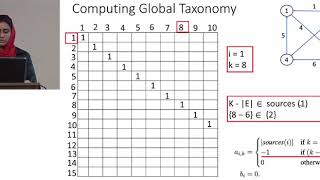
Taskonomy - Disentangling Task Transfer Learning
Explore task transfer learning, higher-order transfers, and task-specific networks. Discover global taxonomies, evaluate computed structures, and assess generalization to novel tasks.
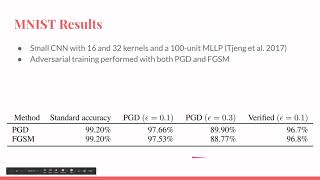
Fast Is Better Than Free: Revisiting Adversarial Training - CAP6412 Spring 2021
Explore adversarial training techniques, comparing PGD with newer methods. Learn about technical contributions, experimental results, and implications for machine learning security.
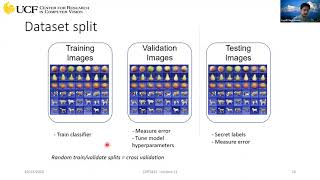
Computer Vision: Classification and Object Recognition - Lecture 11
Explore computer vision classification techniques, including object recognition, image classification, and machine learning frameworks. Learn about nearest neighbor and linear classifiers.
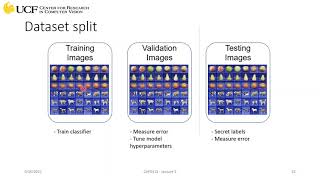
Introduction to Neural Networks for Computer Vision - Part I
Introduction to neural networks for computer vision, covering key concepts like pixel representation, feature extraction, and image classification. Explores biological inspiration and computational implementation of neural activation functions.
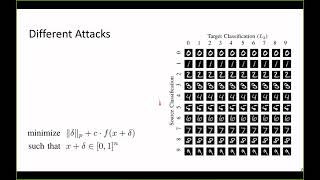
Evaluating Neural Network Robustness - Targeted Attacks and Defenses
Explore neural network robustness evaluation, including targeted attacks, metrics, and defense strategies. Learn about FGS, SMA, and new approaches for assessing and improving AI system security.
Meaningful Signals Within Deep Learning Models for Biology - Primer and Meeting
Explore deep learning models in biology, from curating meaningful pre-training data to disentangling experimental noise, enhancing performance in biomedical imaging and high-throughput microscopy experiments.

Inference with Torch-TensorRT Deep Learning Prediction for Beginners - CPU vs CUDA vs TensorRT
Accelerate deep learning inference using Torch-TensorRT. Compare CPU, CUDA, and TensorRT performance with ResNet50 for image classification. Hands-on tutorial covers setup, implementation, and benchmarking.
AlexNet and ImageNet Explained
Explore the revolutionary AlexNet CNN and ImageNet dataset, their impact on deep learning, and practical implementation using PyTorch for image classification tasks.
Zero-Shot Image Classification with OpenAI's CLIP Model
Explore OpenAI's CLIP model for zero-shot image classification, demonstrating its ability to predict relevant text for images using natural language instructions without task-specific training.
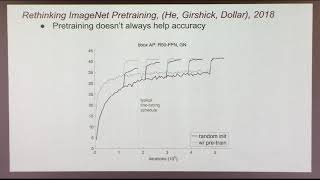
Towards Understanding Transfer Learning with Applications to Medical Imaging
Explore transfer learning in medical imaging, focusing on deep learning applications, performance evaluation, and feature similarity analysis using CCA. Insights on ImageNet models and chest X-rays included.
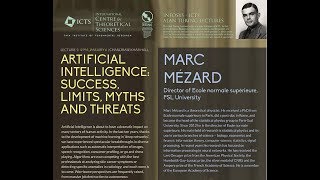
Artificial Intelligence: Success, Limits, Myths and Threats - Lecture 1
Explore AI's successes, limitations, and societal impact. Delve into machine learning, neural networks, and the future of AI. Gain insights on scientific intelligence and ethical considerations.
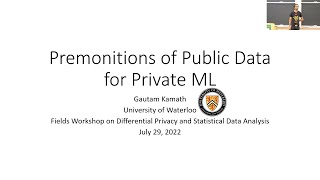
Premonitions of Public Data for Private ML
Explore how public data pre-training enhances private machine learning, examining its impact on accuracy, zero-shot learning, and the future of privacy-preserving AI techniques.
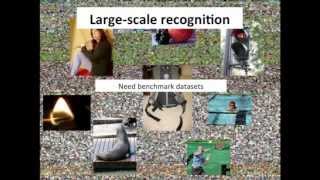
Analysis of Large-Scale Visual Recognition - Bay Area Vision Meeting
Explore large-scale visual recognition challenges, focusing on IMAGENET competitions, object classification, localization techniques, and advancements in computer vision for diverse object classes.

Dialogues Between Neuroscience and Society - AI and Machine Learning's Impact on Human Experience
Pioneering AI expert discusses transformative potential of machine learning, emphasizing ethical stewardship to augment human experience and serve diverse global populations.
Fast and Accurate Deep Neural Networks Training
Exploring LARS and LAMB optimizers for scaling deep learning on supercomputers, enabling faster training and higher accuracy in AI applications across various industries.
Do ImageNet Classifiers Generalize to ImageNet? - Analyzing ML Progress and Challenges
Analyzing ImageNet classifiers' generalization, exploring overfitting and distribution shift in ML benchmarks, and addressing robustness issues like adversarial examples to improve machine learning reliability.
Architecture-Preserving Provable Repair of Deep Neural Networks
Explore architecture-preserving V-polytope provable repair of deep neural networks. Learn about a novel approach that guarantees specification satisfaction while preserving DNN architecture, supporting various layers and activation functions.

Exploring Shallow Architectures for Image Classification
Explore shallow architectures for image classification, focusing on Scattering Networks and their potential compared to deep CNNs. Examine geometric arguments in deriving competitive representations.
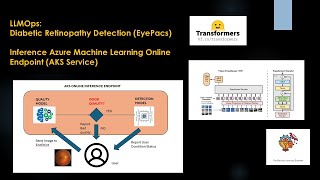
Fine-Tuning Vision Transformer for Retina Image Classification - Inference on Azure ML AKS
Fine-tune a Vision Transformer for diabetic retinopathy detection using EyeQ dataset and deploy on Azure ML with AKS for managed inference.
Introduction to Computer Vision with CNNs
Explore computer vision using CNNs and transfer learning. Learn practical steps for CNN training, including activation functions, and discover applications in image quality assessment and feature extraction.