
Stanford Seminar 2022 - DeepMind's Perceiver and Perceiver IO: New Data Family Architecture
Exploring DeepMind's Perceiver architecture for flexible AI processing across diverse data types, offering domain-general solutions comparable to specialized models in various tasks.
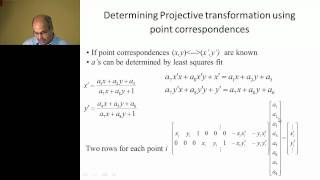
Motion Models in Computer Vision - Lecture 8
Learn about optical flow, rotation, image formation, and 3D rigid motion in computer vision. Explore displacement models and projective transformations using point correspondences.
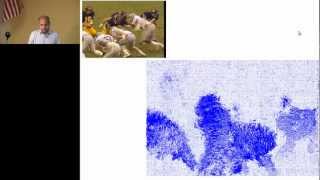
Optical Flow in Computer Vision - Lecture 6
Learn about optical flow in computer vision, covering applications, optimization problems, Laplacians, and solutions, with practical examples and in-depth explanations.
Unsupervised Video Interpolation Using Cycle Consistency
Explore cutting-edge unsupervised video interpolation techniques using cycle consistency, including implementation, constraints, and experimental results for improved frame generation.
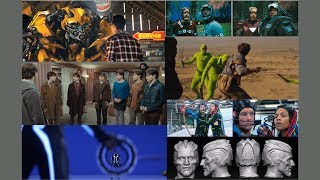
Computer Vision for Visual Effects Lectures Spring 2014
The lectures accompany the textbook Computer Vision for Visual Effects, published by Cambridge University Press in Fall 2012.
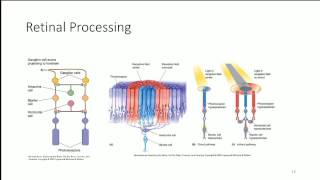
Bio-Inspired Sensing
Explore bio-inspired sensing and its applications in robotics, focusing on how biological systems like the human eye inform edge detection, noise rejection, and data processing in artificial sensors.
Stitch, Stabilize & Color Insta360 Titan & Pro 2 with Mistika Boutique - Mistika VR
Learn advanced techniques for stitching, stabilizing, and color grading 360° footage from Insta360 cameras using Mistika software, enhancing your VR filmmaking skills with professional tools and workflows.
Slow Motion in DaVinci Resolve With Optical Flow - Push That Button
Master super slow motion video in DaVinci Resolve using Optical Flow and Speed Warp tools. Learn techniques for smooth slow-mo effects, even with standard frame rate footage, and explore various results and comparisons.
Stable Video Diffusion: Model Architecture and Training Pipeline
Dive into the technical architecture and training methodology of Stable Video Diffusion, exploring its three-stage process, data curation pipeline, and practical applications in AI-powered video generation.
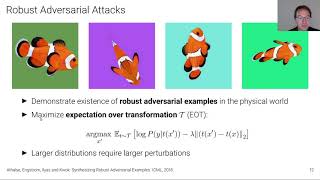
Attacking Optical Flow
Explores adversarial patch attacks on optical flow networks, revealing vulnerabilities in deep learning-based motion estimation crucial for autonomous driving safety.
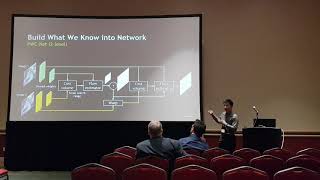
Deqing Sun- PWC Net- CNNs for Optical Flow Using Pyramid, Warping, and Cost Volume
Explore PWC-Net, a CNN-based optical flow algorithm using pyramid processing, warping, and cost volume. Learn its principles, advantages, and limitations for robust motion estimation.
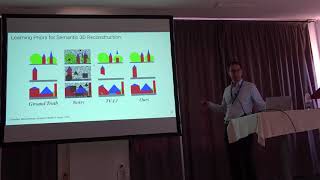
DALI 2018 - Andreas Geiger: How to Satisfy the Thirst for Data
Explore innovative approaches to address data scarcity in computer vision, including specialized architectures, soft constraints, self-supervision, and label transfer techniques.
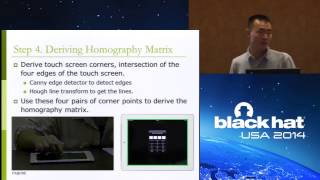
My Google Glass Sees Your Passwords
Innovative computer vision attack automatically recognizes touch screen inputs from a distance, posing significant security risks. Countermeasures include a context-aware privacy-enhancing keyboard for sensitive information.
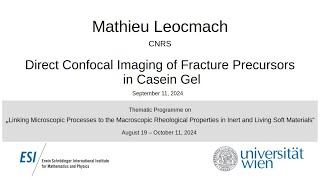
Direct Confocal Imaging of Fracture Precursors in Casein Gel
Explore direct confocal imaging of fracture precursors in casein gel under shear stress, using advanced microscopy techniques to observe microstructural changes before failure.
Climbing the Ladder of Causation Toward Mid-Level Vision
Explore mid-level visual concepts and their origins through Counterfactual World Models, examining how unsupervised algorithms can enhance machine and biological vision understanding.