Feedback Control from Pixels
Explore feedback control using cameras, bridging control theory and machine learning. Learn about challenges, recent advances, and potential applications in robotics and AI.

Premiere Pro Full Course Tutorial
Comprehensive video editing tutorial covering Premiere Pro's interface, importing, editing techniques, effects, audio, text, and exporting. Ideal for beginners and intermediate users seeking to master digital video creation.
How to Make Your Webflow Website Super Fast
Learn techniques to optimize Webflow websites for faster loading, covering image handling, file formats, compression, lazy loading, font optimization, and JavaScript management.
How to Make AI & BI Work Together Like a Dream Team
Learn to combine AI and BI for maximum business value. Discover how to identify and assess AI use cases, explore common applications in BI, and see a live demo of PDF text extraction using computer vision.

Face Recognition with Real Time Database - Computer Vision
Learn face recognition with real-time database integration using computer vision techniques. Develop skills in encoding, database management, and attendance tracking through hands-on projects and practical implementations.
Computer Vision With Arduino - OpenCV Python
Learn to create real-world computer vision applications using Arduino, from basic exercises to exciting projects like gesture control and face tracking. Gain practical knowledge to build your own innovative ideas.

How to Train Object Detection Transformer on Custom Dataset
Learn to train Object Detection Transformers using DETR, from environment setup to custom dataset training and model evaluation. Covers PyTorch, COCO datasets, and PyTorch Lightning for efficient deep learning workflows.
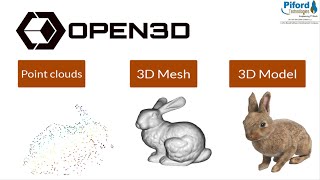
Open3D Tutorial - 3D Data Processing - Visualize 3D Data
Learn to process and visualize 3D data using Open3D library. Explore point clouds, meshes, and 3D models. Hands-on tutorial covers installation, folder structure, and voxel downsampling techniques.

Python Projects for Beginners - Great Learning
Learn Python basics and build four beginner-friendly projects: word counter, word game, calculator, and face recognition. Gain hands-on experience and practical skills in Python programming.
Practical Machine Learning with Tensorflow
We will cover the basics of Tensorflow and Machine Learning in the initial sessions and advanced topics in the latter part. After this course, the students will be able to build ML models using Tensorflow.
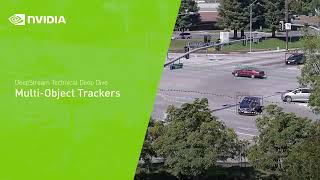
NVIDIA DeepStream Technical Deep Dive - Multi-Object Tracker
Explore NVIDIA DeepStream's multi-object tracker options, architecture, and optimization strategies for AI-based vision applications, with focus on NvDCF tracker and configuration parameters.
Introduction to Deep Learning - Full Stack Deep Learning - March 2019
Comprehensive introduction to AI and deep learning, covering key concepts, applications, and historical context. Explores data processing, computational requirements, and course structure.
Self-Supervision & Contrastive Frameworks - A Vision-Based Review
Comprehensive review of self-supervised and contrastive learning frameworks in computer vision, exploring methodologies, performance, and potential applications in medical imaging.

Segmentation and Quantification of Breast Arterial Calcifications - Xiaoyuan Guo
Explore innovative techniques for segmenting and quantifying breast arterial calcifications in mammograms, aiming to improve cardiovascular risk assessment for women through non-invasive methods.
Few-Shot Chest X-Ray Diagnosis Using Clinical and Literature Images
Explore innovative few-shot learning methods for chest X-ray diagnosis using clinical and literature images, enhancing radiology image analysis with advanced machine learning techniques.
Denoising Diffusion Models for Denoising Diffusion MRI - Tiange Xiang
Explore innovative self-supervised denoising techniques for diffusion MRI using denoising diffusion models. Learn about a three-stage framework integrating statistic-based theory for improved medical imaging quality.
Explaining Model Decisions and Fixing Them Through Human Feedback
Explore algorithms for explaining deep network decisions, building user trust, incorporating domain knowledge, learning grounded representations, and correcting unwanted biases in AI models.
Curation and Analysis of Annotated Medical Images Across Institutions - Xiaoyuan Guo
Explore techniques for curating and analyzing annotated medical images across institutions, focusing on data sharing challenges, anomaly detection, and OOD-aware image retrieval for improved dataset quality and future analysis.
Deep Learning Methods for Electrocardiograms and Echocardiograms
Explore cutting-edge deep learning methods for ECG and echocardiogram analysis, outperforming traditional algorithms and offering insights into cardiovascular imaging interpretation.
Observational Supervision for Medical Image Classification
Exploring gaze data as a novel supervision source for training deep learning models in medical image classification, focusing on chest X-rays and brain MRI scans for improved efficiency and accuracy.
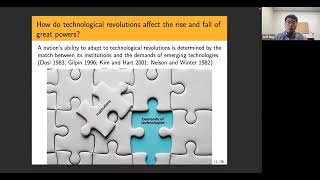
HAI Weekly Seminar with Jeff Ding - The Rise and Fall of Great Technologies and Powers
Explore the impact of technological revolutions on global power dynamics, focusing on the US-China AI race and drawing insights from historical technological shifts.