Frustrating Emulation with Delay Slots in MIPS and MIPS16
Explore MIPS and MIPS16 architecture quirks, focusing on delay slots and their impact on emulation. Learn techniques to frustrate reverse engineering efforts in embedded systems.
Exec ASLR - Abusing Intel Branch Predictors to Bypass ASLR
Explore a new Spectre v2 technique to bypass ASLR on Intel CPUs by abusing branch predictors, with demos on x86 internals, side-channel attacks, and speculative execution.
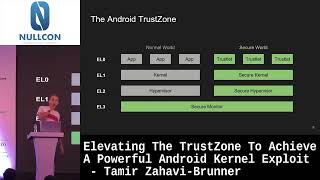
Elevating the TrustZone to Achieve a Powerful Android Kernel Exploit
Explore a novel Android kernel exploitation technique using TrustZone to bypass security mitigations, achieve 100% reliability, and create a versatile exploit applicable across devices and versions.
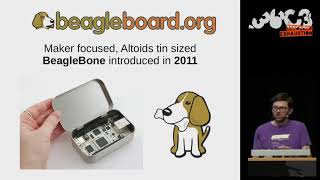
Linux on Open Source Hardware with Open Source Chip Design
Explore open hardware projects for Linux, including BeagleBone and OLinuXino. Learn about RISC-V and free FPGA toolchains for creating libre systems and running Linux on open source chip designs.
ZombieLoad Attack
ZombieLoad: Powerful Intel CPU vulnerability allowing data leaks across processes, kernels, and VMs. Explores attack methods, demonstrates real-world impacts, and discusses implications for hardware/software security.
SuperMUC-NG
Einblick in den SuperMUC-NG Supercomputer: Architektur, Anwendungen und globaler Vergleich. Diskussion über Bedeutung und Grenzen von Höchstleistungsrechnern in der Wissenschaft.
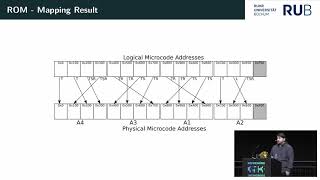
Inside the AMD Microcode ROM
Reverse engineering AMD CPU microcode: mapping physical to virtual addresses, developing custom microcode programs, and implementing defensive measures. Includes open-source framework and hardware setup details.
Meltdown and Spectre for Normal People
Understand Meltdown and Spectre security flaws: their hardware basis, widespread impact, and patching challenges. Includes insights on CPU architecture and security vulnerability management.
Hacking a Satellite Receiver
Explore the hidden potential of a cheap satellite TV receiver through firmware analysis, hardware hacking, and Linux customization. Uncover MIPS architecture quirks and framebuffer manipulation.
Uncover, Understand, Own - Regaining Control Over Your AMD CPU
Explore AMD's Platform Security Processor: firmware analysis, functionality insights, and security implications. Learn to extract, replace, and observe PSP components, gaining control over your AMD CPU.
The Ultimate Acorn Archimedes Talk
Comprehensive exploration of the Acorn Archimedes computer, covering its innovative hardware, software, and historical significance as the birthplace of the ARM processor architecture.
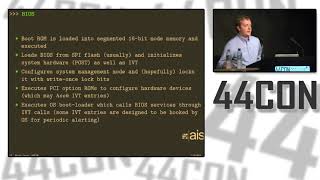
Bootstrapping an Architectural Research Platform
Explore x86 architecture for security research: privileges, events, hypervisors, and emerging tech. Gain foundational knowledge to streamline your research setup and focus on key questions.
Why It's All Snake Oil - And That May Be Ok
Explore cybersecurity challenges, computational limitations, and the implications of "snake oil" solutions in modern technology and threat detection.

AI Impact on Your Bottom Line
Explore AI's impact on business with insights on market cap, Moore's Law, AI stages, intuitive AI, multidirectional algorithms, and gamification from an expert in the field.
Inter VM Data Exfiltration - The Art of Cache Timing Covert Channel on x86 Multi-Core
Explore cache timing covert channels in x86 multi-core systems, learning techniques for inter-VM data exfiltration and reverse shell establishment using shared resources and architecture imperfections.
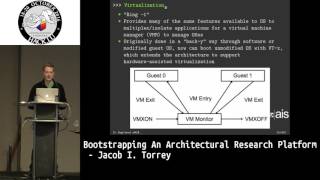
Bootstrapping an Architectural Research Platform
Explore x86 architecture research, covering CPU privileges, hypervisors, and emerging technologies. Learn to focus on research questions by understanding fundamental architectural concepts.
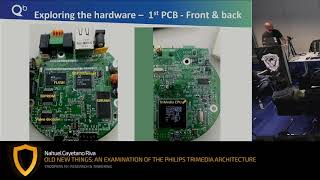
Old New Things - An Examination of the Philips TriMedia Architecture
Explore the Philips TriMedia architecture, examining its history, features, and potential vulnerabilities through firmware analysis and hardware exploration.
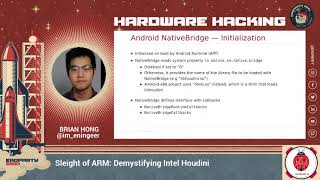
Sleight of ARM- Demystifying Intel Houdini - Brian Hong - Ekoparty 2021- Hardware Hacking Space
Explore Intel's Houdini binary translator for running ARM on x86, its inner workings, security weaknesses, and potential exploits. Gain insights into cross-architecture execution and its implications for Android security.
Mentorship Session - It's Not Just About Embedded! The Yocto Project
Explore custom Linux system creation with Yocto Project. Learn to build and boot for RISC-V, understand underlying technology, and discover why you might need a tailored Linux distribution.
Trusted Execution Environments - A Technical Overview of Intel SGX, Arm TrustZone, and RISC-V PMP
Explore key trusted execution environments: Intel SGX, Arm TrustZone, and RISC-V PMP. Learn their architectures, security features, and implementation processes for robust data protection.
It's Not Just the Qubits
Explore quantum computing beyond qubits with IBM's Bob Sutor. Discover quantum advantage, superposition, entanglement, and the IBM Q Network's impact on this revolutionary technology.