
HTTP - Live Stream
Comprehensive exploration of HTTP evolution, from version 1.0 to 2.0, covering key concepts, improvements, and challenges in web communication protocols.

Computer Organization and Architecture - Complete Course in Hindi
Comprehensive 6-hour Hindi tutorial covering computer organization and architecture, including addressing modes, ALU, instructions, control unit, memory, I/O, and pipelining.

Reactive Stream Processing with Akka Streams
Learn to process streaming data asynchronously and efficiently using Akka Streams, exploring Reactive Streams, back-pressure, and pipelining for robust and scalable applications.

Pipelines and Beyond: Graph Types for ADTs with Futures
Explore a novel graph type system enabling arbitrary combinations of futures and recursive data types in parallel programming, enhancing pipelining and performance optimization techniques.
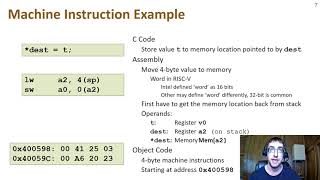
Computer Organization and Design with RISC-V
Learn RISC-V assembly programming, processor design, and cache concepts. Explore pipelining, hazard detection, and practical implementations using QtRVSim simulator.

Performance and Memory Postmortem for Middle-earth - Shadow of War
Explore engineering strategies for achieving 30fps and optimizing memory in Middle-earth: Shadow of War, covering threading, rendering, and memory management techniques.
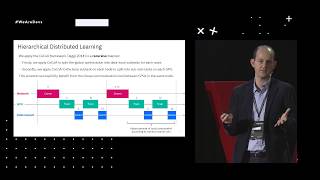
Snap ML - A Highly-Accelerated, Scalable Software Library for Machine Learning
Discover Snap ML, a high-performance framework for training generalized linear models. Learn about its GPU acceleration, pipelining, and distributed computing capabilities for faster machine learning on large-scale datasets.

Can We Double HTTP Client Throughput?
Discover undici, a new HTTP client for Node.js that doubles application throughput by avoiding head-of-line blocking through keep-alive and pipelining techniques.
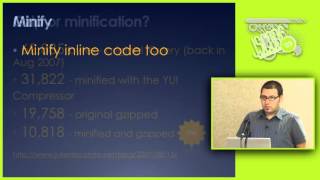
High Performance Kick-Ass Web Apps
Optimize web apps with advanced techniques: pipelining, caching, image inlining, and smushing. Learn from Yahoo! Developer Network expert to boost performance and speed.
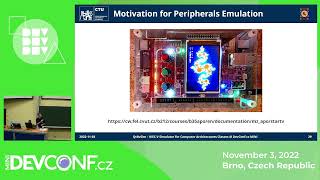
QtRVSim - RISC-V Simulator for Computer Architecture Classes
Explore QtRVSim, an open-source RISC-V simulator for teaching computer architecture. Learn its capabilities, implementation design, and potential educational applications in this insightful presentation.
Streaming Task Graph Scheduling for Dataflow Architectures
Explore efficient scheduling techniques for dataflow architectures using canonical task graphs, steady-state analysis, and spatial block partitioning to optimize performance and device utilization.
Distributed Training for Efficient Machine Learning - Part II - Lecture 18
Explore advanced distributed training techniques for machine learning, focusing on efficiency and scalability in large-scale systems.