Introduction to Astronomy: Space Exploration
Explore space exploration's history, NASA's role, commercial sector involvement, and future technologies in this astronomy course section.
Introduction to Astronomy: Extrasolar Planets
Explore extrasolar planets, their detection methods, and the search for habitable worlds in this comprehensive overview of exoplanet science and the quest for Earth-like planets.
Introduction to Astronomy - Stars
Explore the life cycle of stars, from formation to evolution, including supernovae, pulsars, and black holes. Discover how stars create elements and their impact on the universe.
Introduction to Astronomy: Galaxies
Explore galaxies, dark matter, and cosmic expansion. Learn about the Milky Way, galactic collisions, and the large-scale structure of the universe. Discover active galaxies, quasars, and dark energy.
Introduction to Astronomy: Astrobiology
Explore the fascinating field of astrobiology, from extremophiles to the Drake Equation. Delve into the origins of life, potential for extraterrestrial intelligence, and thought-provoking concepts like the simulation hypothesis.
Sequencing Tutorial
Learn essential steps in RNA-seq analysis: data download, quality control, trimming, alignment, indexing, and gene expression quantification using popular bioinformatics tools.
Julia in Astronomy and Astrophysics Research - JuliaCon 2022
Explore how Julia enhances astronomical research through talks on instrument simulation, stellar modeling, exoplanet characterization, cosmology, and more. Discover Julia's impact on productivity and scientific advancement in astronomy.
Celeste.jl - Petascale Computing in Julia
Explore Celeste.jl, a Julia-based project for petascale astronomical image analysis using Bayesian inference, showcasing Julia's power in high-performance computing and data science on supercomputers.
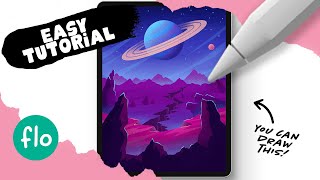
How to Draw an Outer Space Landscape in Procreate
Learn to create a stunning outer space landscape in Procreate with step-by-step guidance. Master techniques for drawing hills, planets, textures, and stars to bring your cosmic scene to life.

The Map of Black Holes - Black Holes Explained
Explore the fascinating world of black holes, from their creation and structure to detection methods and unsolved mysteries. Gain insights into spacetime curvature, classification, and cutting-edge theories.
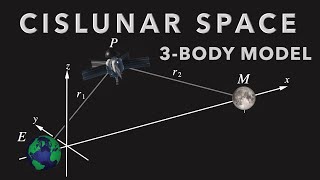
Cislunar Space - 3-Body Model of Orbital Dynamics Beyond the Geosynchronous Belt
Explore orbital dynamics beyond geosynchronous orbit using the 3-body model. Learn about Lagrange points, manifolds, and resonances in cislunar space, with practical MATLAB exercises and real-world applications.

Planet Simulation in Python - Tutorial
Learn to create a realistic planet simulation in Python, modeling orbits and gravity using astronomical data and physics principles for accurate planetary motion.
Extraordinary Physics with Millisecond Pulsars - Scott Ransom
Explore millisecond pulsars' role in detecting gravitational waves, testing general relativity, and understanding dense matter, using advanced timing observations and cutting-edge telescopes.
The Mineralogy of Mars from Rocks in Hand
Explore Mars' mineralogy through meteorites and rover data, revealing unique planetary composition, mantle sources, and geological processes that shaped the Red Planet's surface and interior.
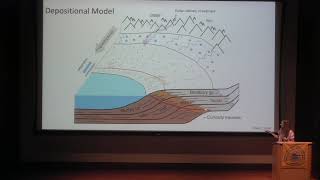
New Perspectives of Ancient Mars - Mineral Diversity and Crystal Chemistry at Gale Crater, Mars
Explore Mars' mineral diversity at Gale crater through Curiosity rover data. Discover new insights on Martian geology, including igneous silicates, iron oxides, sulfates, and phyllosilicates.
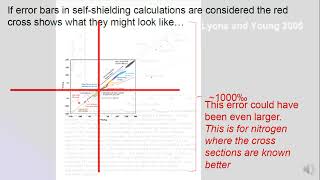
Discoveries of Mass Independent Isotope Effects in the Solar System - Past, Present and Future
Explore mass-independent isotope effects in the solar system, covering measurements, photochemistry, meteorites, and implications for understanding solar system formation and evolution.

Deep Learning for Fundamental Sciences Using High-Performance Computing
Exploring deep learning applications in fundamental sciences using high-performance computing to uncover universe secrets and improve discovery sensitivity.
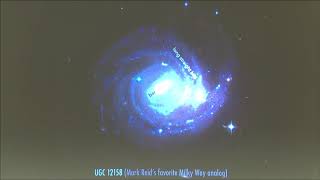
Teasing Out the True Milky Way
Explore the structure and dynamics of our galaxy with Harvard astrophysicist Alyssa Goodman. Discover recent findings like the Radcliffe Wave and learn about innovative techniques for mapping the Milky Way.
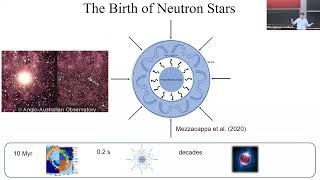
Neutrino Quantum Kinetics in Neutron Star Mergers - Sherwood Richers III
Explore neutrino quantum kinetics in neutron star mergers, focusing on flavor transformation, radiation transport, and their impact on heavy element formation and kilonova observations.
Spacetime, Quantum Entanglement and Black Holes
Explore quantum entanglement's role in resolving spacetime puzzles, focusing on black holes and their connections to various physics fields. Four researchers present fascinating insights.
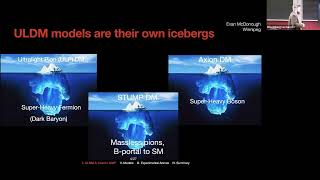
Ultralight Dark Matter and Cosmological Condensed Matter Physics - Evan McDonough
Explore ultralight dark matter theories, their exotic phenomena, and experimental tests across cosmic scales. Delve into composite models and their observables, connecting to early dark energy and the Hubble tension.