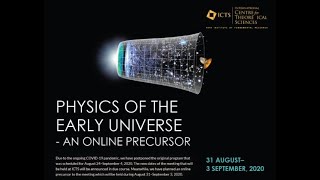
Essential Cosmological Perturbation Theory by David Wands
Explore essential cosmological perturbation theory, from metric perturbations to gravitational waves, and its role in understanding cosmic structure and the early universe.
Physics and Astrophysics of Gamma-Ray Bursts - Part 1
Comprehensive exploration of gamma-ray bursts, covering discovery, observational facts, physics, and astrophysical implications. Delves into prompt emission, afterglows, and theoretical models, providing insights for researchers and students.
Numerical Relativity - Mathematical Formulation by Harald Pfeiffer
Explore mathematical formulation of numerical relativity, focusing on simulating binary black hole coalescence, gravitational waves, and advanced computational techniques in astrophysics.
Magnetic Reconnection - Plasmoid Instability in an Experimentally Accessible Regime by Pallavi Bhat
Explore magnetic reconnection and plasmoid instability in the semi-collisional regime, with theoretical and numerical investigations validating its existence at lower, experimentally accessible Lundquist numbers.
Maximum Mass of Neutron Stars - Lecture 8
Explore the physics of neutron stars, including their maximum mass, equation of state, and exotic internal states. Delve into key concepts like Fermi gas, Bose-Einstein condensation, and gravitational implosion.
Supernovae and Neutron Stars - Lecture 3
Explore the formation and evolution of neutron stars, supernovae, and their remnants. Delve into stellar physics, cosmic rays, and the violent interstellar medium in this comprehensive lecture.
Neutron Stars and Black Holes - Lecture 6: Pulsars and Their Properties
Explore pulsars, neutron stars, and their remarkable properties. Delve into the Crab Nebula's history, pulsar discovery, and radiation mechanisms. Gain insights into magnetospheres and electrodynamics of these fascinating cosmic objects.
Neutron Stars and Black Holes - Lecture 1: Diffuse Stars
Explore the physics of stars, from their structure and energy production to their lifetimes, in this comprehensive lecture on stellar astrophysics by G Srinivasan.
Neutron Stars and Black Holes - Radiation from Relativistic Particles - Lecture 5
Explore radiation from relativistic particles, covering Maxwell's equations, synchrotron radiation, and applications to astrophysical phenomena like pulsars and supernova remnants.
The Interior of Neutron Stars - Lecture 4
Explore neutron star interiors, from formation to exotic states of matter. Delve into superfluidity, superconductivity, and their implications for neutron star physics and behavior.
White Dwarf Stars: Formation, Structure, and Evolution - Lecture 2
Explore white dwarf stars, their quantum nature, and formation process. Learn about Chandrasekhar's groundbreaking theory, relativistic effects, and the ultimate fate of low-mass stars in this comprehensive lecture.
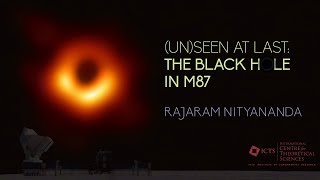
Unseen at Last - The Black Hole in M87 by Rajaram Nityananda
Explore the groundbreaking M87 black hole image, its scientific significance, and the advanced techniques used to capture it. Learn about black hole physics and their role in galactic centers.
Reionization - Evidence and Observational Constraints - Lecture 1
Explore the epoch of reionization, its evidence, and observational constraints through absorption signatures, Lyman-alpha forest, and CMBR angular power spectrum in this comprehensive lecture.
Galaxy Clusters - Lecture 1
Explore galaxy clusters' formation, evolution, and role in cosmology. Learn about their history, current research status, and characterization methods using the Jeans equation.
Cosmology with Large-Scale Structure - Lecture 1
Explore large-scale structure as a cosmological probe, covering statistical approaches, bias models, and testing methods. Learn how LSS informs our understanding of the universe's composition and evolution.
21cm Physics and Cosmology - Lecture 2
Explore 21cm physics in cosmology, covering spin temperature, radiative transfer, and 21-cm brightness temperature. Gain insights into the Universe's expansion and structure formation.
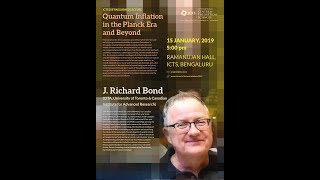
Quantum Inflation in the Planck Era and Beyond by J. Richard Bond
Explore quantum fluctuations in the early universe, cosmic microwave background data, and the quest for physics beyond the standard model of cosmology through cutting-edge experiments and observations.
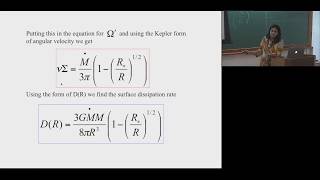
Formation, Fueling, and Feedback from Supermassive Black Holes - Lecture 2
Explore supermassive black hole physics: formation, growth, and environmental impact. Covers accretion discs, AGN structure, jets, and scaling relations. Ideal for graduate students in astrophysics.
Formation, Fueling, and Feedback from Supermassive Black Holes - Lecture 1
Explore the physics of supermassive black holes, from formation to accretion processes. Learn about observational evidence, modeling techniques, and key concepts in black hole astrophysics.
Advanced Course in General Relativity - Lecture 1
Explore advanced general relativity concepts, including spacetime, Einstein equations, vacuum solutions, and geodesics. Gain insights into the fundamental principles of gravitational physics and their applications.
Self-Force and Radiation Reaction in General Relativity - Lecture 4
Explore advanced concepts in general relativity, including stress-energy tensors, two-timescale expansions, and matched asymptotic expansions. Gain insights into self-force and radiation reaction in gravitational wave astronomy.