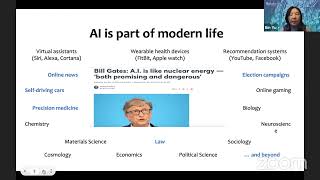
Interpreting Deep Neural Networks Towards Trustworthiness
Explores methods for interpreting complex neural networks, introducing ACD and AWD techniques. Advocates for a quality-controlled data science lifecycle to ensure trustworthy model interpretation.
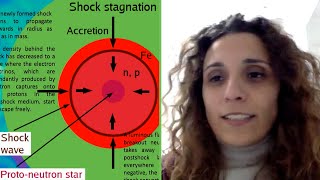
Deep Learning Algorithm for Core-Collapse Supernova Detection
Explore deep learning algorithms for detecting gravitational waves from core-collapse supernovae, enhancing multi-messenger astronomy and uncovering insights into extreme cosmic events.
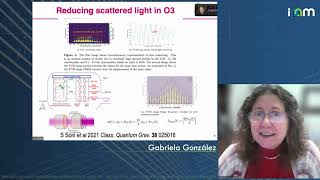
Non-Astrophysical Transients in LIGO Detectors: Help With Machine Learning
Explore machine learning techniques for diagnosing non-astrophysical transients in LIGO detectors, enhancing gravitational wave detection and analysis in multi-messenger astrophysics.
Black Holes and Quantum Information - Thomas Hartman
Explores connections between black holes and quantum information, discussing Hawking radiation, island effect, and replica wormholes. Addresses key questions in quantum gravity and implications for cosmology.
OpenTelemetry vs eBPF - Comparing Observability Approaches
Explore OpenTelemetry and eBPF for observability, comparing strengths and weaknesses. Learn how they complement each other, focusing on request tracing and future developments in cloud-native monitoring.
Network Policies - The Not-So-Hard Way
Practical workshop on implementing Cilium Network Policies in Kubernetes. Learn fundamentals, approaches, and tools for securing application traffic and creating effective network policies.
Effortless Open Source Observability with Cilium, Prometheus and Grafana
Discover how Cilium leverages eBPF to provide seamless observability for applications using Prometheus metrics, without code modifications. Learn to monitor service connectivity and collect tracing data with open-source tools.
Adopting Network Policies in Highly Secure Environments
Learn to secure Kubernetes networks using Cilium Network Policies, focusing on application-aware and identity-based security. Explore strategies for different exposure types and leverage observability tools for effective policy management.
Evaluating the Energy Footprint of GitOps Architectures - A Benchmark Analysis
Explore the energy consumption and CO2 emissions of GitOps architectures through benchmark analysis, providing insights for eco-friendly decision-making in cloud-native environments.
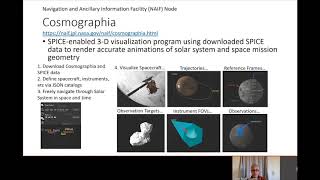
Recent Advancements in Planetary Data Archiving
Explore cutting-edge tools and services for planetary data archives, focusing on delivery, discovery, and analysis. Learn about innovations from NASA's PDS and ESA's PSA within the IPDA partnership.
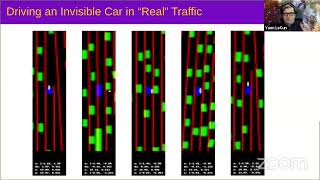
The Deep Learning - Applied Math Connection
Explore the intersection of deep learning and applied mathematics, focusing on advancements in signal processing, optimization, and self-supervised learning for predictive modeling.
Monitoring Energy Consumption and Building Energy Efficient Systems the Cloud Native Way
Explore Kubernetes-based Efficient Power Level Exporter (Kepler) for container-level energy consumption metrics, enabling energy-efficient cloud systems through observability and sustainable cluster management.
Linux for Space - Mission Begins
Explore Linux4Space: an open-source initiative to create a standardized Linux distribution for space applications, based on industry requirements and stakeholder collaboration.
Machine Learning Applications in Particle Physics, Astronomy, and Cosmology
Explore machine learning applications in cosmology and astronomy with NYU's Kyle Cranmer, featuring insights from the 2018 Machine Learning Physics Next workshop.
Building, Testing, and Autoscaling a Kubernetes-Native IoT Pipeline
Learn how ndustrial.io replaced their IoT pipeline with a Kubernetes-native solution using Pulsar and Helm, enabling seamless development, testing, and automatic scaling to handle traffic spikes.
Docker in Space: The DART Project from NASA
Explore NASA's DART project and its groundbreaking use of Docker in space. Learn about autonomous technology for rendezvous and docking, and the innovative applications of containerization in space exploration.
Kubernetes and Cloud Native at the SKA Observatory - Exploring the Radio Universe
Explore how Kubernetes and cloud native solutions are revolutionizing radio astronomy at the SKA Observatory, enabling groundbreaking research into the mysteries of the Universe.
Embedded Linux in Space - Panel Discussion
Explore the current trends and future prospects of Linux in space missions with industry experts, discussing its effectiveness in satellites, rockets, and cubesats.
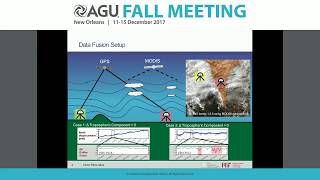
Recent Advances in Deep Learning and Data Analytics in Earth Sciences - 2017
Explore cutting-edge deep learning applications in geosciences, featuring talks from NASA, MIT, and other leading institutions on solving complex Earth and planetary challenges.
How AI Is Unlocking the Secrets of Nature and the Universe
Demis Hassabis explores AI's potential to accelerate scientific discovery, from predicting protein shapes to unraveling mysteries of the mind and universe, showcasing its transformative impact on human knowledge.
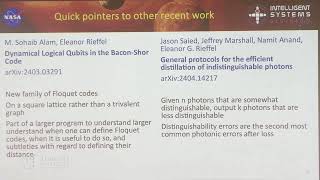
A NASA Perspective on Quantum Computing - Recent Results in Distributed Computing
Explore NASA's quantum computing research, focusing on distributed computing advancements in the quantum CONGEST-CLIQUE Model for optimization problems relevant to space missions.