
The Discrete Fourier Transform - Most Important Algorithm Ever?
Explore the Discrete Fourier Transform's derivation, properties, and significance in modern technology through a discovery-oriented approach, from basic concepts to complex exponentials.

How to Calculate P-Values
Learn to calculate p-values for discrete and continuous data, understand one-sided vs two-sided p-values, and gain practical insights for statistical analysis in this comprehensive tutorial.

Covariance, Clearly Explained
Demystifies covariance, its calculation, and significance in statistics. Explores relationships between variables and sets the stage for understanding correlation.

Linear Regression, Clearly Explained
Clear explanation of linear regression concepts, including least squares, R-squared, multivariable models, p-values, and F-distribution. Ideal for beginners seeking a solid foundation in statistical analysis.
Linear Regression - A Friendly Introduction
Discover the fundamentals of linear regression through visual explanations, exploring concepts like slope, y-intercept, and error measurement to predict housing prices effectively.

Probability Explained
Learn to solve probability word problems using marbles, covering basic concepts, compound events, and calculations with/without replacement through examples and practice problems.
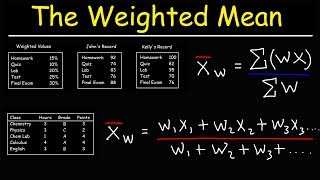
How to Find the Weighted Mean and Weighted Average in Statistics
Learn to calculate weighted means and averages in various scenarios, from test scores to GPAs and mixture concentrations, with clear explanations and practical examples.
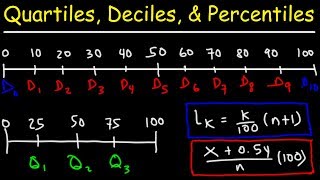
Quartiles, Deciles, and Percentiles With Cumulative Relative Frequency - Data and Statistics
Learn to calculate quartiles, deciles, and percentiles using cumulative relative frequency tables. Master essential statistical concepts for data analysis and interpretation.
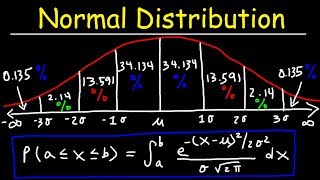
Normal Distribution & Probability Problems
Comprehensive introduction to normal distribution and probability, covering calculation methods, practice problems, and key concepts like the 68-95-99.7 rule for a solid understanding of the topic.

Introduction to Statistics
Comprehensive overview of basic statistical concepts, including measures of central tendency, data distribution, and graphical representations. Learn to analyze and interpret datasets effectively.

Everything About the Degrees of Freedom of a Robot - Fundamentals of Robotics
Comprehensive exploration of robot degrees of freedom, covering rigid body motion, joint types, and Grübler's formula for various mechanisms including Stewart platforms and Delta robots.

From Causal Inference to Autoencoders, Memorization & Gene Regulation - Caroline Uhler, MIT
Exploring causal inference, autoencoders, and gene regulation through genomics and 3D genome organization. Integrates data modalities, analyzes overparameterized autoencoders, and links memorization to real-valued data retrieval.

Fast and Optimal Low-Rank Tensor Regression via Importance - Garvesh Raskutti, UW-Madison
Explore low-rank tensor regression using importance sketching for efficient high-dimensional data analysis, with theoretical guarantees and practical applications in neuroimaging.

Sequential Design Based on Mutual Information for Computer Experiments - Joakim Beck, KAUST
Explore uncertainty quantification using Gaussian Process emulators for complex systems. Learn about sequential design methods, mutual information criteria, and applications in climate, tsunami, and earthquake modeling.
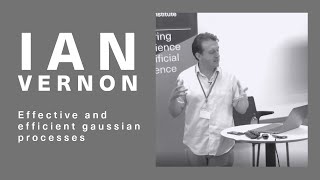
Known Boundary Emulation of Complex Computer Models - Ian Vernon, Cambridge
Explore efficient methods for emulating complex computer models using Known Boundary Emulation, focusing on uncertainty quantification and applications in climate, tsunami, and earthquake problems.
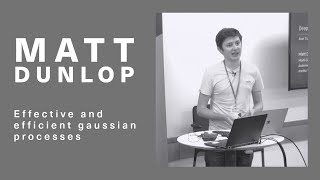
Deep Gaussian Processes for Bayesian Inversion - Matt Dunlop, Courant
Explore deep Gaussian processes for Bayesian inversion, covering theoretical foundations, numerical methods, and applications in uncertainty quantification for complex physical systems.

Pragmatically Ambitious Multiscale Global Temperature Reconstruction - Finn Lindgren, Edinburgh
Explore pragmatic approaches to global temperature reconstruction using multiscale models, data sources, and statistical techniques for uncertainty quantification and bias correction.

Workshop on Probabilistic Numerical Methods - Panel Discussion
Panel discussion exploring probabilistic numerical methods, covering topics like reference priors, robust uncertainty quantification, and Bayesian inversion methods for improved statistical inference and error quantification.
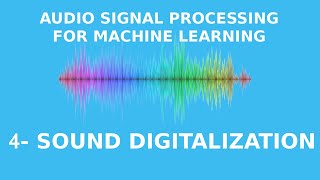
Understanding Audio Signals for Machine Learning
Explore audio digital signals, analog-to-digital conversion, and key concepts like sampling, quantization, and aliasing for machine learning applications.

Thinking Better with Mathematics – With Marcus du Sautoy
Explore how calculus, geometry, and probability can simplify problem-solving in various fields. Learn about neural networks, efficient packing, and innovative shortcuts that have driven human progress throughout history.

How Not to Fall for Bad Statistics - With Jennifer Rogers
Uncover the truth behind misleading statistics in media. Learn to critically analyze data, understand risk, and differentiate between correlation and causation for informed decision-making.