Bootstrapping Statistics and Bootstrapping in R
Learn bootstrapping in statistics and R, covering resampling techniques, hypothesis testing, and confidence intervals. Gain practical skills with examples and downloadable datasets.
Analysis of Variance - ANOVA Statistics and ANOVA with R
Learn to perform Analysis of Variance (ANOVA) with practical examples and R implementation. Master statistical techniques for comparing multiple group means, including post-hoc tests and non-parametric alternatives.
Descriptive Statistics Concept and With R
Learn descriptive statistics techniques and their implementation in R, covering data summarization, visualization, and basic measures to effectively analyze and present research findings.
Bivariate Analysis in Statistics and with R - Statistics for Beginners
Comprehensive exploration of bivariate analysis techniques in statistics using R, covering various tests and methods for analyzing relationships between two variables.
Univariate Analysis in Statistics and with R - Statistics for Beginners
Comprehensive introduction to univariate analysis in statistics, covering key concepts like t-distribution, hypothesis testing, and confidence intervals. Includes practical examples using R for data analysis and visualization.

Getting Started with R - R Statistical Software Tutorial Videos
Comprehensive introduction to R programming for beginners, covering installation, basic operations, data handling, and essential functions. Ideal for those starting their journey in data analysis and statistics.
Graphs and Descriptive Statistics with R - R Statistical Software Tutorial Videos
Learn to create various graphs and calculate descriptive statistics using R. Master bar charts, boxplots, histograms, scatterplots, and more while customizing plots and adding text and legends.
Linear Regression in R
Comprehensive guide to linear regression in R: model fitting, assumption checking, interpretation, categorical variables, interactions, and advanced techniques for effective data analysis.
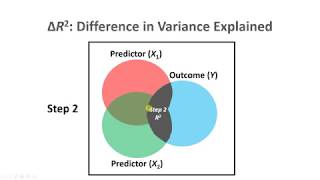
Conceptual Overviews of Statistical and Data-Analytic Tools and Techniques
Explore key statistical and data analysis methods, from hierarchical regression to survival analysis, with conceptual overviews of advanced techniques and tools.

Sampling Distributions
Explore sampling distributions, focusing on the sample mean and Central Limit Theorem, to enhance your understanding of statistical concepts.

Discrete Probability Distributions
Comprehensive exploration of discrete probability distributions, covering key concepts, formulas, and applications for various distribution types in statistics and probability theory.
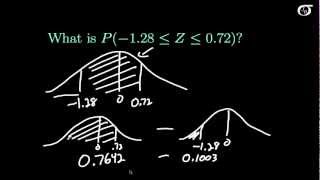
Using a Standard Normal Table
Learn to interpret standard normal tables, calculate areas and percentiles for normal distributions, and standardize variables in this comprehensive statistical guide.
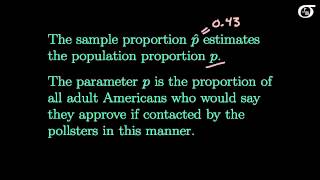
Confidence Intervals for a Population Mean
Learn to construct, interpret, and apply confidence intervals for population means using Z and t methods, exploring assumptions and sample size determination.

Inference for Two Population Means
Learn statistical inference techniques for comparing two population means, including pooled-variance and Welch t-tests, confidence intervals, and paired-difference procedures.
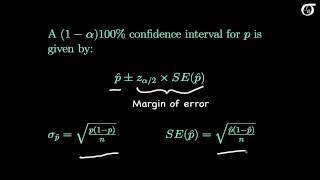
Inference for Proportions
Explore statistical inference for proportions, covering sampling distributions, confidence intervals, hypothesis tests, and comparisons between two populations.
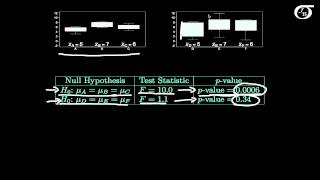
One-Way ANOVA - Analysis of Variance
Learn to perform and interpret one-way ANOVA, including formulas, examples, confidence intervals, and p-value calculations for comparing multiple group means.

Simple Linear Regression
Learn to analyze relationships between variables using linear regression, covering model interpretation, assumptions, inference, and practical applications.
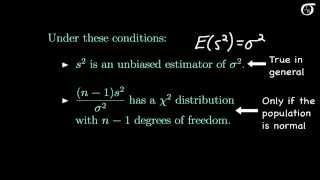
Inference for Variances
Explore statistical methods for analyzing variances, including confidence intervals and hypothesis tests for one and two variances, with a focus on normally distributed populations and robustness considerations.
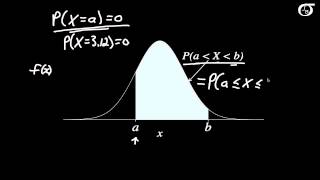
Continuous Probability Distributions
Explore continuous probability distributions, including uniform, normal, chi-square, t, and F. Learn to calculate probabilities, percentiles, means, and variances using integration techniques.
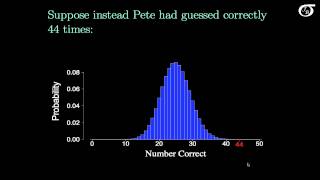
Hypothesis Testing
Learn hypothesis testing fundamentals, including rejection regions, p-values, error types, power calculations, and statistical significance. Explore Z and t tests for one mean, with practical examples and assumptions.
The Binomial and Poisson Distributions
Explore binomial and Poisson distributions, from basic concepts to practical applications in probability calculations for real-world scenarios.