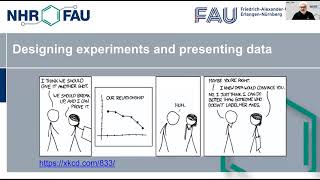
Experiments and Data Presentation in High Performance Computing
Learn effective techniques for conducting experiments and presenting data in high performance computing. Master key aspects of scientific benchmarking, statistical analysis, and data visualization for HPC research.
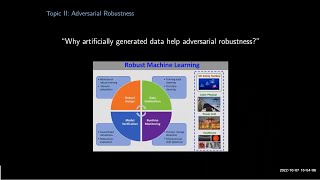
A Statistical Journey through Trustworthy AI
Explore statistical perspectives on privacy, robustness, and fairness in AI, focusing on machine un-learning, adversarial robustness, and fair Bayes-optimal classifiers.
Set Valued Hamilton-Jacobi-Bellman Equations - Applications and Theory
Explore set valued PDEs and their applications in stochastic optimization, risk measures, and game theory. Learn about dynamic programming principles and set valued HJB equations.
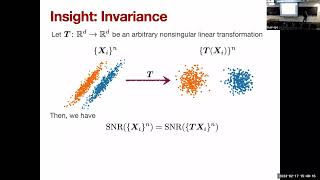
Clustering a Mixture of Gaussians with Unknown Covariance - Lecture
Explore clustering with Gaussian mixtures, focusing on maximum likelihood estimation, Max-Cut solutions, and efficient algorithms. Investigate statistical-computational gaps and challenges in high-dimensional settings.
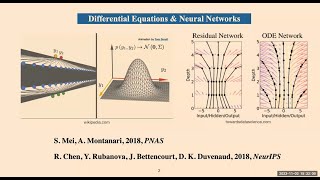
Continuous-in-time Limit for Bandits
Explore the connection between Hamilton-Jacobi-Bellman equations and multi-armed bandit problems, and discover an efficient algorithm for solving MAB challenges.
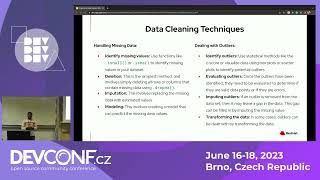
EDA Techniques for Data Analysis
Explore powerful Exploratory Data Analysis techniques for cleaning, visualizing, and understanding datasets to drive insights and inform decision-making in business contexts.
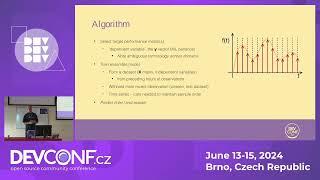
Performance Co-Pilot TreeTop - Predictive Analytics for System Performance Analysis
Explore automated system performance analysis using dynamic ensemble, statistical methods, causal inference, anomaly detection, and explainable AI for rapid data distillation and real-time performance insights.
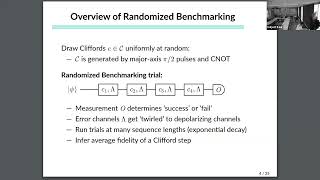
Optimized Experiment Design and Analysis for Fully Randomized Benchmarking
Explore optimized fully randomized benchmarking for quantum gates, offering improved error estimation, flexible analysis, and enhanced experimental protocols in quantum computing.

Mathematical Problems in Machine Learning - Part 2 of 4
Explore mathematical foundations of machine learning with Andrea Montanari, focusing on key problems and theoretical concepts in the field.
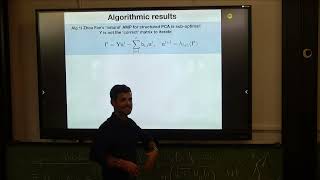
Bayesian Limits in Structured PCA and How to Reach Them - Workshop on Spin Glasses
Explore Bayesian limits in structured PCA and techniques to achieve them, presented by J. Barbier from ICTP Trieste.
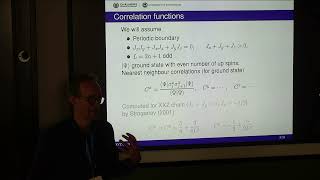
Supersymmetric XYZ Correlations and Painlevé VI
Explore supersymmetric XYZ correlations and their connection to Painlevé VI equations in condensed matter physics and quantum field theory.
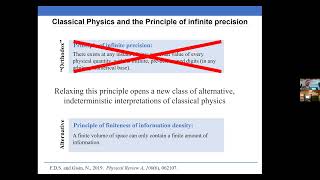
Potential Realism: Classical and Quantum Indeterminism
Explore classical and quantum indeterminism through potential realism, examining propensities in physics for a realistic yet indeterministic perspective.
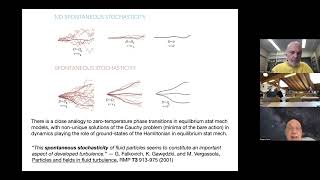
What is Spontaneous Stochasticity and How Far Do We Understand It?
Explore spontaneous stochasticity in physics and mathematics, examining its implications and current understanding through expert insights and research findings.
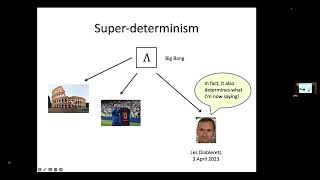
Quantum Randomness: Certified Randomness in Quantum Physics
Explore quantum randomness, correlations, and causality in physics. Learn about Bell inequalities, quantum violations, and the nature of randomness in quantum systems.
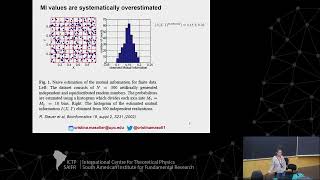
Time Series Analysis - Class 4
Explore advanced time series analysis techniques in socio-economic complexity, focusing on nonlinear systems applications and cutting-edge research insights.
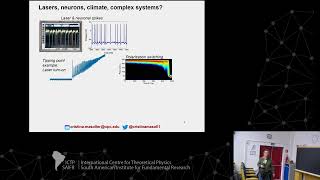
Time Series Analysis Tools with Applications to Neuroscience - Class 1
Explore time series analysis tools and their applications in neuroscience, focusing on nonlinear dynamics and complex networks in brain function.
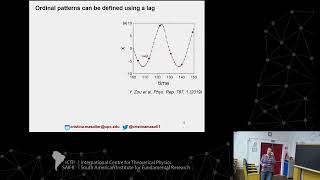
Time Series Analysis Tools with Applications to Neuroscience - Class 2
Explore time series analysis tools and their applications in neuroscience, focusing on advanced techniques for understanding complex neural data.
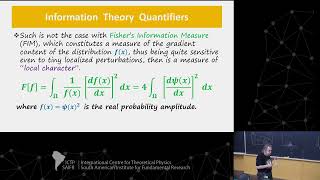
Information Theory Tools for Neuroscience Applications - Class 1 of 3
Explore information theory tools for neuroscience, covering dynamical systems, chaos, complexity measures, and probability distributions in this comprehensive lecture.
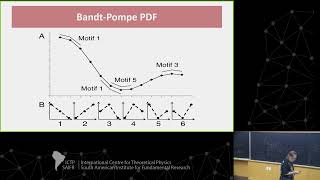
Information Theory Tools for Neuroscience Applications - Class 2
Explore information theory tools for neuroscience, focusing on advanced concepts and practical applications in complex neural systems analysis.
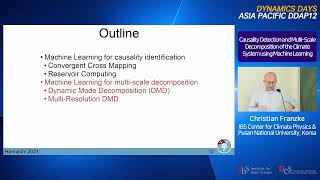
Causality Detection and Multi-Scale Decomposition of the Climate System Using Machine Learning
Explore machine learning approaches for detecting causal relationships and meaningful patterns in climate systems, focusing on Reservoir Computing and Multi-Resolution Dynamic Mode Decomposition techniques.
Introduction to Artificial Intelligence: Monte Carlo Reinforcement Learning Methods - Lecture 16
Explore Monte Carlo reinforcement learning methods, including prediction and policy iteration, with applications to Blackjack and matchbox machine learning.