A Deep Computational Phenomenology of MPE as Metacognitive Free Energy Optimization
Explore the computational modeling of minimal phenomenal experience through Bayesian mechanics and free energy principles, examining belief dynamics and metacognitive processes.
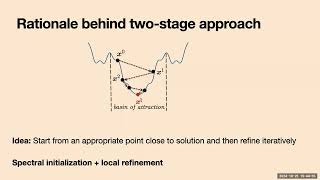
Non-convex Matrix Sensing: Breaking the Quadratic Rank Barrier in Sample Complexity
Explore groundbreaking research on non-convex matrix sensing, focusing on improved algorithms for reconstructing low-rank matrices using fewer samples through innovative probabilistic decoupling methods.
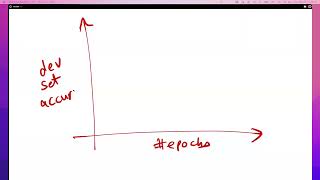
Machine Learning: Least Mean Square Regression - Lecture 12
Dive into advanced linear regression concepts, exploring overfitting, gradient descent, and practical plotting techniques for enhanced machine learning understanding.
Missing Mass and Optimal Discovery in Power Systems Security Analysis
Explore advanced statistical modeling and machine learning concepts through probabilistic expert advice, focusing on security analysis in power systems and Good-Turing missing mass estimation techniques.
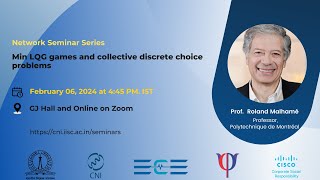
Min LQG Games and Collective Discrete Choice Problems in Decision Making
Explore linear quadratic Gaussian games and their applications in social choice dynamics, election patterns, and micro-robotic exploration through mathematical modeling and Nash equilibria analysis.
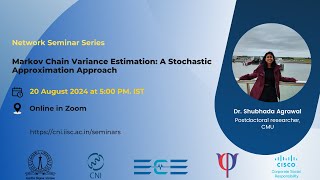
Markov Chain Variance Estimation - A Stochastic Approximation Approach
Delve into advanced statistical methods for Markov chain variance estimation, exploring stochastic approximation techniques and their applications in reinforcement learning and sequential decision-making.
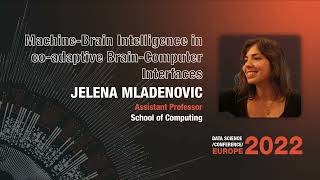
Machine-Brain Intelligence in Brain-Computer Interfaces - Understanding Neural Networks and Human Learning
Explore the symbiotic relationship between neural networks and brain-computer interfaces, discovering how machine and human learning combine to extend neural control to external devices.
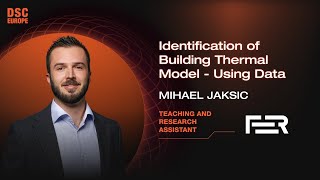
Identification of Building Thermal Model Using Data Science Tools
Discover how to create building thermal models using data science tools instead of complex mathematical approaches, streamlining the process for efficient control algorithm implementation.

Formal Probabilistic Methods for Combinatorial Structures using the Lovász Local Lemma
Explore formal probabilistic methods for combinatorial structures, focusing on the Lovász Local Lemma and its application to hypergraph coloring in Isabelle/HOL.
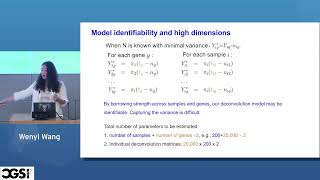
Computational Deconvolution of Cancer Genomes and Transcriptomes - CGSI 2022
Explore computational methods for deconvoluting cancer genomes and transcriptomes. Learn advanced techniques to analyze tumor heterogeneity and uncover molecular phenotypes shaping clinical outcomes in cancer research.
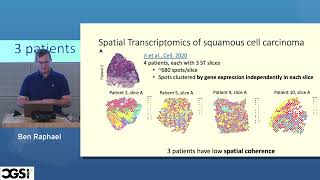
Alignment, Integration, and Modeling of Spatial Transcriptomics Data
Explore alignment, integration, and modeling techniques for spatial transcriptomics data, focusing on innovative approaches to analyze gene expression patterns in tissue samples.
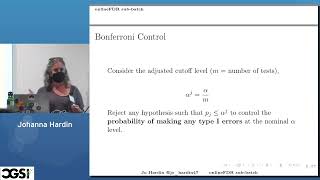
OnlineFDR Control with Applications to RNA-Seq Data
Explore onlineFDR control techniques for RNA-Seq data analysis, focusing on adaptive algorithms and their applications in multiple hypothesis testing scenarios.
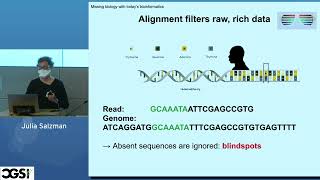
Statistical Reference-Free Genomics Solves Myriad Problems in Bioinformatics - 2023
Explore statistical reference-free genomics to solve bioinformatics challenges. Learn about Splash algorithm, RNA splicing, and novel approaches for analyzing sequencing data in cancer and human disease research.
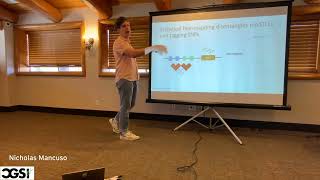
Computationally Scalable Approaches for Characterizing Genetic Architectures in Diverse Ancestries
Explore computationally scalable methods for characterizing genetic architectures across diverse ancestries, focusing on fine-mapping and heritability estimation techniques.
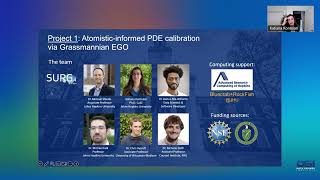
Leveraging Latent Representations for Predictive Physics-Based Modeling
Explore advanced techniques for leveraging latent representations in predictive physics-based modeling, focusing on surrogate models, inverse problems, and transfer learning for complex PDEs.
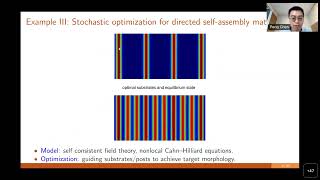
Derivative-Informed Neural Operators for Solving PDE-Governed Optimization Problems
Explore novel machine learning for solving optimization problems with PDEs, featuring derivative-informed neural operators for efficient, scalable solutions in high-dimensional parameter spaces.
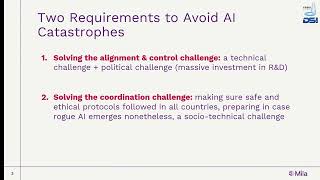
How Could We Design Aligned and Provably Safe AI?
Explore AI safety with Dr. Yoshua Bengio, focusing on run-time risk evaluation and Bayesian approaches to mitigate potential harm from advanced AI systems.
Data Labeling for Search Relevance Evaluation
Explore data labeling techniques for search relevance evaluation, focusing on human-in-the-loop pipelines, ranking metrics, and crowdsourcing best practices.
Introduction to Machine Learning: Regression - Part 1
Explore regression in machine learning: estimate relationships, predict outcomes, and apply algorithms for continuous target variables. Learn evaluation techniques and practical considerations.

Introduction to Machine Learning: Classification Techniques - Part 2
Explore classification techniques in machine learning, including logistic regression and KNN, with practical insights from industry experts.
Moving Beyond Data Pseudoscience - Methods and Philosophy for Effective Data Science
Explore effective data science methods and philosophies to move beyond pseudoscience. Gain insights into robust approaches for meaningful analysis and interpretation of data.