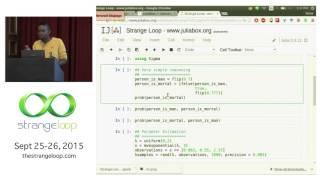
Probabilistic Programs Which Make Common Sense
Explore probabilistic programming as a step towards machines with common sense. Learn about Sigma, a language for functional probabilistic models, and its applications in automated reasoning and inference.

Die dreckige Empirie
Kritische Betrachtung empirischer Studien: Methoden, Probleme und Interpretationen. Grundlagen der Statistik und wissenschaftlichen Denkweise für ein besseres Verständnis von Forschungsergebnissen.
Inside the Fake Like Factories
Investigación sobre fábricas de likes falsos en redes sociales, revelando métodos, hallazgos y consecuencias de la compra de interacciones en Facebook, YouTube e Instagram.
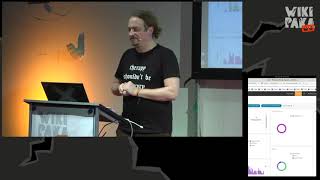
Measuring Code Contributions in Wikimedia's Technical Community
Blitzlicht über technische Beiträge in Wikimedia-Projekten: Messmethoden, Herausforderungen und Einsatz von GrimoireLab zur Datenanalyse der technischen Community.
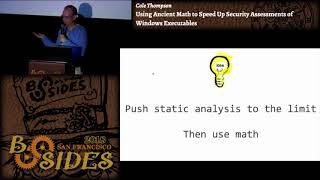
Using Ancient Math to Speed Up Security Assessments of Windows Executables
Discover how to accelerate Windows executable security assessments using Euclidean Distance and Bayes Theorem, enabling rapid triage and efficient risk reduction in regulated environments.
The Metrics Manifesto
Discover predictive analytics for security, including decision science, Bayesian methods, and quantitative risk management. Learn to measure attack surface and present advanced metrics to boards.
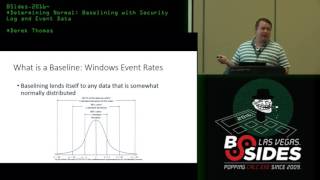
Determining Normal - Baselining with Security Log and Event Data
Learn effective strategies for baselining security logs and event data to identify anomalies, establish normal patterns, and enhance threat detection capabilities in your organization.

From Poverty to Prosperity
Explore global poverty trends, evolution, and strategies for widespread prosperity. Learn about basic needs, healthcare, resilience, and impactful solutions for addressing global challenges.
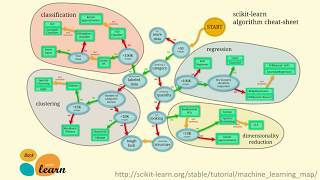
Data Science Tools and Techniques for the Blue Team
Explore data science tools and techniques for cybersecurity, including statistical analysis and machine learning, to enhance threat detection and defense capabilities in large-scale corporate environments.
Under Pressure: Real World Damage With TPMS Spoofing - DefCamp - 2019
Explore TPMS spoofing techniques, real-world implications, and mitigation strategies in this DefCamp 2019 talk on vehicle security vulnerabilities and their potential impact on autonomous driving.
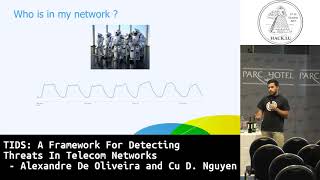
TIDS - A Framework for Detecting Threats in Telecom Networks
Explore a framework for detecting threats in telecom networks, covering monitoring, data collection, and analytics to protect infrastructure and subscribers from various attacks and privacy issues.
All Your Cloud Are Belong To Us – Hunting Compromise in Azure
Explore cloud security vulnerabilities, attack tactics, and proactive measures for Azure and AWS. Learn about hunting compromised systems and securing cloud marketplaces.
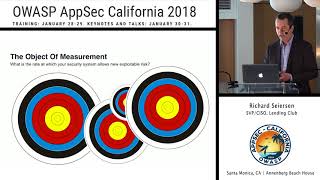
Prove It! - Confronting Security With Data
Explore data-driven methods to measure and improve security capabilities in rapidly scaling businesses, focusing on quantitative strategies and decision analysis techniques.
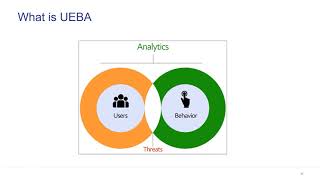
Insider Threat Detection & Automation by Behaviour Analytics
Learn to detect and automate insider threat prevention using behavior analytics, exploring UEBA, anomalies, and data-driven techniques for enhanced cybersecurity.
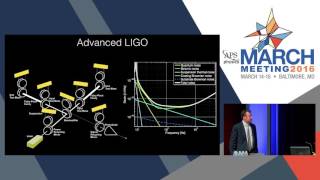
The Observation of Gravitational Waves from a Binary Black Hole Merger
Explore the groundbreaking detection of gravitational waves from binary black hole merger, its implications for general relativity, and the future of gravitational-wave astronomy.
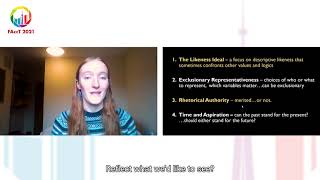
Representativeness in Statistics, Politics, and Machine Learning
Explore the concept of representativeness across statistics, politics, and machine learning, examining its roots, applications, and ethical implications in various fields.
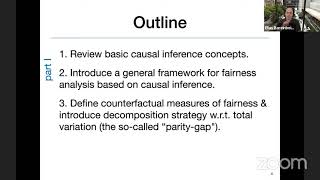
Translation Tutorial - Causal Fairness Analysis
Explore causal fairness analysis in AI, covering structural causal models, causal diagrams, and demographic disparities. Learn why causality matters and how to address fairness challenges in artificial intelligence.
Interventions over Predictions - Reframing the Ethical Debate for Actuarial Risk Assessment
Reframing ethical debates on actuarial risk assessment, focusing on interventions over predictions. Explores historical context, machine learning implications, and causal inference in risk evaluation.
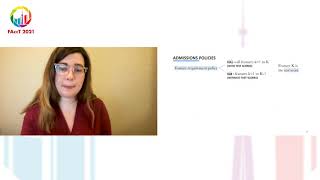
Standardized Tests and Affirmative Action - The Role of Bias and Variance
Explore the impact of bias and variance in standardized tests on affirmative action policies, examining their role in shaping educational opportunities and social equity.
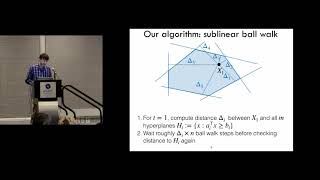
Faster Polytope Rounding, Sampling, and Volume Computation via a Sublinear Ball Walk
Explore advanced algorithms for efficient polytope analysis, including rounding, sampling, and volume computation using innovative Markov chain techniques.
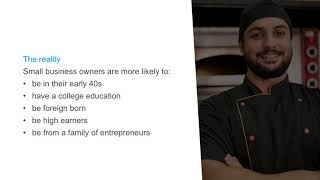
Who Are Entrepreneurs? The Myth and the Reality
Debunking entrepreneurship myths using LegalZoom data, revealing true demographics and challenges of small business owners in America.