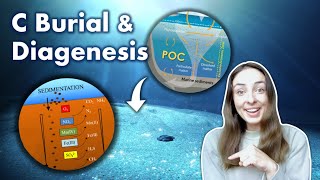
Organic Carbon Burial and Diagenesis - How Much Organic Carbon Is Actually Preserved?
Explore organic carbon burial and diagenesis in marine sediments, from production to preservation. Learn about microbial degradation, sediment reactions, and the surprisingly small fraction of carbon ultimately preserved.
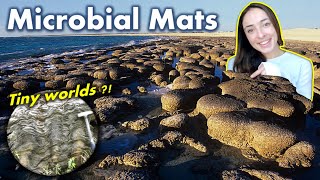
Where and How Microbial Mats Form, Types of Mats, and Biosedimentary Structures - GEO GIRL
Explore microbial mats: formation, types, and biosedimentary structures. Learn about their unique layering, environments, and preservation in geological records.
Bioleaching - Mineral-Dissolving Bacteria Help Us Obtain Valuable Metals but Produce AMD
Explore microbial metal oxidation, bioleaching techniques, and environmental impacts of biomining. Learn about acid mine drainage, heap leaching, and biooxidation for extracting valuable metals like gold.
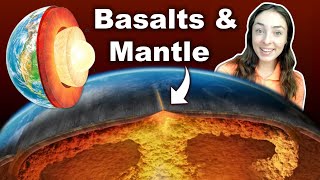
How We Deduce Mantle Composition and Structure From Basalts - Igneous Petrology - GEO GIRL
Explore basalt types, mantle composition, and Earth's structure through igneous petrology. Learn how basalts reveal insights into mantle processes and magma generation environments.
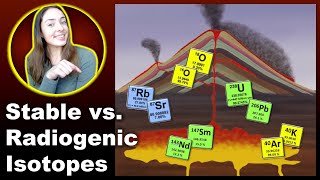
Stable and Radiogenic Isotopes in Igneous Petrology - Geochronology and Isotope Tracers
Comprehensive overview of stable and radiogenic isotopes in igneous petrology, covering fractionation, dating methods, and applications in determining magma sources and temperatures.
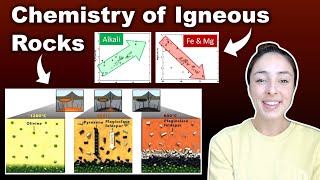
Modal vs Norm Mineralogy, Major vs Trace Elements, and Indices - Igneous Petrology
Comprehensive overview of igneous petrology concepts, including mineralogy types, element behavior, analytical diagrams, and geochemical indices. Explores trace elements and partition coefficients in rock formation.
Magma Viscosity, Volatile Content, Partial Melting, and Mixing - Igneous Petrology
Explore magma properties, volcanic eruptions, and igneous processes. Learn about viscosity, volatiles, partial melting, and magma mixing to understand the factors influencing volcanic activity and rock formation.
Is Europa Geologically Active? - Europa's Surface Features & Geology - Astrobiology
Explore Europa's geology, surface features, and potential for life. Discover evidence of geologic activity and its implications for the icy moon's subsurface ocean and habitability.
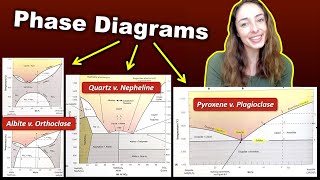
Phase Diagrams - Minerals Melt at Different Temperatures - Igneous Petrology
Explore phase diagrams in igneous petrology to understand mineral melting and crystallization. Learn to predict mineral formation from melts and melt composition from minerals at various temperatures.
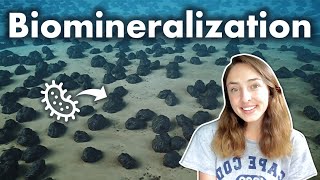
Biomineralization - Fe Hydroxide, Magnetite, Mn Oxides, Clays, Amorphous Silica
Explore microorganism-induced mineral formation, including iron hydroxides, magnetite, manganese oxides, clays, and amorphous silica. Learn about their formation processes, environments, and significance in geomicrobiology.

Igneous Rock Textures and Classification Based on Grain Size and Shape - Igneous Petrology
Explore igneous rock textures, their formation, and classification based on grain size and shape. Learn about crystallization processes, nucleation, and growth rates in this comprehensive guide to igneous petrology.

Igneous Rock Classification and How to Use the QAPF Diagram - Igneous Petrology
Comprehensive introduction to igneous rock classification, covering grain size, silica content, and the QAPF diagram. Learn to identify and categorize igneous rocks using key features and standardized schemes.
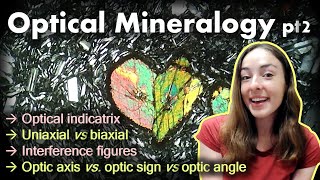
Optical Mineralogy - Optical Indicatrix, Uniaxial vs Biaxial, Interference Figures - GEO GIRL
Explore optical indicatrix, uniaxial vs biaxial minerals, and interference figures. Learn to identify minerals using optical properties and petrographic microscope techniques.

Marine Life in Triassic and Jurassic - Why Life Recovered Slowly After Permian Extinction
Explore marine life evolution from Triassic to Jurassic, including mass extinctions, slow recovery, and the rise of new species. Learn about sea monsters, modernized fish, and changing reef ecosystems.

How to Identify Igneous Rocks in Thin Section and Hand Sample - GEO GIRL
Learn to identify igneous rocks in hand samples and thin sections. Explore characteristics of various rock types, from basalt to tuff, and understand their formation processes and mineral compositions.
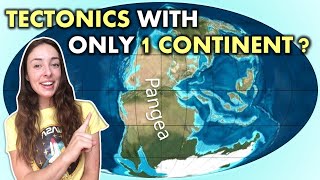
Geology of the Carboniferous and Permian - 360-252 Million Years Ago
Explore the formation of Pangea, major geological events, and climate changes during the Carboniferous and Permian periods, including mountain building, glaciations, and the development of coal swamps.
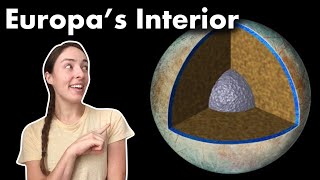
Europa's Core, Mantle, and Water Shell - What We Know and How We Know It
Explore Europa's interior structure, formation, and evidence for a liquid ocean through gravity science, geology, and magnetic field data. Learn about ongoing research and future missions.

Life in the Cambrian and Ordovician - GEO GIRL
Explore the fascinating evolution of early Paleozoic life, from Cambrian burrowers to Ordovician predators, and discover key events shaping Earth's biodiversity 542-444 million years ago.
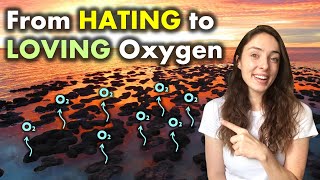
Anaerobe to Aerobe - How Oxygen Changed Life on Earth Forever
Explore Earth's early life, oxygen's impact on metabolism, and the Great Oxidation Event. Learn how oxygen shaped evolution, caused mass extinctions, and ultimately enabled complex life forms.
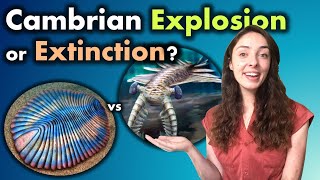
Cambrian Explosion - More Like Precambrian Explosion and Cambrian Skeletonization
Explores the Cambrian Explosion, challenging its name and timing. Discusses Ediacaran fauna, early animal evolution, mass extinctions, and factors contributing to increased diversity and complexity in Pre- and Early Cambrian life.
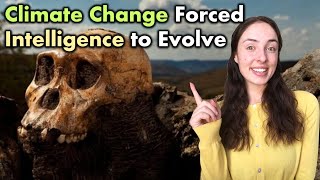
Neogene Life and Human Evolution from Early Apes to Australopithecus to Homo
Explore Neogene life and human evolution, from early apes to Australopithecus and Homo. Learn about key evolutionary events, environmental changes, and the development of human traits like bipedalism and tool use.