Insolation-Paced Sea Level and Sediment Flux During the Early Pleistocene in Southeast Asia
Explore early Pleistocene sea-level cycles in Taiwan, challenging the "41-kyr world" concept with evidence of precession-dominated fluctuations in high-sedimentation rate basins.
Employing Macrofossils in Sedimentology
Explore how macrofossils provide crucial sedimentological data, aiding in interpreting depositional settings, fossil concentration processes, paleocurrent analysis, and diagenetic studies.
Chasing Tsunami Deposits With GPR
Explore ground-penetrating radar techniques for tracing tsunami deposits, featuring case studies from Thailand, Indonesia, Scotland, and Shetland Islands. Learn about coastal erosion, sand sheets, and subsurface investigations.
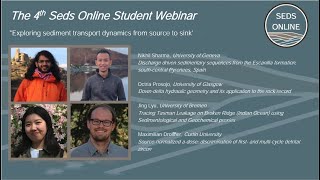
Exploring Sediment Transport Dynamics From Source to Sink
Explore sediment transport dynamics through case studies in Spain, hydraulic geometry, Tasman Leakage, and zircon analysis, offering insights into sedimentary processes and their applications.
Salty Tales of Diagenesis in Antarctica
Explore Antarctic brine's role in sediment cementation and its implications for climate history. Learn about groundwater composition, mineral precipitation, and ice sheet dynamics.
Autogenic Processes in Sedimentary Systems Are Just Part of the Allogenic Spectrum
Explore the debate on autogenic processes in sedimentary systems, examining their relationship to allogenic factors and implications for understanding Earth's geological history.
New Insights into Coastal Processes from the Sedimentological Record
Explore coastal processes through sedimentological records, covering marine transgression, reef island formation, coal deposits, and quantitative analyses of sedimentary systems.
130 Years of Natural & Anthropogenic Modifications of the Venice Lagoon - Evolution of Tidal Meanders
Explores tidal meander evolution in Venice Lagoon over 130 years, examining hydrodynamic changes, morphology, and sediment transport using diverse data and modeling techniques.
Roles of Oceanography and Orbital Forcing in Greenhouse Climates
Explore the interplay of oceanography and orbital forces in shaping greenhouse climates, focusing on sedimentary records, ocean circulation, and climate pacing in warmer periods of Earth's history.
Disentangling the Controls and Orbital Pacing of SE Atlantic Carbonate Deposition Since the Oligocene
Explore 30 million years of Southeast Atlantic carbonate deposition through XRF core scanning, revealing climate, cryosphere, and carbon cycle interactions since the early Oligocene.
Linking Deltaic Distributary Morphodynamics Networks to Stratigraphic Connectivity of Channel Bodies
Explore synthetic stratigraphy creation from surface imagery and its application in predicting subsurface architecture in deltaic environments, focusing on channel network evolution and connectivity.
The 3D Geometry of Meandering Channels - Implications for the Stratigraphic Record
Explore 3D geometry of meandering channels, their migration patterns, and implications for stratigraphic records using Python-based visualization of subaerial and submarine flows.
What Is Left After Tsunami Disasters? – A Sedimentological Perspective
Explore tsunami deposits, their identification challenges, and new research methods. Gain insights into recent tsunamis and their geological impacts through sedimentological studies and innovative approaches like paleogenetics.
The Effect of Stress on the Acoustic Properties of Carbonate Rocks
Explore the impact of stress on carbonate rock acoustics, examining microstructural models and experimental methods to understand key observations and applications in geophysics.
Early Pleistocene Mud Tectonics and Sedimentation Within Mud-Withdrawal Basins, Bawdsey, Suffolk, UK
Explore early Pleistocene mud tectonics and sedimentation in Suffolk, UK. Discover implications for civil engineering and offshore projects, challenging previous assumptions about mud deformation causes.
How, When and Where Do Ocean Currents Control Sedimentation in Deep-Water Environments?
Explore ocean currents' impact on deep-sea sedimentation, focusing on contourites and their formation processes. Gain insights into oceanographic influences on seafloor morphology and sediment distribution.
Submarine-Channel Meandering and Salt-Basin Filling
Explore submarine channel evolution and salt basin filling through 3D seismic data analysis, comparing underwater patterns to river meandering and examining the impact of salt domes on channel migration.
Biotic, Abiotic, Pre-Biotic, Post-Biotic Controls on Carbonate and Phosphate Formation
Explore crystallographic textures in marine minerals using Electron Backscatter Diffraction to uncover their formation processes and biological origins in deep time.
An Archive of Glacial Seawater and Implications for Carbonate Platform Sediments
Explore ancient seawater preserved in Maldives sediment cores, revealing insights into glacial ocean circulation, carbonate systems, and sedimentary geochemistry from the Last Glacial Maximum.
A Microbial Ecosystem in the 3.48 Ga Dresser Formation, Pilbara, Australia
Explore ancient microbial ecosystems through sedimentary structures in the Archean Pilbara Block, revealing complex life forms from Earth's early history and their implications for astrobiology.
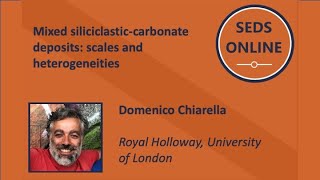
Mixed Siliciclastic-Carbonate Deposits - Scales and Heterogeneities
Explore mixed siliciclastic-carbonate deposits, their formation, characteristics, and importance in geological studies. Learn about scales, heterogeneities, and implications for research and industry.