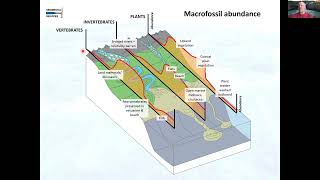
The Sedimentology of Palaeontology - How to Accumulate Highly Fossiliferous Deposits
Explore sedimentological factors influencing fossil accumulation and preservation across various depositional environments, from fluvial to deep marine, with case studies and practical insights for fossil hunting.
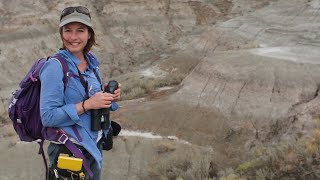
Using Trace Fossils to Reconstruct Palaeoenvironments
Explore ancient environments through trace fossils. Dr. Jenni Scott reveals how dinosaur activity records inform us about populations and evolution in Cretaceous coastal plains and rivers.
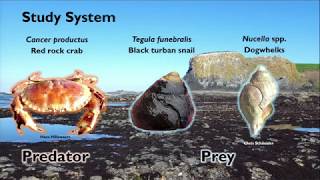
Predator-Prey Interactions Between Crabs and Gastropods
Explore climate change impacts on crab-snail predation dynamics in modern and fossil ecosystems, examining shell repair patterns and ocean acidification effects across time and geography.
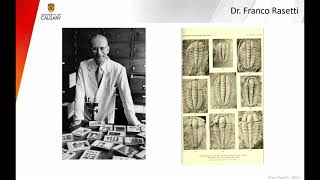
Trilobites from Mount Stephen, BC
Explore the Middle Cambrian Stephen Formation's trilobites, fossils, and scientific discoveries. Learn about historical research and recent findings in this paleontological treasure trove.
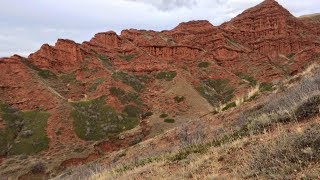
Changing Landscapes in the Tien Shan Mountains of Kyrgyzstan
Explore Central Asia's Tien Shan mountains: their rapid formation, seismic hazards, and impact on ecosystems over 10 million years. Discover ancient mammals and implications for modern cold-adapted organisms.
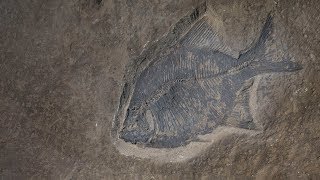
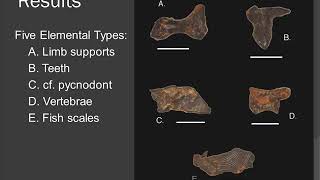
Fossil Fish from the Late Cretaceous of Alberta
Explore fossil fish from Late Cretaceous Alberta, challenges in identifying isolated elements, and new insights into teleost fish history using advanced technology like micro CT scanners.
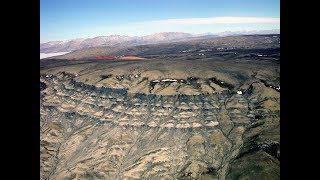
Eocene Vertebrate Fauna and Flora in Canada's High Arctic
Explore Eocene Arctic ecosystems: lush rainforests, diverse fauna, and climate insights. Dr. Eberle discusses fossil evidence, ancient animals' adaptability, and implications for future Arctic environments.
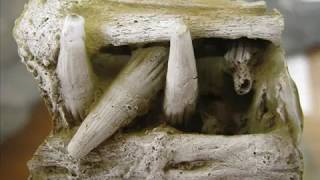
The Fossils of New Zealand: Remnants of a Lost Continent
Explore New Zealand's unique fossil record, from ancient marine reptiles to giant penguins, revealing the evolution of a lost continent over 83 million years.
Bioclastic Conglomerates: Composition and Stratigraphic Significance
Explore bioclastic conglomerates at the Albian-Cenomanian boundary, examining their composition and stratigraphic importance in the Western Interior Sea through various geological sections and thin section analyses.
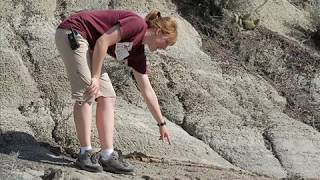
Reconstructing the Paleoenvironments of the Horseshoe Canyon Formation
Explore paleoenvironments of Alberta's Horseshoe Canyon Formation through soil analysis, revealing Late Cretaceous ecosystems and faunal changes in a subtropical forest setting.
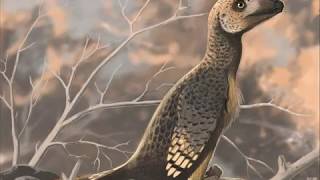
Air Giants- Launch, Flight, and Ecology of Cretaceous Pterosaurs
Explore the fascinating world of Cretaceous pterosaurs, their unique adaptations for flight, and their ecological roles in prehistoric ecosystems.
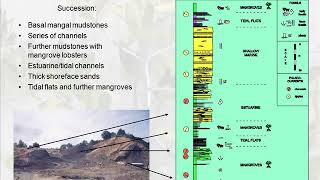
Clear As Mud - Exploring Ancient Mangroves and Their Inhabitants
Explore ancient mangrove ecosystems and their diverse inhabitants through geological evidence. Discover the fascinating world of prehistoric coastal environments and the creatures that called them home.
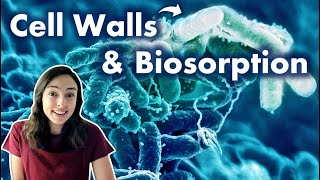
Prokaryote vs. Eukaryote Cell Walls, Cell Surface Layers, and Biosorption - Geobiology
Explore cell walls and biosorption in prokaryotes and eukaryotes. Learn about bacterial excretions, archaeal adaptations, and how organisms interact with their environment through passive and active processes.
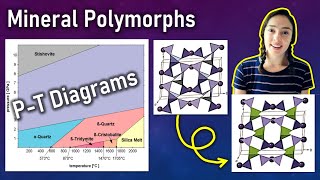
Mineral Polymorphism and PT Diagrams - Mineralogy
Explore mineral polymorphism, its types, and common examples. Learn about pressure-temperature diagrams and the stability fields of various mineral polymorphs in this comprehensive mineralogy lesson.

Optical Mineralogy Part 1 - Plane and Cross Polarized Light, Birefringence, Pleochroism
Comprehensive introduction to optical mineralogy, covering light behavior in minerals, refractive index, polarized light, birefringence, interference colors, extinction, and pleochroism. Includes practical mineral identification techniques.

Symmetry Operations, Types of Twinning, and Miller Indices of Crystal Planes - Mineralogy
Explore symmetry operations, twinning types, and Miller indices in mineralogy. Learn about crystal structures, cleavage planes, and their significance in X-ray diffraction and optical mineralogy.
The Anthropocene Epoch - GEO GIRL
Explores the Anthropocene epoch, detailing climate change impacts on ecosystems, oceans, and human life. Discusses greenhouse gases, migration, water scarcity, and positive feedback loops, concluding with actionable steps for mitigation.
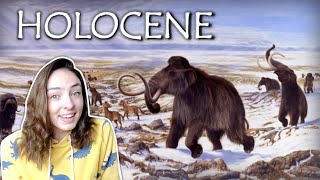
Pleistocene and Holocene Epochs - GEO GIRL
Explore major events of the Pleistocene and Holocene epochs, including glacial cycles, climate shifts, megafauna extinctions, and human evolution. Understand the impact of these changes on Earth's history and current climate.
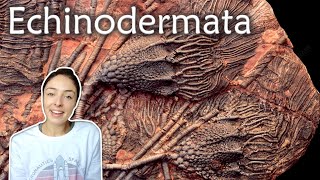
Echinoderms - Invertebrate Paleontology - Crinoids, Starfish, Sand Dollars, & More
Comprehensive exploration of echinoderms: diversity, anatomy, evolution, and classification. Focuses on crinoids and echinoids, their morphology, ecology, and evolutionary history. Includes identification practice and comparisons to vertebrates.
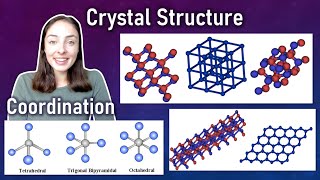
Crystal Structure, Coordination Number & Polyhedra, Pauling's Rules, Bonding- Mineralogy
Explore crystal structures, coordination numbers, Pauling's rules, and bonding types in minerals. Learn about atomic arrangements, polyhedra, and ionic substitution in this comprehensive mineralogy overview.
Early Paleozoic Oxygen History - Evidence and Reasons for Paleozoic Oxygen Fluctuations
Explore Paleozoic oxygen fluctuations, their evidence, and impacts on biodiversity. Learn about the Devonian oxidation event, land plant evolution's role, and how changing oxygen levels shaped Earth's history.