Simple ESP32-CAM Object Detection
Train an ESP32-CAM for object detection using Edge Impulse, without coding. Learn to capture images, create a model, and deploy it on microcontrollers for efficient and cost-effective object recognition.
Security and Real-Time Linux in a Shifting Automotive World
Explore security challenges and real-time Linux solutions for software-defined vehicles in the evolving automotive industry. Learn IT approaches bridging traditional and modern practices.
From Data Crimes to Self-Supervised Reconstruction: Advancing AI-based MRI
Explore AI-based MRI advancements, from data crime prevention to self-supervised reconstruction techniques, with insights from UC Berkeley's EECS expert.
Ultra-low-field MRI for Healthcare - A Future Powered by Computing?
Explore the potential of ultra-low-field MRI in healthcare, focusing on computational advancements and future applications in medical imaging.
Pulling Pictures Out of an Undocumented File Format - Let Me at My Data!
Uncover the process of extracting data from an undocumented file format, following a developer's journey to transform real-world exploration data into wall art through reverse engineering and problem-solving.
Building a Better World with AI - Automating Quality Control in Architectural Drawings
Explore AI-powered quality control for architectural drawings. Learn how advanced computer vision and NLP technologies automate error detection, saving time and money in construction projects.
From Pretty to Useful: A Story in Using AI to Denoise Medical Images
Explore AI's journey in medical imaging, from aesthetic enhancements to practical applications in denoising, with insights on evaluating model usefulness and future directions.
Noise-Bias and Contrast-Noise Analysis in Medical Imaging
Explore key metrics and concepts in medical imaging analysis, including noise, bias, contrast, and their relationships. Gain insights into image quality assessment and reconstruction methods.
Earth Through the Eye of a Satellite - ISTA Conference Talk
Explore Earth's landscapes through satellite imagery, gaining insights into remote sensing and its applications in environmental monitoring and resource management.
Mapping the Distribution of Seagrass Meadows from Space with Deep Convolutional Neural Networks
Utilize deep convolutional neural networks to map seagrass meadow distribution from satellite imagery, advancing marine ecosystem monitoring and conservation efforts.
Accessibility and Interaction in a World Beyond Screens
Explore interaction patterns and accessibility in non-traditional environments like mixed reality and wearables, focusing on next-generation interfaces and user interaction methods.
Numerical Approximation of the Stochastic Total Variation Flow
Explore numerical schemes for simulating stochastic total variation flow, including convergence analysis and applications in image denoising.
Robot Learning: Inspiration from Child Development
Explore how insights from child development can enhance robot learning, bridging AI, psychology, and neuroscience perspectives.
Next-Generation Robot Perception: Hierarchical Representations, Certifiable Algorithms, and Self-Supervised Learning
Exploring next-gen robot perception: hierarchical representations, certifiable algorithms, and self-supervised learning for enhanced spatial understanding and robust estimation in robotics.
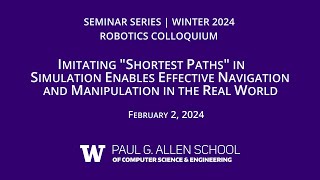
Imitating Shortest Paths in Simulation for Real-World Robot Navigation and Manipulation
Exploring how imitating shortest path planners in simulation can produce effective real-world robots for navigation and manipulation, without human demonstrations or reinforcement learning.
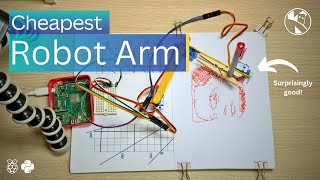
Building and Using a BrachioGraph: The Cheapest Robot Drawing Arm
Learn to build and operate a BrachioGraph, the cheapest robot drawing arm. Covers assembly, wiring, software setup, and creating art using Raspberry Pi and Python. Ideal for DIY enthusiasts and aspiring roboticists.
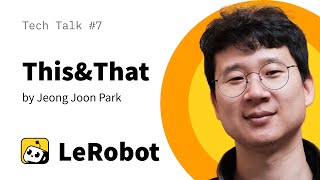
This and That: Language-Gesture Conditioning of Visual Generative Models for Robotics - Tech Talk #7
Explore visual generative models, language-gesture conditioning, and video-to-robot action in this tech talk on advanced machine learning for robotics, featuring research insights and future directions.

HumanPlus and MobileAloha - Humanoid Shadowing and Bimanual Mobile Manipulation - Tech Talk 6
Exploración de HumanPlus y MobileAloha: avances en robótica humanoide e imitación de movimientos humanos para manipulación bimano móvil y teleoperación de bajo costo.
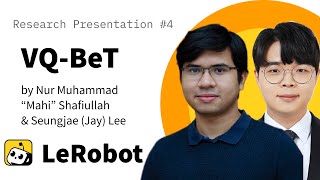
VQ-BeT: Behavior Generation with Latent Actions - Research Presentation 4
Explore behavior generation with latent actions in robotics, featuring insights on VQ-BeT methodology and its applications in AI-driven robotic control systems.
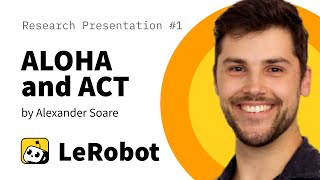
ALOHA and ACT: Advancing Robot Learning - Research Presentation 1
Explore ALOHA and ACT methodologies for robotic learning, presented by Alexander Soare. Gain insights into cutting-edge research and advancements in robot manipulation techniques.
Looking Back and Ahead in a Spiral
Explore the cyclical nature of scientific progress with Stéphane Mallat's insightful analysis of past discoveries and future directions in mathematics and physics.