CHARLAS / María José Meneses / Restauración de imágenes multiespectrales con GAN
Método de restauración basado en GAN para imágenes multiespectrales con corrupciones aleatorias, generando resultados visualmente aceptables y preservando datos valiosos.
Patterns of ML Models in Production
Explore ML model deployment patterns for production, covering online serving, offline processing, and scalable frameworks like Ray Serve, with insights from 100+ user interviews.
Reconocimiento de Figuras con Visión Artificial
Aprende a identificar figuras y elementos usando OpenCV para visión artificial. Explora algoritmos de procesamiento de imágenes y sus aplicaciones en industria, salud y control de calidad.
Charlas - Alison Orellana Rios: OCR, Reconocimiento y obtención de información a través de imágenes
Explora el reconocimiento de patrones y texto en imágenes usando OpenCV y Tesseract con Python. Aprende técnicas de visión artificial aplicables en industrias como automoción, robótica y procesamiento de datos.
Eroding Coastlines - A Geospatial & Computer Vision Analysis
Explore satellite imagery and Python tools for geospatial analysis to identify and analyze coastal erosion, addressing a critical environmental and humanitarian challenge.

Let's Play with Python and OpenCV
Explore image processing and computer vision using Python and OpenCV, learning practical techniques for manipulating visual data and creating interactive applications.
Don't Fear Our New Robot Overlords
Explore GoldenEye: a Python-based setup combining robotics and image recognition for mobile front-end testing, offering an innovative approach to device-agnostic quality assurance.
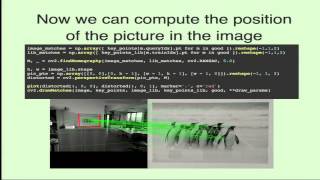
Image Recognition and Camera Positioning with OpenCV - A Tourist Guide Application
Explore image recognition and camera positioning using OpenCV Python bindings for a tourist guide application, applied to recognizing paintings in museums.
Build and Control a Python-Powered Robot
Learn to build a Python-powered robot using Raspberry Pi, OpenCV, and gpiozero. Explore hardware options, computer vision algorithms, and GPIO control for creating an interactive, people-recognizing robot.
Ingesting 35 Million Hotel Images with Python in the Cloud
Learn to build a scalable image processing pipeline using Python and AWS to handle millions of hotel images, covering data ingestion, quality control, and optimization.
An Introduction to Deep Learning
Comprehensive introduction to deep neural networks, covering theory, training methods, and applications in image processing, speech recognition, and text analysis.
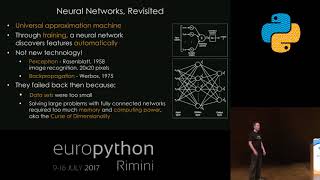
AI on a Pi
Explore Deep Learning with Python and MXNet, including practical demonstrations on a Raspberry Pi for computer vision and natural language processing tasks.
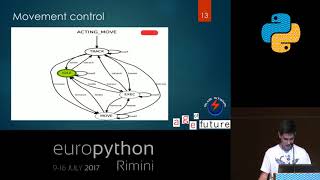
A Robotic Platform for Natural and Effective Human-Robot Interaction
Explore a Python-based humanoid robotic platform for natural human-robot interaction using speech, gestures, and facial expressions. Learn about its architecture, applications, and see a live demo.
Getting Your Data Joie De Vivre Back
Explore data-driven creativity through AI and visualization, from poetry composition to image reconstruction, blending technical skills with artistic expression for fun and learning.
Building a Powerful Pet Detector in Notebooks
Learn to build and deploy an AI-powered pet breed detector using Azure Notebooks, TensorFlow, and transfer learning techniques. Optimize the model for improved accuracy and create a web service.
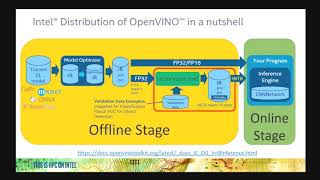
Accelerate Your Deep Learning Inferencing with the Intel DL Boost Technology
Explore Intel® DL Boost technology for efficient deep learning inference acceleration using low-precision INT8 and VNNI instructions on 2nd gen Intel Xeon Scalable processors.
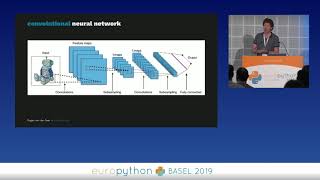
How to Train an Image Classifier Using PyTorch
Learn to build an image classifier using PyTorch in this hands-on tutorial. Covers data preparation, model selection, training techniques, and evaluation, with practical tips and code examples for immediate implementation.
AI in Contemporary Art
Explore AI's impact on contemporary art, from creative applications like DeepDream to critical examinations of facial recognition and deep fakes. Discover how artists and technologists are pushing boundaries and addressing societal implications.

Astro Pi - Python on the International Space Station
Explore Python programming on the International Space Station with Astro Pi, a collaboration between Raspberry Pi Foundation and ESA, offering exciting opportunities for students to conduct space experiments.
Docker and Python - Making Them Play Nicely and Securely for Data Science and ML
Learn Docker best practices for data-intensive Python applications, covering image optimization, security, automation, and efficient deployment workflows in Data Science and Machine Learning contexts.
Building Smarter Solutions with No Expertise in Machine Learning
Explore practical ML solutions using existing models and AutoML techniques, with interactive demonstrations and insights for quick implementation without deep expertise.