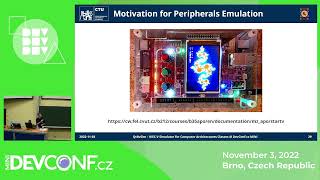
QtRVSim - RISC-V Simulator for Computer Architecture Classes
Explore QtRVSim, an open-source RISC-V simulator for teaching computer architecture. Learn its capabilities, implementation design, and potential educational applications in this insightful presentation.
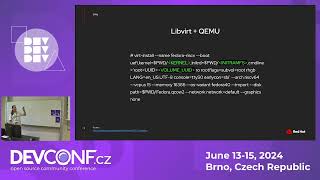
Road to Testing Applications on RISC-V with QEMU and Fedora
Explore RISC-V application testing using QEMU and Fedora, overcoming challenges in VM and container environments without physical hardware.
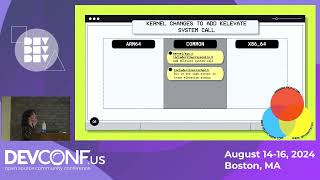
Porting and Generalizing Dynamic Privilege in Linux
Explore Dynamic Privilege in Linux: acquire and relinquish hardware privilege on-the-fly. Learn about porting core primitives to ARM64 and implications for system optimization.
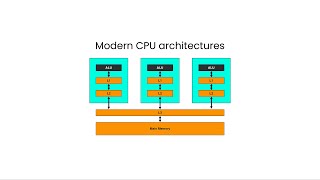
Designing Fast and Efficient List-like Data Structures
Explore optimized list-like data structures for modern CPUs, reducing cache misses and improving performance over STL equivalents in multi-core architectures.
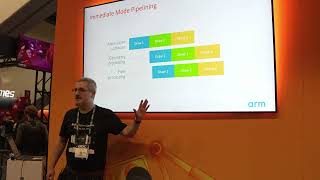
Powering Gaming Excellence - Introduction to Arm GPUs for Mobile Game Developers
Explore Arm GPUs for mobile game development, enhancing performance and efficiency. Learn key features and optimization techniques to create cutting-edge mobile games.
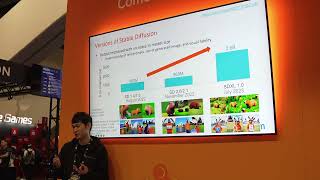
Stable Diffusion on Mobile - Model Optimization for Speed and Efficiency
Optimize Stable Diffusion for mobile: Learn techniques to enhance speed and efficiency, overcoming complexity challenges for improved performance on mobile devices.

Multi-Arch Cloud Infrastructure - Why and How to Get Started
Explore multi-architecture cloud infrastructure benefits, challenges, and implementation strategies. Learn about workload optimization, price-performance comparisons, and resources for migrating to Arm-based systems.
Unleashing the Potential of the Arm Architecture - Write Once, Deploy Anywhere
Explore Arm's role in overcoming software challenges, discover essential tools, and learn to perfect Arm-based applications for seamless deployment across platforms.
Automatic Promotion of Helper Functions to TCG Using LLVM
Explore automatic translation of C helper functions to optimized Tiny Code Generators for QEMU using LLVM. Learn about performance improvements and see an interactive demo of C to TCG mappings.

KVM/arm64: The Blob Strikes Back - Episode V
Explore ARM Confidential Computing Architecture's impact on KVM, focusing on challenges posed by the Real Management Monitor as a firmware blob and potential improvements.
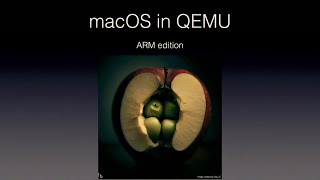
macOS in QEMU - ARM Edition
Explore running macOS on ARM using QEMU, delving into Virtualization.Framework, vmapple2, and GPU drivers for unrestricted virtual macOS machines.
LRSCwait: Enabling Scalable and Efficient Synchronization in Manycore Systems
Explore scalable synchronization in manycore systems with LRSCwait. Learn about polling-free and retry-free operations for improved throughput and energy efficiency in shared-memory architectures.
Streaming Task Graph Scheduling for Dataflow Architectures
Explore efficient scheduling techniques for dataflow architectures using canonical task graphs, steady-state analysis, and spatial block partitioning to optimize performance and device utilization.
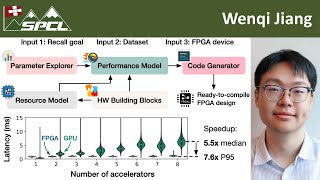
Co-design Hardware and Algorithm for Vector Search
Explore hardware-algorithm co-design for efficient vector search on FPGAs, enhancing performance in large-scale information retrieval and machine learning systems.

Cloud AI 100 High Performance Cloud-Edge Inferencing
Explore Qualcomm's Cloud AI 100 accelerator for high-performance cloud-edge inferencing, featuring leadership-class performance, power efficiency, and comprehensive software tools for production deployment.
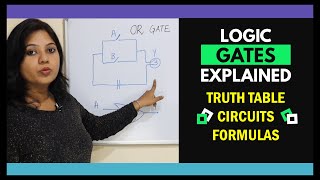
Logic Gates A to Z - Truth Tables, Circuits, Formulas, and Applications
Explore logic gates from A to Z, covering truth tables, circuits, formulas, and real-world applications. Master essential concepts through step-by-step explanations and examples.
Julia Community Reshapes Computation in Geosciences
Explore Julia's impact on geosciences: ecosystem tools, hardware acceleration, and collaborative initiatives revolutionizing Earth observation and software development in the field.
Nomad: Non-Exclusive Memory Tiering via Transactional Page Migration
Innovative memory management strategy for tiered systems, improving performance under pressure through non-exclusive page retention and transactional migration.
Automatically Reasoning About How Systems Code Uses the CPU Cache
Technique for automatic analysis of CPU cache usage in systems code. Enables developers to identify performance issues and security vulnerabilities without extensive benchmarking.
SquirrelFS - Using the Rust Compiler to Check File-System Crash Consistency
SquirrelFS: A novel approach to building crash-safe file systems using Rust's typestate pattern for compile-time enforcement, offering performance comparable to state-of-the-art alternatives.
UniMem - Redesigning Disaggregated Memory within a Unified Local-Remote Memory Hierarchy
Explores UniMem, a novel disaggregated memory system that optimizes remote memory access, local cache utilization, and page migration for improved performance in large-scale computing environments.