
Stop Writing Dead Programs
Explore the future of programming with a critical look at current practices and innovative ideas for live programming environments that could revolutionize problem-solving in technology.
Page Cache Attacks - Microarchitectural Attacks on Flawless Hardware
Explore microarchitectural attacks on flawless hardware, focusing on page cache vulnerabilities. Learn about state-of-the-art techniques, countermeasures, and implications for system security.
Uncommon Sense - Detecting Exploits with Novel Hardware Performance Counters and ML Magic
Explore novel hardware performance counters and machine learning techniques to detect advanced exploits like speculative execution, Rowhammer, and ROP, enhancing cybersecurity defenses against evolving threats.
A Little Less Speculation, a Little More Action - A Deep Dive into Fuchsia's Mitigations for Specific CPU Side-Channel Attacks
Explore Fuchsia's approach to mitigating CPU side-channel attacks, including enumeration, implementation, and testing of protective measures across x86 and ARM processors.
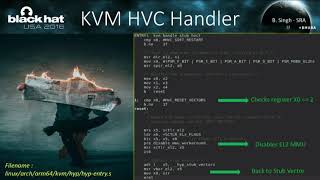
Back to the Future - A Radical Insecure Design of KVM on ARM
Explore ARM architecture vulnerabilities in KVM, focusing on privilege escalation through exception-generating instructions and hypervisor calls. Learn about potential security risks in virtualization.
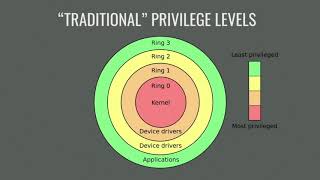
Why so Spurious? Achieving Local Privilege Escalation on Operating Systems
Explore a critical x86 architecture vulnerability exploitable for local privilege escalation across Windows, macOS, and Linux. Learn about this widespread security issue and its implications.
Jack-in-the-Cache - A New Code Injection Technique through Modifying X86-to-ARM Translation Cache
Explores a novel code injection technique for Windows 10 on ARM, exploiting vulnerabilities in x86-to-ARM translation cache to compromise system security on ARM-based laptops.
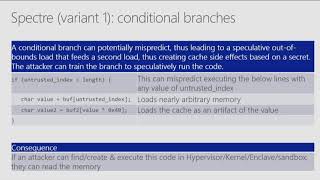
Wrangling with the Ghost - An Inside Story of Mitigating Speculative Execution Side Channel Vulnerabilities
Explore Microsoft's approach to mitigating speculative execution vulnerabilities, including research, collaboration, and industry-wide efforts. Learn about Spectre, Meltdown, and strategies for robust security measures.
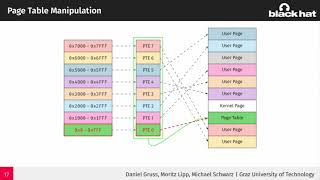
Another Flip in the Row
Explore the Rowhammer bug in DRAM modules, its security implications, exploitation techniques, and potential mitigations in this comprehensive overview of hardware vulnerabilities.
Sleight of ARM - Demystifying Intel Houdini
Explore Intel's Houdini binary translator for running ARM on x86, its architecture, security implications, and comparison with Apple's Rosetta 2, focusing on Android emulation and Chromebooks.
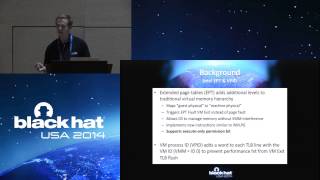
MoRE Shadow Walker - The Progression of TLB-Splitting on x86
Explore TLB-splitting evolution on x86 architecture, from defensive memory protections to offensive rootkit techniques. Learn new methods for modern processors and their implications for cybersecurity.
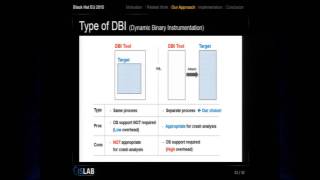
Triaging Crashed with Backward Taint Analysis for ARM Architecture
Explore tools for analyzing crashes on Linux and ARM, using dynamic binary instrumentation and backward taint analysis to determine exploitability. Learn about ARM-Tracer and ARM-Analyzer for efficient crash analysis.
The Memory Sinkhole - Unleashing An X86 Design Flaw Allowing Universal Privilege Escalation
Unveiling a critical x86 design flaw allowing privilege escalation, exploring forgotten backdoors, and demonstrating how to exploit vulnerabilities in processor architecture.
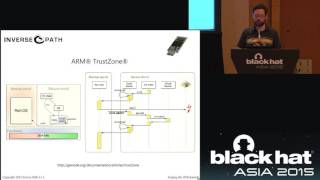
Forging the USB Armory
Explore the development of an open-source USB-sized computer for security applications, featuring advanced SoC technology, secure boot, and ARM TrustZone implementation.
GPU Programming with Modern C++
Explore GPU programming with modern C++, covering parallelism fundamentals, heterogeneous computing, and SYCL for GPU dispatch. Learn to optimize performance and leverage multi-core architectures effectively.
Hardware - Software Co-design - The Coming Golden Age
Explore the future of computing as Bryan Cantrill discusses hardware/software co-design, Moore's Law, and the potential of open FPGAs and HDLs in this thought-provoking keynote.
Cloud Native Rust Workshop - Let's Go Parallel with Rust
Build a Rust server from scratch, exploring parallelization with threads and async programming. Gain hands-on experience with Rust's concurrency features in a cloud-native context.
Maximizing Workload's Performance With Smarter Runtimes
Explore innovative container runtime solutions for maximizing workload performance and resource utilization, focusing on CPU, memory, caches, and I/O optimizations in Kubernetes environments.

Leveraging Prometheus' TSDB for Conprof - Continuous Profiling
Explore conprof, an open-source tool for continuous profiling. Learn how it adapts Prometheus' time-series database for efficient storage and analysis of CPU and memory profiles over time.
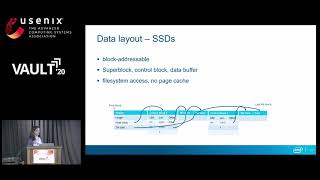
Introduction to Client Side Caching in Ceph
Explore Ceph's client-side caching evolution, focusing on RBD storage policies and upcoming write-back cache implementation for SSDs and persistent memory to enhance distributed storage performance.
Wie Hackt Man Einen Analogrechner
Einblick in unkonventionelles Computing und Analogrechner: Zukunftstechnologie, Anwendungen in KI und Quantencomputing, Vorstellung des Open-Source-Analogrechners "The Analog Thing" und Hacking-Möglichkeiten.