Interpretability Agents: Automating and Scaling Model Interpretation
Explore automated interpretability agents for scaling model interpretation, enabling efficient analysis of AI systems through hypothesis-driven experimentation and modular design.
Transformer Expressivity and Formal Logic
Explore the relationship between transformers and formal logic, uncovering their abilities, limitations, and implications for computational models.
Using Recurrence to Achieve Weak to Strong Generalization
Explore recurrent architectures for weak-to-strong generalization in reasoning models, enhancing problem-solving capabilities beyond training data.
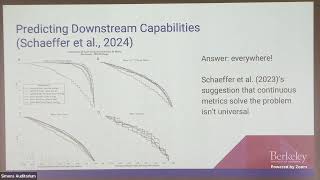
Transformers as a Computational Model - What Was Revolutionized by the "Transformer Revolution?"
Explore the paradigm shift in machine learning brought by transformers, examining new research questions and recent findings in AI development.
Exact Solutions to the Geometric Dynamics of Signal Propagation Through Transformers
Explore exact solutions to geometric dynamics of signal propagation in transformers, predicting their behavior as computational models.
Computational Benefits and Limitations of Transformers and State-Space Models
Explore mechanisms enabling retrieval, copying, and length generalization in language models. Compare Transformers' excellence with LSTM and state-space models' limitations in sequence modeling tasks.

Learning to Reason with Large Language Models
Explore OpenAI's o1 model: an LLM trained via reinforcement learning for improved reasoning in math, programming, and science tasks.
Introducing Swarm: OpenAI's Groundbreaking Agent Framework with Code Examples
Explore OpenAI's Swarm framework through code examples, learning concepts and applications for multi-agent systems. Gain insights into routines, agent handoffs, context injection, and function calling.
AI Agents and Tools in Action - Demos and Tutorials
Explore cutting-edge AI demos and tutorials on agent collaboration, RAG systems, game development, and voice transcription. Master advanced techniques in Python, OpenAI API, and Claude AI.

New AI Features in Adobe Camera RAW 17.0
Explore new AI features in Adobe Camera RAW 17.0: Adaptive Presets, Generative Expand, and non-destructive enhancements for improved image editing.
The Parallelism Tradeoff: Understanding Transformer Expressivity Through Circuit Complexity
Explore transformer neural nets' computational power and limitations through circuit complexity analysis, revealing insights into parallelism tradeoffs in large-scale model architectures.
Transformers, Parallel Computation, and Logarithmic Depth
Explore the computational power of transformers, their connection to parallel processing, and efficiency in solving complex tasks with logarithmic depth.
Transformers as a Computational Model
Explore Transformers as a computational model with Misha Belkin, delving into their architecture, capabilities, and implications for AI research and applications.
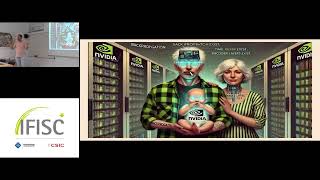
The Functional Role of Oscillatory Dynamics in Neocortical Circuits: A Computational Perspective
Explore computational perspectives on oscillatory dynamics in neocortical circuits, examining their functional roles and implications for neural processing.
AI Advancements: Nobel Prize, DGX B200, and Unstructured Data Funding - Episode 24
Explore AI's impact on Nobel Prizes, cutting-edge AI platforms, and the growing importance of unstructured data in machine learning with industry experts.
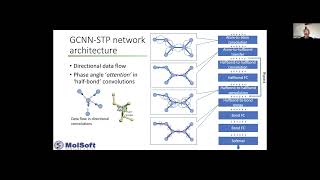
New Technologies in MolSoft ICM: Neural Networks and Beyond
Explore cutting-edge neural networks and advanced technologies in molecular modeling with MolSoft ICM, enhancing your computational chemistry capabilities.

How Generative AI Created and Shaped a Modern Enterprise
Explore how Generative AI revolutionized company creation, from coding to cybersecurity, streamlining operations and driving innovation in enterprise development.
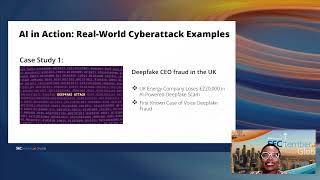
The Intersection of AI and Cybersecurity: Threats and Opportunities
Explore AI's dual role in cybersecurity: enhancing threat intelligence, amplifying defensive and offensive capabilities, and reshaping the cyber risk landscape. Learn strategies for leveraging AI in risk mitigation and resilient operations.
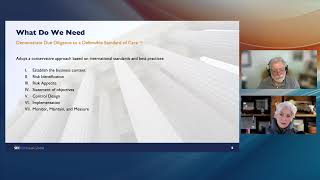
Embracing Ethical AI: A Proactive Approach to Cyber Risk Management and Regulatory Compliance
Develop proactive strategies for ethical AI deployment, addressing cyber risks and regulatory compliance while gaining a competitive edge in the era of Generative AI.
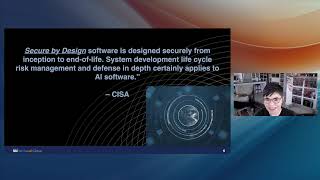
Building AI Security In - MLSecOps in Practice
Learn to secure AI and ML systems by integrating security into the Machine Learning lifecycle, leveraging DevSecOps principles to create a robust MLSecOps framework.
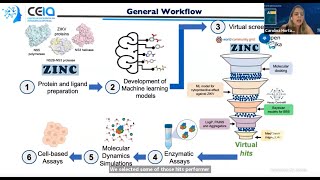
Cheminformatics-Driven Discovery of Hits for Neglected and Emerging Diseases - 2022
Explore AI-driven drug discovery for neglected diseases with Dr. Carolina Horta, focusing on computational methods and QSAR models for identifying new drug candidates.