Deep Learning Models for Genomes and Beyond
Explore deep learning models for genomic analysis and their applications beyond, presented by Olga Troyanskaya in this Broad Institute colloquium on AI in biomedicine.
Multimodal Protein Language Models for Deciphering Protein Function
Explore multimodal protein language models integrating sequences, structures, and textual descriptions to bridge structural and functional understanding of proteins for biomedical research.
Alpha Missense: Proteome-Wide Missense Variant Effect Prediction
Explore Alpha Missense, an AI model predicting missense variant pathogenicity. Learn how it combines structural context and evolutionary conservation to achieve state-of-the-art results in genetic benchmarks.

Image-Guided Robotics: Closing the Loop in Surgical Robotics
Explore image-guided robotics and interventional imaging in surgical robotics with Ali Uneri, Assistant Research Professor at Johns Hopkins University, in this informative discussion on innovation.
Assisted and Augmented: AI and the Cardiovascular Clinician
Explore AI's role in cardiovascular medicine, from EHRs to wearables. Learn how AI enhances diagnostics, therapeutics, and patient outcomes through real-world evidence and innovative care solutions.

Prompt Engineering Tips for Midjourney and Better AI Art
Master 15 essential prompt engineering tips to enhance your Midjourney AI art creation skills, from prioritizing keywords to exploring styles and optimizing formulas for better results.
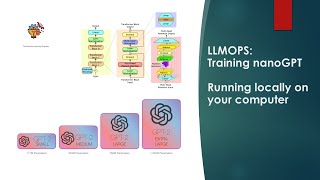
LLMOPS: Training a Small LLM (GPT-2) - Machine Learning and Data Science
Explore training a small LLM (GPT2) locally, understanding challenges and limitations of LLM development for individuals and small teams.
The Mathematics of Scaling Laws and Model Collapse in AI
Explore the mathematics behind AI scaling laws and model collapse, focusing on the shift from linear to flattened performance relationships in large language models.
The Price of Implicit Bias in Robust Machine Learning
Explore the impact of implicit bias on robust machine learning, examining challenges in neural network performance and generalization gaps in worst-case scenarios.
A Framework for Designing Non-Diagonal Adaptive Training Methods
Explore a framework for designing non-diagonal adaptive training methods in deep learning optimization, leveraging Fisher-Rao geometry and quasi-Newton approaches for large-scale neural networks.
Neural Network Scaling Limits
Explore neural network scaling limits and their impact on learning models, focusing on depth, width, and training data parameters in deep learning theory.
How to Use OCR: Getting Started with Optical Character Recognition
Explore OCR models, benchmark performance, and follow a step-by-step guide to implement Optical Character Recognition in your projects.
Re-thinking Transformers: Searching for Efficient Linear Layers over a Continuous Space
Explore efficient alternatives to dense linear layers in neural networks, examining structured matrices and their compute-optimal scaling laws for improved performance in large language models.
Herb.jl: Teaching Programs How to Program with Program Synthesis
Explore Herb.jl, a Julia library for program synthesis, unifying various approaches and providing tools for developing new synthesizers and solving complex problems.
Critical Decisions - Live Services, Generative AI, and Game Infrastructure Architecture
Explore integrating generative AI in games, architect for scalability, and future-proof development with insights from Google Cloud's product manager.

Living off Microsoft Copilot - Exploiting AI for Red Team Operations
Explore how Microsoft Copilot can be exploited for covert data theft, exfiltration, and AI-based social engineering. Learn about LOLCopilot tool and recommended protective measures against Copilot abuse.

Building Generalist Robotics Policies from Scratch
Build a Generalist Robotics Policy from scratch, reimplementing the "Octo" model step-by-step. Learn to create, train, and evaluate large models for robotics using interaction data and transformer architecture.
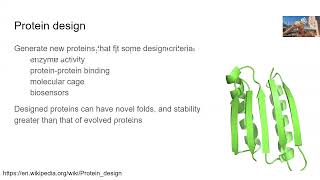
Protein Structure with Transformers - Lecture 9
Explore protein structure prediction using transformer models, uncovering advanced techniques for understanding and analyzing protein folding and interactions.
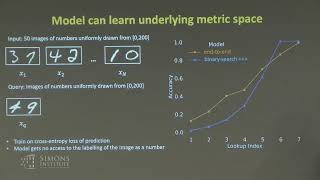
Using Algorithms to Understand Transformers and Using Transformers to Understand Algorithms
Explore algorithmic tools and optimization theory to uncover Transformer mechanisms for computational tasks, and discover how Transformers design data structures for tasks like nearest neighbor search.
Associative Memories as a Building Block in Transformers
Explore associative memories in Transformers, their role in storing knowledge, and how gradients and over-parameterization affect their learning and capacity.
The Emergence of Clusters in Self-Attention Dynamics
Explore the formation of clusters in self-attention dynamics, examining their impact on transformer models and computational processes.