Language, Perception and Action Shape the Human Conceptual System
Explore how language, perception, and action influence human conceptual systems with Louise Connell, a leading researcher in complex cognition and embodied intelligence.
Embodiment Without Situatedness - An Embodied Perspective on Neural Architecture Search
Explore embodied perspectives on neural architecture search with Nick Cheney, examining the intersection of neurorobotics and complex systems in AI development and intelligence research.
Language Comprehension Requires Affordances
Explore how language comprehension is grounded in physical interactions with the world, challenging traditional views of cognition and offering insights into embodied intelligence.

Why Intelligent Reasoning Must Be Embodied
Explore the philosophical perspective on embodied intelligence and its implications for AI, presented by Lisa Miracchi from the University of Pennsylvania's GRASP Lab and MindCORE.
Are Foundation Models Castles in the Air?
Explore the trustworthiness and effectiveness of foundation models in AI with Stanford professor Percy Liang, examining their potential and limitations for human-computer interaction and continuous learning.
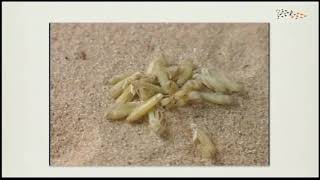
The Principles of Collective Behavior
Explore the fascinating world of collective animal behavior, from insect swarms to human crowds. Discover how individual actions create complex group dynamics and problem-solving abilities in nature.

Harnessing Chaos and Predicting the Unpredictable with Artificial Intelligence
Explore how Reservoir Computing and AI can predict chaotic systems like weather and brain dynamics, pushing beyond traditional forecasting limits and combining knowledge-free and knowledge-based approaches.
Practice Makes Perfect - Learning from Massive Data
Explore how computers learn from massive data to perform tasks like spelling correction and translation, rivaling human capabilities through example-based learning.
The Most Human Human - What Artificial Intelligence Teaches Us About Being Alive
Explore the intriguing intersection of AI and human nature, examining what our interactions with machines reveal about our own humanity and consciousness.
Eating Our Words: What the Language of Food Reveals About History and Culture
Explore how language in food reveals insights on history, economics, and culture. From ketchup's origins to menu linguistics, uncover surprising connections between words and cuisine.
Tokens and Complex Systems - Part 2
Explore the intersection of complex systems and blockchain technology, including AI DAOs, token design, and agent-based simulations for innovative ecosystem development.
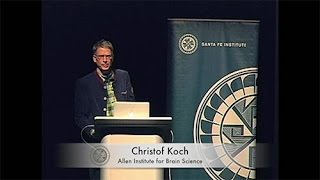
Consciousness in Biological and Artificial Brains
Exploration of consciousness in biological and artificial brains, discussing Integrated Information Theory and why digital systems may never truly experience consciousness like humans do.
All Watched Over by Machines of Loving Grace - The Future of Biological Intelligence
Explore the future of biological intelligence in a world of distributed machine intelligence and potential cultural mechanisms surpassing human analytical capabilities.
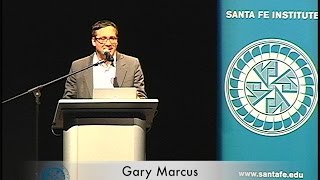
Smart Machines and What They Can Still Learn from People
Cognitive scientist Gary Marcus explores AI's progress, challenges, and potential lessons from human cognition, offering insights into the future of machine intelligence.
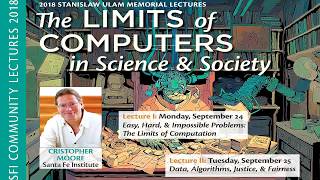
Data, Algorithms, Justice and Fairness - Lecture 2
Exploring algorithmic fairness in justice systems: accuracy, data sources, and potential biases. Discusses AI decision-making, explainability, and societal implications of algorithms in criminal justice.
Automated Recognition of Visual Situations in Images
AI architecture for recognizing visual situations in images, using learned models of object features and spatial relationships to actively search and score images for specific situations.
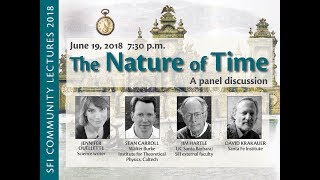
The Nature of Time - Panel Discussion on Physics, Biology, and Culture
Explore the mysteries of time with experts discussing its physical, biological, and cultural aspects, focusing on the arrow of time, entropy, and adaptive systems.
Intelligent Systems, Music, and Social Engineering - InterPlanetary Festival Day 2
Explore intelligent systems, social engineering, and visualization with expert panels, plus a unique theremin concert. Dive into cutting-edge topics with leading thinkers and innovators.
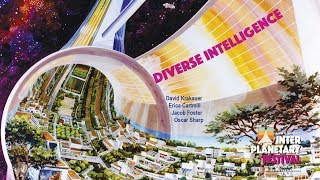
Diverse Intelligence - From Human Minds to Complex Systems
Exploring diverse forms of intelligence: from human evolution to complex systems and future discoveries. Experts discuss biological, artificial, and collective intelligence across species and technologies.
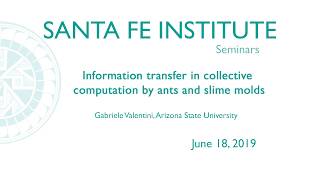
Information Transfer in Collective Computation by Ants and Slime Molds
Explores information transfer in collective problem-solving by ants and slime molds, revealing surprising mechanisms for regulating information flow and decision-making in simple organisms.
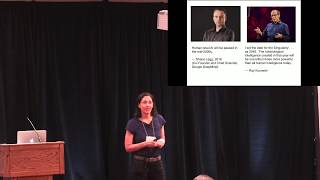
The Collapse of Artificial Intelligence
Explore the potential downfall of AI systems, their limitations, and the challenges they face in achieving human-like intelligence with Melanie Mitchell's insightful analysis.