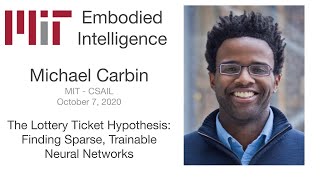
The Lottery Ticket Hypothesis - Michael Carbin
Explore the Lottery Ticket Hypothesis for efficient neural networks. Learn about pruning techniques, sparse architectures, and potential improvements in machine learning methods.
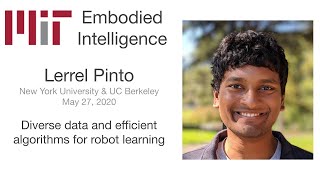
Diverse Data and Efficient Algorithms for Robot Learning
Explore diverse data collection and efficient algorithms for robot learning, focusing on large-scale approaches and reinforcement learning for deformable object manipulation.
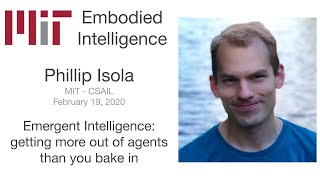
MIT EI Seminar - Phillip Isola - Emergent Intelligence- Getting More Out of Agents Than You Bake In
Explore emergent intelligence in AI through unsupervised learning, generative modeling, and self-assembling agents. Discover surprising outcomes beyond explicit programming in representation, video generation, and creature development.
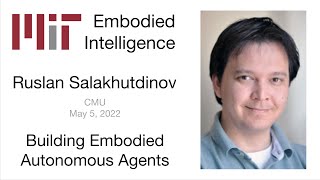
Building Embodied Autonomous Agents
Explore modular agents for visual navigation, 3D semantic mapping, and embodied instruction following. Learn about self-supervised learning, semantic search policies, and state-of-the-art performance in challenging environments.
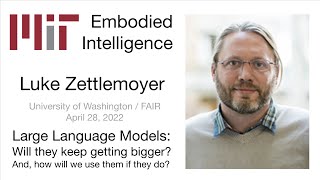
Large Language Models - Will They Keep Getting Bigger?
Explore the future of large language models, discussing scaling challenges, sparse mixtures of experts, improved prompting techniques, and new forms of supervision for enhanced NLP performance.
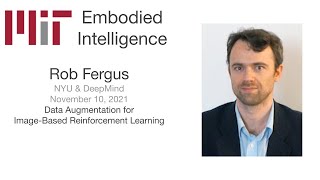
Data Augmentation for Image-Based Reinforcement Learning
Explores data augmentation techniques for image-based reinforcement learning, presenting a model-free algorithm and a self-supervised framework for visual continuous control tasks, achieving state-of-the-art results.
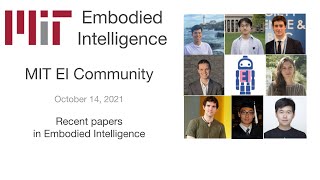
EI Seminar - Recent Papers in Embodied Intelligence
Explore cutting-edge research in embodied intelligence, covering topics like experiment design, neuro-symbolic models, robot design, speech recognition, and social perception.
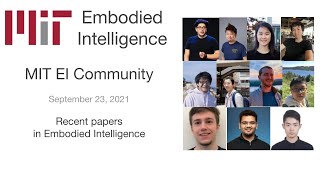
Recent Papers in Embodied Intelligence I
Explore cutting-edge research in embodied intelligence, covering topics like robot training, task planning, neural networks, and machine learning for various AI applications.
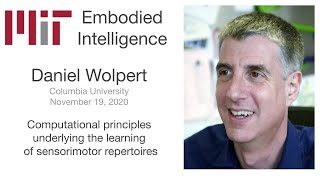
Computational Principles Underlying the Learning of Sensorimotor Repertoires
Explore computational principles of motor learning, focusing on context's role in memory activation and how statistical learning shapes object representations.

On Building General, Zero-Shot Robot Policies - EI Seminar
Explore the development of zero-shot robot policies for real-world tasks. Gain insights into Robot Utility Models (RUMs) and their ability to generalize to new environments without finetuning, achieving 90% success in novel settings.

Queer Theory and Gender Performativity - Lecture 23
Explore Judith Butler's queer theory, gender performativity, and their relation to Foucault's work. Examine key concepts, methodologies, and implications for identity politics and literary analysis.

Introduction to Plato's Phaedo - Arguments for the Existence of the Soul, Part II
Explore arguments for the soul's existence, focusing on free will as a key defense. Delve into dualism vs. physicalism and examine consciousness, emotions, and creativity in machines.
Evolution and Rationality: An Evolutionary Perspective on Psychology
Explore how natural selection shapes human psychology, examining evolutionary perspectives on mental phenomena, instincts, and decision-making processes in this insightful lecture on the origins of human behavior.

Don Quixote - Introduction to Part II - Lecture 12
Explore the transition between Don Quixote's Parts I and II, examining themes, cultural context, and Cervantes' writing process in this insightful lecture on the classic novel.

Heroes and Villains - Benedict Arnold and Social Mobility in the American Revolution
Explore Benedict Arnold's treason as a case study of regionalism, social rank, and gender dynamics in Revolutionary America, examining motivations, plot details, and consequences.

Why Are People Different? Understanding Personality and Intelligence - Lecture 13
Explore theories on personality and intelligence differences, including measurement methods, genetic and environmental influences, and their impact on individual and group variations.
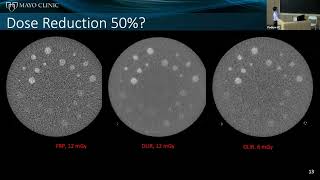
Image Quality Evaluation of Deep Learning Image Reconstruction and Denoising in Clinical CT
Explore advanced techniques for assessing image quality in CT scans using deep learning, focusing on reconstruction and denoising methods for improved clinical outcomes.
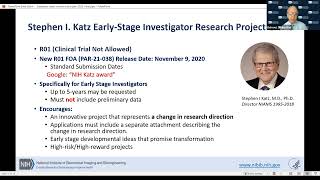
NIH Perspective: Scientific Program and Funding Opportunities for Advanced Imaging and AI at NIBIB
Explore NIBIB's scientific programs and funding opportunities for advanced imaging and AI research, presented by Behrouz Shabestari at Yale University's Deep Reconstruction Workshop.
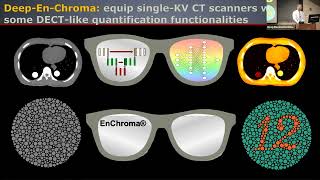
Bring Quality Check Back in Medical AI CT Applications
Explore strategies for implementing quality control measures in AI-driven CT applications, ensuring reliability and accuracy in medical imaging diagnostics.
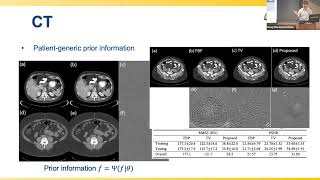
Modeling Prior Information to Guide Image Reconstruction in Radiation Therapy
Explore innovative techniques for incorporating prior knowledge into image reconstruction algorithms, enhancing accuracy and efficiency in radiation therapy planning and delivery.
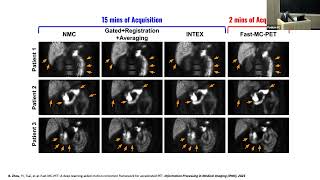
Deep Learning Guided Reconstruction and Processing for PET, SPECT, and CT
Explore advanced reconstruction techniques using deep learning for medical imaging modalities, enhancing image quality and diagnostic accuracy in PET, SPECT, and CT scans.