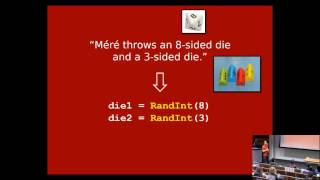
Probability 1
Explore key concepts in probability theory, including events, conditioning, chain rule, and independence, with practical examples and problem-solving techniques.
Understanding Predictive Modeling with R
Learn to create predictive models using R, covering key concepts, training techniques, and practical demonstrations. Gain insights into model selection and explore various applications in data analysis.
Linear Algebra With Polynomials - Wild Linear Algebra A
Explore polynomials in linear algebra, covering interpolation, regression, and isomorphism. Learn to apply geometric approaches to transformations and connect polynomial spaces with vector spaces.
Benign Overfitting in Linear Prediction
Explore the phenomenon of benign overfitting in linear prediction, its implications for deep learning, and its impact on adversarial examples in machine learning.
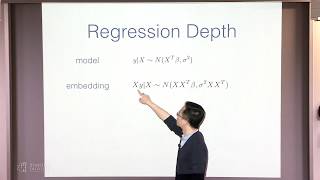
Robust Estimation and Generative Adversarial Nets
Explore robust estimation techniques and their applications in high-dimensional statistics, including Huber's model, multivariate location depth, and f-Learning, with insights on computational challenges and theoretical foundations.
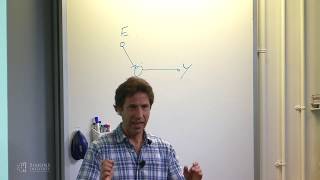
Invariance, Causality and Novel Robustness
Explore invariance, causality, and robustness in high-dimensional statistics. Learn about modern applications, heterogeneous data, and novel approaches to prediction problems using causal inference techniques.
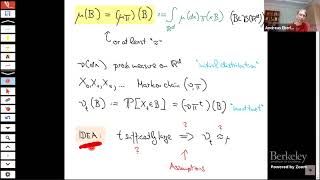
Sampling Crash Course
Explore geometric methods in optimization and sampling, covering direct methods, Markov chain Monte Carlo, and probabilistic approaches for efficient algorithm design and analysis.
Approximate Message Passing Algorithms
Explore Approximate Message Passing algorithms, their applications in statistical inference, and theoretical foundations including state evolution, convergence, and joint distribution analysis.
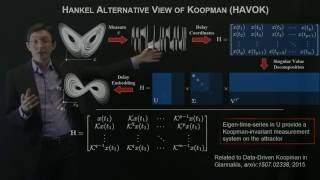
Hankel Alternative View of Koopman Analysis
Decomposing chaos into linear systems with intermittent forcing using HAVOK analysis. Explores eigen-time-delay coordinates for regression models, offering new insights into complex dynamical systems.

Learning from Data: The Two Cultures
Explore statistical and task modeling approaches in AI, their strengths, limitations, and the importance of integrating principles from both cultures for more robust and responsible machine learning.
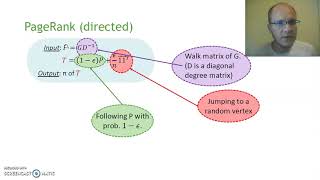
Walking Randomly, Massively, and Efficiently
Explore efficient random walk algorithms for massive graphs, focusing on PageRank implementation and optimization techniques for undirected edges and degree-based calculations.
Statistics Tutorial with Python - Fundamentals and Data Analysis
Learn Python-based statistics: data types, visualization, measures of central tendency, dispersion, and relationships between variables. Gain practical skills for data analysis.
Prelinear Algebra - Essential Concepts for Linear Algebra
Comprehensive introduction to vectors, trigonometry, and geometry as foundational concepts for Linear Algebra, with applications in various fields like physics, economics, and machine learning.
Statistics Tutorial - T Distribution and Hypothesis Testing
Learn to calculate and interpret T distributions, use T tables, understand degrees of freedom, and perform hypothesis testing with independent and dependent samples in this comprehensive statistics tutorial.
Statistics Tutorial 4: Z Scores and Confidence Intervals
Explore probability, normal distributions, sample error, Central Limit Theorem, Z scores, and confidence intervals with Python code examples for practical application.
Statistics Tutorial - Standard Deviation and Coefficient Variation
Learn to calculate standard deviation and coefficient variation using Python, with real-world examples and in-depth explanations of statistical concepts.
Statistics Tutorial - Real World Example with Python
Explore real-world data analysis using Python to maximize profits for a computer company. Learn to parse data, create functions, and gain insights for targeted marketing and product strategies.

Exploring the MASCHINE+ Auto Sampler - Native Instruments
Explore MASCHINE+ Auto Sampler's creative potential for sound design, CPU optimization, and unique instrument sampling. Learn techniques for transforming sounds and expanding your music production capabilities.
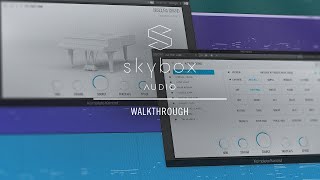
Hammers + Waves from Skybox Audio - Native Instruments
Explore skybox Audio's innovative piano collections, featuring robotic sampling for a human touch. Product specialist demonstrates acoustic, chime, electric, and prepared instruments.
Basic Probability Examples
Explore fundamental probability concepts through practical examples, covering conditional probability, independent events, and more.
Basic Statistics Examples
Learn basic statistics through practical examples with Michael Penn in less than an hour. Randolph College Math and Science.