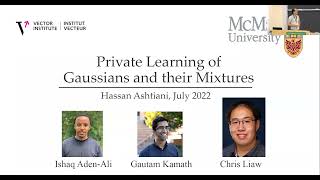
Private Learning of Gaussians and Their Mixtures
Explore private learning techniques for Gaussian distributions and mixtures, focusing on robust methods, hypothesis selection, and high-dimensional cases.
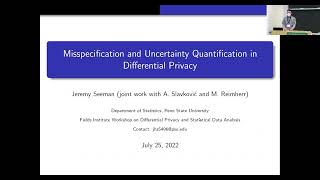
Misspecification, and Uncertainty Quantification in Differential Privacy
Explore differential privacy's theoretical guarantees, misspecification issues, and uncertainty quantification methods. Gain insights into designing mechanisms and addressing implementation challenges.
Recent Development in Differential Privacy I
Explore recent advancements in differential privacy, covering statistical queries, compressible estimators, and multiple comparisons in adaptive data analysis.

Blackhat EU 2013- Power Analysis for Cheapskates
Explore power analysis attacks on embedded systems, from basic concepts to advanced techniques. Learn practical methods for implementing these attacks using affordable tools and hardware setups.
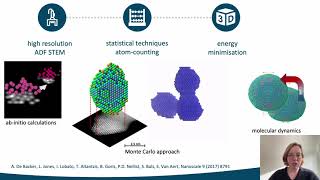
3D Atomic Resolution Through Dose-Efficient Fusion of Image & Analytical Technique
Explore 3D atomic structure analysis of nanomaterials using advanced quantitative TEM techniques, including parameter estimation, deep learning, and fusion of ADF STEM with EDX for heterogeneous materials.
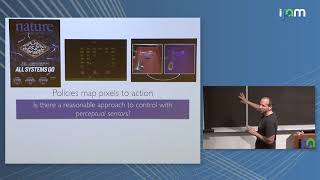
Trying to Make Sense of Control from Pixels
Explores challenges in merging machine learning with control systems, focusing on autonomous vehicles using vision. Discusses uncertainty quantification, robust controller design, and performance guarantees.
Differentially Private Simple Linear Regression
Explore advanced techniques for protecting data privacy in statistical analysis, focusing on simple linear regression methods and their applications.
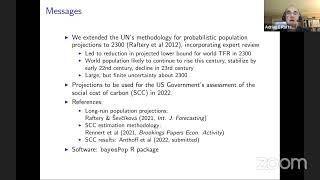
Keyfitz Lecture - Adrian E. Raftery - Very Long-Term Probabilistic Population Projections
Explore probabilistic methods for long-term population projections, examining statistical techniques and demographic trends to forecast global population changes over extended time horizons.
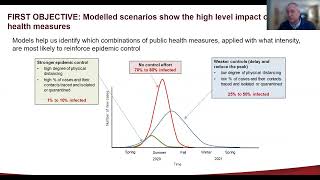
Predicting What Comes Next: Modelling the COVID-19 Epidemic
Explore mathematical modeling techniques for predicting COVID-19 epidemic trends and future scenarios, with insights from public health experts.
Scientific Approaches to Understanding the Past
Explore multidisciplinary scientific methods in archaeology, from Stone Age to Iron Age. Learn about human evolution, dispersals, and adaptations through case studies and cutting-edge research techniques.
Differential Privacy and the US Census - IPAM at UCLA
Explore differential privacy's role in the 2020 US Census, its mathematical foundations, and challenges in balancing data utility with privacy protection in large-scale statistical analysis.

Measuring the IQ of Your Threat Intelligence Feeds
Explore methods for evaluating threat intelligence feeds, including novelty tests, overlap tests, and population tests, to improve cybersecurity decision-making and data analysis.
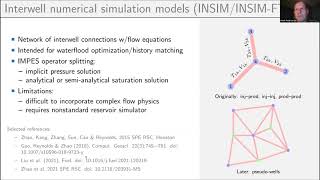
Graph-Based Methods for Reduced-Order Reservoir Simulation
Explore graph-based approaches for reduced-order reservoir simulation, comparing interwell methods like GPSNet with CGNet, which mimics 3D grid connections. Learn about their setup, training, and generalization capabilities.
Learning from COVID-19 Data on Transmission, Health Outcomes, Interventions and Vaccination
Explore COVID-19 data analysis on transmission, outcomes, interventions, and vaccination with Harvard researcher Xihong Lin in this insightful lecture from the Joint Mathematics Meetings.
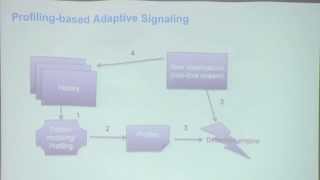
Devil in the Haystack - Application Security Through Statistical Analysis and Machine Learning
Exploring statistical and machine learning techniques for in-app security at Salesforce. Focuses on adaptive, data-driven approaches for detecting and preventing attacks and abuses on the platform.
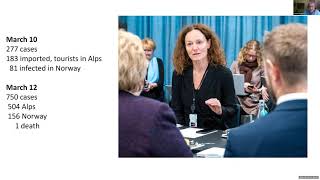
Norwegian Regional Stochastic Model of COVID-19 Epidemics
Explore Norway's stochastic SEIR model for COVID-19, including data collection, mobility tracking, and decision-making processes in public health management.
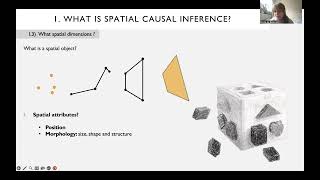
Spatial Causal Inference and Neighborhood Effects
Explore spatial causal inference, interference problems from social interactions, and neighborhood effects in multilevel analyses. Examine agent-based models to question area-level effects and their causal interpretations.
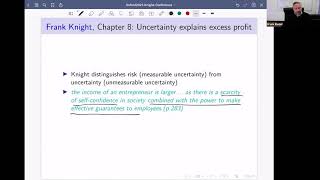
Frank Knight, the Economics of Uncertainty, and 21st Century Finance
Explore Frank Knight's influential work on risk and uncertainty in economics, its impact on probability theory, and its relevance to modern finance and economic challenges.
A Full Classification of Finite Adversarial Partial Monitoring - Tor Lattimore
Explore finite adversarial partial monitoring, its classification, and implications for multi-armed bandit problems and full-information games. Learn about regret dependence on game structure.
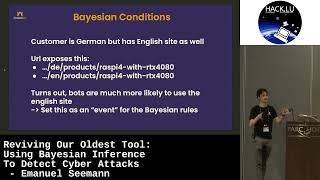
Using Bayesian Inference to Detect Cyber Attacks
Explore Bayesian inference techniques for detecting cyber attacks, enhancing your ability to identify and respond to security threats in real-time.
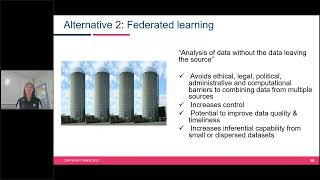
Making Private Data Open and Enhancing Decision-Making Through Digital Atlases
Explore innovative approaches to data sharing, privacy preservation, and decision-making enhancement through digital atlases, focusing on the Australian Cancer Atlas and Bayesian statistical models.