Test for Single Proportion and Hypothesis in Applied Statistics
Master statistical hypothesis testing through single proportion analysis, covering one-tail and two-tail tests with practical applications and numerical examples.
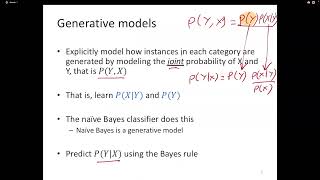
Discriminative and Generative Models in Machine Learning - Lecture 24B
Explore the key distinctions between discriminative and generative models in machine learning, focusing on their unique approaches and practical applications.
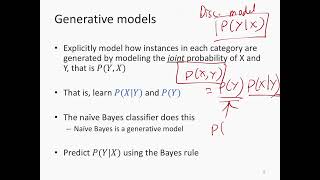
Generative and Discriminative Models in Machine Learning - Lecture 27B
Explore the fundamental differences between generative and discriminative models in machine learning through a concise high-level introduction to these essential modeling approaches.

Data Mining: Choosing k for MinHashing - Spring 2023
Delve into advanced min hashing concepts, exploring PAC learning, Central Limit Theorem, and Chernoff-Hoeffding Inequality to optimize k-value selection for accurate Jaccard similarity estimates.

Thrifty Shadow Estimation: Re-using Quantum Circuits and Bounding Tails
Explore statistical efficiency improvements in quantum shadow estimation through circuit reuse techniques, focusing on Haar random unitaries and practical implementations for near-term quantum computing.

Electric Flow Sampling and Quantum Walks on Trees
Explore electric flow sampling (elfs) in quantum walks, examining their connection to random walks, hitting times on trees, and applications in quantum algorithms for distribution sampling.

Quantum Theory in Finite Dimension Cannot Explain Every General Process
Explore groundbreaking research demonstrating how certain finite-dimensional processes in quantum theory require explanations beyond classical probability and quantum mechanics frameworks.

Efficient Tomography of Non-Interacting Fermion States
Delve into quantum state tomography algorithms for non-interacting fermion systems, exploring efficient methods for state reconstruction and measurement through theoretical frameworks and error analysis.

Tight Cramër-Rao Type Bounds for Multiparameter Quantum Metrology Through Conic Programming
Delve into advanced quantum metrology concepts, focusing on Cramër-Rao bounds and conic programming for optimal measurement strategies in estimating incompatible parameters with maximum precision.

JAX vs PyTorch 2 - Converting Stateful to Stateless Operations in Neural Networks
Explore functional programming in JAX through hands-on comparison with PyTorch 2, focusing on neural network implementation and stateless operations for gradient descent.
Machine Learning Algorithms for Student Success Prediction in Higher Education
Explore how machine learning algorithms predict student academic performance by analyzing attendance patterns, responsibility factors, and generational differences across IT studies.
Delivering Delivery Time Prediction - Machine Learning Lessons and Model Optimization
Discover practical insights into ML model development, from handling unclear requirements to ensemble classification techniques and determining optimal probability cutoffs for delivery predictions.
Container Tracking and Demand Forecasting for Bosch Tools Supply Chain Operations
Discover how BOSCH Power Tools leverages neural forecasting models in AWS cloud to optimize demand forecasting, reduce inventory costs, and enhance supply chain stability for millions of product time series.
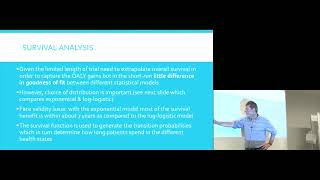
Economic Evaluation of Health Technologies: Survival Analysis - Lecture 2
Delve into survival analysis methods for evaluating health technologies, focusing on modeling time spent in different health states and predicting resource outcomes.
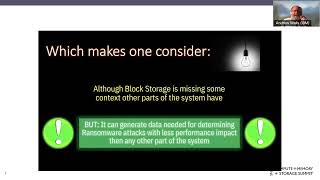
Computational Storage: Detecting Ransomware Using Flash Control Modules
Discover how computational storage in SSDs can detect ransomware attacks through IBM's Flash Control Modules, exploring key statistical indicators and security implementation across different system layers.
How Well Do LLMs Detect Anomalies in Your Data? - Conf42 LLMs 2024
Explore LLMs' effectiveness in detecting data anomalies, understand data quality importance, and learn practical techniques for anomaly detection using OpenAI and BigQuery.

Scales and Guides: How to Visualize Anything
Visualize data effectively using scales and guides. Learn techniques for categorical, nominal, and ordinal data, plus explore parallel axis plots and scaling functions.

A Weak Convergence Viewpoint on Invertible Coarse-Graining
Explore weak convergence in invertible coarse-graining, combining force-matching with neural networks to recover fine-grained free energy surfaces in biomolecular systems.
Experimenting with Customer Support Operations
Explore challenges and solutions for conducting product experiments in customer support, focusing on overcoming complexities in operational settings.
Supply Path Optimization: A Bayesian Approach to Take Rate Estimation
Explore Bayesian approaches to bid shading and supply path optimization in programmatic advertising, enhancing pricing strategies and ROI for more effective real-time bidding campaigns.
Data Analytics Competitions: A Guide for Success
Discover strategies for excelling in data analytics competitions, from understanding their unique nature to securing top positions using various statistical approaches.