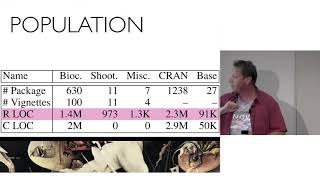
R in Java - Performance and Implementation Challenges
Explore R integration in Java, covering performance, memory allocation, and language features. Learn about specialized interpreters and data types for efficient R-Java interoperability.

Kalman Folding - Extracting Models from Data One Observation at a Time
Explore Kalman Folding technique for extracting models from data incrementally. Learn how to process observations one at a time for efficient data analysis and model building.
Mathematical Problems in Machine Learning - Part 1 of 4
Dive into mathematical probability fundamentals for machine learning through Stanford expert Andrea Montanari's comprehensive exploration of key theoretical concepts and applications.
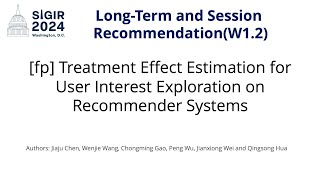
Treatment Effect Estimation for User Interest Exploration on Recommender Systems
Explore advanced techniques for estimating treatment effects in recommender systems, focusing on user interest exploration and long-term session recommendations.
Mathematical Problems in Machine Learning - Lecture 3
Delve into advanced mathematical probability concepts and their applications in machine learning through Stanford expert Andrea Montanari's comprehensive theoretical exploration.
Mathematical Problems in Machine Learning - Lecture 2
Delve into mathematical probability fundamentals and their applications in machine learning through advanced theoretical concepts and problem-solving approaches from Stanford expertise.
Mathematical Problems in Machine Learning - Lecture 4
Delve into advanced mathematical probability concepts applied to machine learning through Stanford expert Andrea Montanari's comprehensive theoretical exploration and analysis.
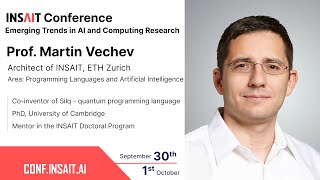
Provably Fair and Robust Machine Learning
Explore cutting-edge methods for building fair and robust machine learning systems, covering tabular and vision data alongside deterministic and statistical certification approaches.

Simulating Quantum Computation - Classical Data Requirements and Efficiency
Explore the classical simulation methods for quantum computation through probability functions, examining data requirements and computational efficiency in magic state implementations.
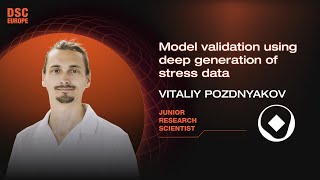
Model Validation Using Deep Generation of Stress Data
Discover advanced techniques for model robustness validation through deep generative models, focusing on stress testing, performance assessment, and handling unlikely events in data science applications.
Introduction to Lasso and Ridge Regression Models in R
Master linear regression regularization techniques through Lasso and Ridge methods in R, focusing on preventing overfitting and improving model reliability for more accurate predictions and estimations.
Introducing Two Criteria for Future Data Prediction with ML Models
Explore transparent evaluation methods for ML models through new criteria linking database characteristics to machine learning metrics, focusing on future data prediction and unbiased assessment.
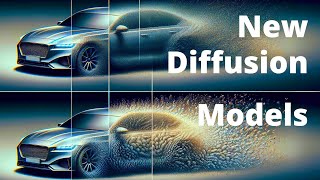
Diffusion Transformer and Rectified Flow in Stable Diffusion 3
Dive into the mechanics of Diffusion Transformers, exploring noise distribution, latent space dimensionality, and the innovative Rectified Flow technology powering next-gen AI image generation.
What is OpenTelemetry - Understanding Core Concepts and Implementation
Discover OpenTelemetry's core components, implementation strategies, and practical applications for logs, metrics, and tracing in modern cloud-native environments through hands-on examples and real-world scenarios.
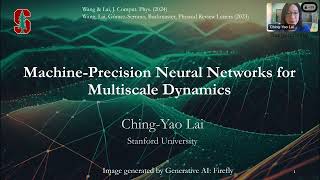
Machine-Precision Neural Networks for Multiscale Dynamics
Discover how multi-stage neural networks can achieve machine-precision accuracy in scientific predictions, addressing spectral bias and improving deep learning applications in multiscale physics problems.
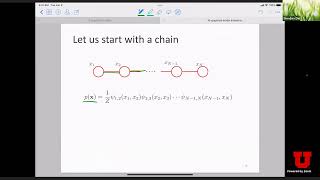
Probabilistic Machine Learning - Lecture 14
Dive into advanced data science concepts through comprehensive lecture coverage of key theoretical and practical aspects in this graduate-level academic session.
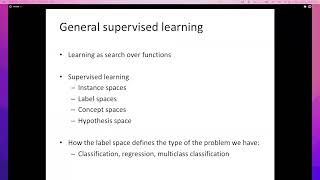
Machine Learning Mid-Semester Review - Lecture 15
Dive into a comprehensive mid-semester review of fundamental machine learning concepts, covering key principles and techniques explored throughout the academic term.
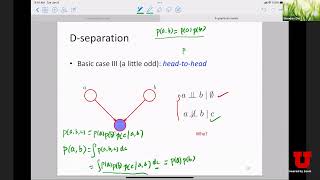
Probabilistic Graphical Models and Maximum Likelihood Estimation - Lecture 13
Dive into probabilistic graphical models, exploring likelihood estimation, Gaussian models, and network structures while learning to analyze real-world data using conditional independence concepts.
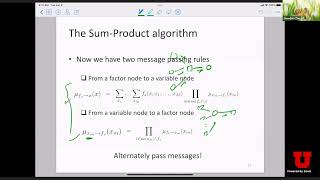
Probabilistic Machine Learning - Lecture 15
Dive into advanced data science concepts through a comprehensive graduate-level lecture covering key theoretical foundations and practical applications in modern data analysis and machine learning.

Google's Dual-Agent AI Architecture: Thinking Fast and Slow
Explore Google's innovative dual-agent AI system that combines fast, intuitive responses with deep, deliberate reasoning for enhanced human-AI interactions and complex problem-solving.

Monte Carlo and Bayesian Networks for AI Agent Decision Making
Explore advanced probabilistic frameworks combining Dynamic Bayesian Networks and Monte Carlo methods to enhance AI agent decision-making in complex, high-dimensional environments through practical implementations.