Large-Scale Differentiable Causal Discovery of Factor Graphs - Lecture and Primer
Explore large-scale causal discovery using factor directed acyclic graphs and differentiable optimization. Learn about causal representation learning for genetic perturbations and combinatorial extrapolation.
Data Thinning to Avoid Double Dipping in Statistical Analysis - Lecture 1
Explore data thinning techniques to prevent double dipping in statistical analysis, with applications in single-cell RNA sequencing and unsupervised learning problems.
Causal Representation Learning Through Multi-Modal Data Integration
Explore causal representation learning techniques for integrating multi-modal data in this workshop by Caroline Uhler from MIT and Broad Institute.
Medical and Population Genetics Primer: All of Us Research Program - Part 1
Explore the basics of medical and population genetics, covering human genetic variation, genotyping, and DNA sequencing methods in this informative primer series.
Contrastive Models for Case-Control Changes in Sequencing - Models, Inference and Algorithms
Explore contrastive latent variable models for analyzing differential expression in sequencing data, enhancing case-control comparisons in transcriptomics with novel approaches to capture condition-specific variations.
GRN-Guided Simulation of Single-Cell RNA-Seq and Primer on Causal GANs
Explore GRouNdGAN for simulating single-cell RNA-seq data and learn about CausalGANs for gene regulatory network analysis and in-silico perturbation experiments.
Modeling Rare Variation and Calculating Genetic Constraint - MPG Primer 2023
Explore genetic constraint calculation and rare variation modeling techniques for understanding human population genetics and disease mechanisms.
MPG Primer: suSIEx - Medical and Population Genetics 2023
Explore suSIEx, a cutting-edge method for analyzing genetic data in medical and population genetics. Learn its principles, applications, and potential impact on understanding complex traits and diseases.
Inferring Causal Cell Types Driving Human Disease and Complex Traits - MPG Primer 2023
Explore causal cell types in human diseases through GWAS and functional genomics integration. Learn about colocalization, TWAS, and TCSC for identifying disease-critical genes and tissues.
MPG Primer: STACI - 2023
Explore STACI, a novel method for analyzing single-cell data to uncover cell type-specific genetic effects on gene expression and disease risk.
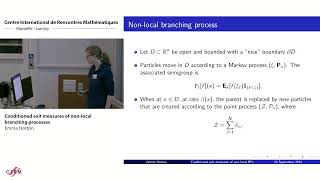
Conditioned Exit Measures of Non-Local Branching Processes
Explore conditioned exit measures of non-local branching processes in this mathematical conference talk by Emma Horton at CIRM.

Accessibility Percolation for the Rough Mount Fuji Model
Explore accessibility percolation in the rough Mount Fuji model through a mathematical conference talk by Matt Roberts at CIRM.
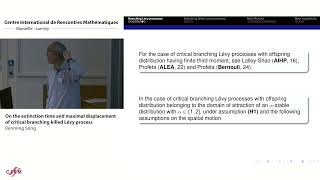
On the Extinction Time and Maximal Displacement of Critical Branching Killed Levy Processes
Explore critical branching killed Levy processes, focusing on extinction time and maximal displacement in this mathematical analysis.
Metric Forecasting with Dynatrace - Predictive IT Resiliency Automation
Explore probabilistic forecasting for cloud resource management. Learn mathematical models, leverage forecasts in Notebooks, and automate infrastructure scaling using Dynatrace's predictive IT resiliency.
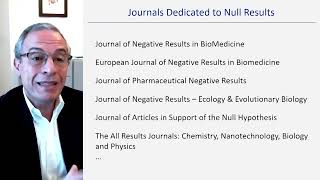
Study Design Part 2 - Statistical Considerations in Preparing Your Research Protocol - Lecture 3
Explore statistical considerations for study design, including sample size, power analysis, and data analysis planning for clinical and translational research.
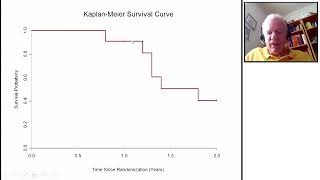
Study Design Part 1: Survival Analysis - Lecture 2C
Explore survival analysis techniques for clinical research, covering key concepts and applications in study design and data interpretation.
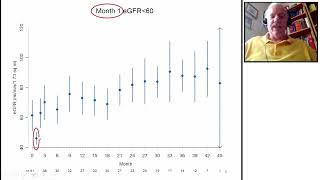
Study Design Part 1 - Observational Studies - Lecture 2A
Explore observational study designs in clinical and translational research, focusing on key principles and applications in medical research.
Scalable Single-Cell Models for eQTL Mapping - Primer and Main Talk
Explore scalable single-cell models for robust cell-state-dependent eQTL mapping. Learn about statistical challenges, computational solutions, and applications in identifying autoimmune disease risk loci in memory T cells.
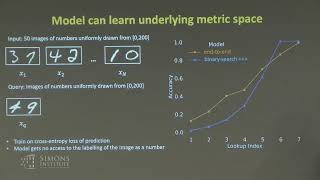
Using Algorithms to Understand Transformers and Using Transformers to Understand Algorithms
Explore algorithmic tools and optimization theory to uncover Transformer mechanisms for computational tasks, and discover how Transformers design data structures for tasks like nearest neighbor search.
Analytic Insights into the Zig-Zag Product and Its Friends - Part I
Explore advanced graph theory with Gil Cohen, delving into the Zig-Zag product and related graph operators using innovative analytic techniques for more precise bounds and insights.
Evolutionary Human Sciences: Causal Inference
Explore advanced methods for drawing causal inferences from observational data, with a focus on social influence and cultural evolution in human behavior.