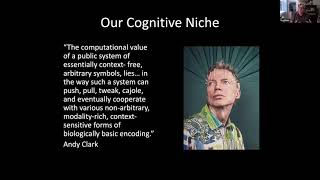
Guy Dove- Language Is a Neuroenhancement
Explore how language enhances cognitive abilities, examining embodied cognition, abstract concepts, and the elastic mind. Gain insights into human intelligence and its implications for AI development.

The Evolution of Root Systems & Biogeochemical Cycling
Exploring root system evolution and its impact on biogeochemical cycles. Insights into plant adaptation, nutrient acquisition, and ecological interactions, with implications for understanding complex systems and future technologies.
Caleb Scharf on The Ascent of Information - Life in The Human Dataome
Explore the interplay of information, energy, and matter in the evolution of life and technology. Delve into the concept of the "dataome" and its impact on human society, culture, and our search for extraterrestrial intelligence.
The Evolution of Robustness and Integrating the Disciplines
Exploring robustness in evolution, cryptic variation, and interdisciplinary approaches to understanding complex systems. Discusses canalization, neurodiversity, and the interplay between biology, culture, and cognition.
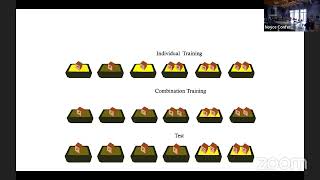
Imitation vs Innovation: Large Language and Image Models as Cultural Technologies
Explore the impact of large language and image models as cultural technologies, examining the balance between imitation and innovation in AI development.
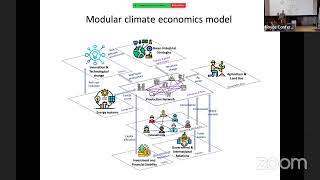
A Fast Green Energy Transition - Economic Benefits and Climate Impact
Explore how a rapid shift to green energy could lead to significant cost savings and reshape global climate policy incentives, based on validated forecasting methods.
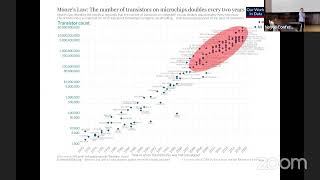
A Biologist's Perspective of Process and Pattern in Innovation
Explore innovation patterns across biology, culture, and technology, examining novel changes and emerging functions to uncover potential universal principles and future research directions.
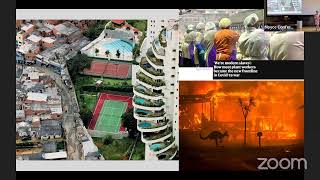
New Economics for a Successful Policy Paradigm
Explore a radical restructuring of economic theory integrating recent research and ethical commitments, addressing sustainability, equal dignity, and social injustice through dynamic, interdisciplinary approaches.

Averting Extinction: Lessons from Borneo's Last Hunter-Gatherers
Explore the unique culture of Borneo's Cave Punan, their message stick communication system, and efforts to preserve their ancestral forests and biodiversity in the face of deforestation and modernization.

Knowledge, Prosperity and Economic Complexity - How Are They Connected?
Explore the intricate connections between knowledge, prosperity, and economic complexity, examining societal structures, inequality, and the role of distributed knowledge in shaping global economic landscapes.
Hierarchy and Conflict in Human and Other Societies
Explore how social hierarchies reduce conflict through an agent-based model, examining emergent properties and potential applications in various societal contexts.
Language, Perception and Action Shape the Human Conceptual System
Explore how language, perception, and action influence human conceptual systems with Louise Connell, a leading researcher in complex cognition and embodied intelligence.
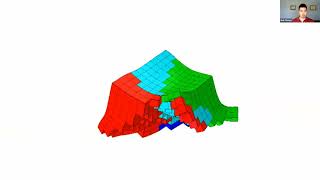
Embodiment Without Situatedness - An Embodied Perspective on Neural Architecture Search
Explore embodied perspectives on neural architecture search with Nick Cheney, examining the intersection of neurorobotics and complex systems in AI development and intelligence research.
Language Comprehension Requires Affordances
Explore how language comprehension is grounded in physical interactions with the world, challenging traditional views of cognition and offering insights into embodied intelligence.

Why Intelligent Reasoning Must Be Embodied
Explore the philosophical perspective on embodied intelligence and its implications for AI, presented by Lisa Miracchi from the University of Pennsylvania's GRASP Lab and MindCORE.

The Science of Success - What's Luck Got to Do with It?
Explore the interplay of skill and luck in shaping life outcomes. Learn to define, measure, and improve skill while managing luck, with examples from sports, entertainment, and business.
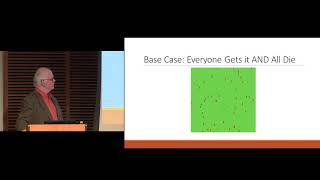
Frontiers of Computational Social Science - Agent-Based Modeling and Artificial Societies
Explore agent-based modeling in computational social science, from playground simulations to global epidemic models, with insights on future developments in neuro-cognitive agents and their applications.
Moving Beyond the Brain in a Jar - The Promise and Challenge of Studying Interacting Brains
Explores how social interactions shape human thought and behavior, presenting studies on mental model alignment through conversation and its impact on real-world social networks.
Energy, Scaling, and The Future of Life on Earth
Explore the roles of energy and information in 21st century biology with Geoffrey West's lecture on scaling laws, energy dynamics, and their implications for life on Earth and our future.
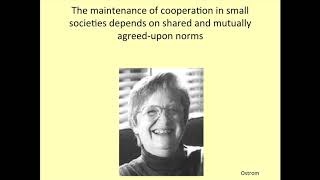
The Ecology of Society - Complex Adaptive Systems in Nature and Human Societies
Explore ecological and economic systems as complex adaptive systems, examining emergent behaviors, critical transitions, and evolutionary forces shaping resource allocation and cooperation.
Turing Test for Free Will - Determinism and Unpredictability in Decision-Making
Explore the interplay of determinism, randomness, and free will in decision-making processes. Discover a proposed 'Turing test' for free will and its implications for human and artificial intelligence.