
Human-Centered AI for Mental Health Prediction in Social Media Data
Exploring human-centered machine learning for ethical and compassionate mental health predictions on social media, combining Media Studies and Computer Science approaches.
Online Communities as Model Systems for Commons Governance
Exploring how online communities serve as laboratories for self-governance, offering insights into institutional design and functioning through computational social science approaches.
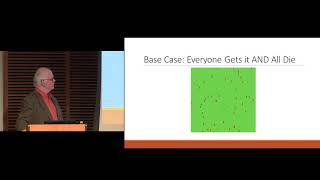
Frontiers of Computational Social Science - Agent-Based Modeling and Artificial Societies
Explore agent-based modeling in computational social science, from playground simulations to global epidemic models, with insights on future developments in neuro-cognitive agents and their applications.

Big Data, Global Development, and Complex Systems
Explore how big data from everyday technologies can reveal human behavior patterns and societal trends, with applications in global development, health, and socioeconomic analysis.

Artificial Intelligence - A Universal Tool? Limits and Considerations
Explore the potential and limitations of AI as a universal problem-solving tool with Professor Dirk Helbing. Gain insights into complex dynamic systems and alternative approaches to addressing world problems.

Towards Human Behavior Modelling from Mobile Data - Dr. Nuria Oliver
Exploring human behavior modeling through mobile data, covering topics like personality inference, financial responsibility, boredom detection, and crime prediction using advanced data analysis techniques.

The Role of Computational Social Science in Policymaking - Session 6
Expert panel explores computational social science's role in policymaking, discussing micro data, agent-based models, empirical validation, and applications in fisheries, energy, and digital twins to enhance decision-making processes.
Election Simulation 5 - Instant Run-Off Voting
Explore instant run-off voting through simulation, examining how voter preferences impact election outcomes and overall satisfaction. Learn about alternative voting systems and their effects.
Challenges and Opportunities in Measuring Social Constructs Using Computational Methods
Explore challenges and opportunities in measuring social constructs computationally. Examine stance detection limitations and social media bios for identity presentation. Discuss impacts of LLMs and data sharing on future research.
Uncovering and Reasoning with Implicit Mental Models
Explore techniques to uncover shared cultural mental models from remote populations, combining linguistic analysis and surveys to identify decision-making factors and cultural norms.

Hacking Online Virality
Explore strategies for manipulating online information spread and learn to identify and combat viral misinformation in complex social networks.

Bounded Confidence: A Deceptively Simple Model
Explore the intriguing Bounded Confidence model, its dynamics, and applications in complex systems through examples, interpretations, and insightful discussions.
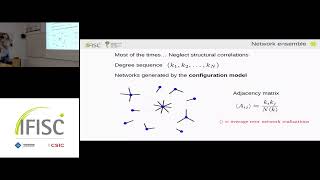
Stochastic Dynamics on Networks: Insights into Opinion Polarization
Explore stochastic dynamics on networks and gain insights into opinion polarization through advanced mathematical modeling and analysis techniques.
Implementing Intersectionality in Algorithmic Fairness - Keynote Panel I
Exploring approaches to implement intersectionality in algorithmic fairness, addressing hidden biases and unique experiences at the intersection of identities to promote equitable AI systems.
Human-AI Interaction in the Age of Large Language Models
Explores LLMs' impact on human-AI interaction, focusing on computational social science and AI-assisted therapy. Demonstrates how LLMs can empower individuals and foster positive change.
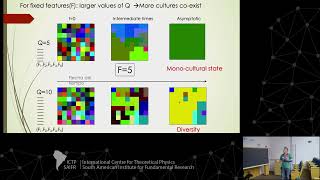
Multi-agent Models in Complex Networks - Class 4
Explore multi-agent models in complex networks, focusing on applications to socio-economic complexity and nonlinear systems.
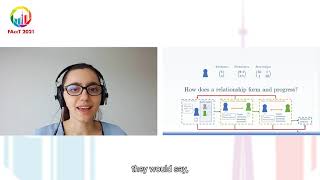
An Agent-Based Model to Evaluate Interventions on Online Dating Platforms to Decrease Racial Homogamy
Explore an agent-based model evaluating interventions on dating platforms to reduce racial homogamy, examining societal impacts and potential solutions.
Signals from the Deep Web - Making Sense of Ephemeral and Anonymous Content
Explore data scraping as an alternative to biased APIs for social media research. Learn scalable architecture for deep web data capture, topic modeling, and sentiment analysis to detect community manipulation.

Methodology for Forecasting Election Results from Tweets
Discover advanced techniques for analyzing social media data to predict election outcomes using computational methods and Twitter sentiment analysis.

Political Barometer: Public Opinion Mining Using Tweets
Explore advanced techniques for mining public opinion from Twitter data to analyze political sentiment and create accurate political barometers in the digital age.
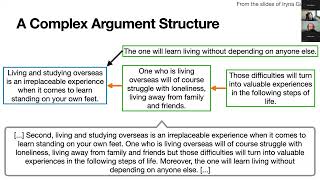
Analyzing Arguments from Political Debates
Explore advanced computational techniques for analyzing and understanding political debate arguments, focusing on AI-driven methods for extracting meaningful insights from political discourse.