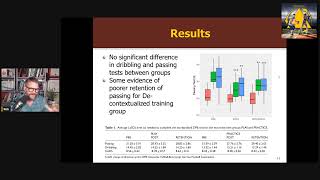
Evidence Supporting the Ecological Approach to Skill Development
Explore research addressing concerns and benefits of the ecological approach to skill development, focusing on long-term effects, consistency, and self-organization.
Evidence Supporting the Ecological Approach to Skill Development
Exploring research addressing concerns and benefits of the ecological approach to skill development, with insights on perception-action coupling in sports and motor learning.

Stable Adaptation and Learning in Nonlinear Systems and Neural Networks
Explore nonlinear systems tools for insights on collective computation and learning in large dynamical networks, focusing on stable adaptation and implicit sparse regularization.

Ray Summit 2022 - Robotics and AI: Challenges and Opportunities - Day 2 Keynote
Explore cutting-edge AI research and applications with Anca Dragan's keynote address at Ray Summit 2022, focusing on advancements in machine learning and distributed computing.

Probabilistic and Machine Learning Approaches for Autonomous Robots and Automated Driving
Explore probabilistic and machine learning approaches for autonomous robots and automated driving, focusing on robust perception and action execution in uncertain environments.

Compositional Learning for Robot Autonomy via Modularity and Abstraction
Explore compositional learning for robot autonomy through modularity and abstraction. Discover neuro-symbolic planners for long-horizon manipulation tasks and state-action abstractions from raw signals.

Building Blocks of Generalizable Autonomy
Explore key aspects of generalizable autonomy in robotics, including representational biases, causal inference, and interactive policy learning under uncertainty for efficient and adaptable AI systems.

Chance Constrained Simultaneous Task Allocation and Path Planning for Multi-Robot Systems
Explore multi-robot task allocation and path planning with probabilistic performance guarantees. Learn algorithmic approaches for optimizing team performance in open environments.

Insurance Rates and Privacy in the Era of Drones, Satellites, and Data
Explore the impact of advanced data collection on insurance rates and privacy, discussing ethical implications and public interest concerns.
Physical Problem-Solving Across Timescales
Explore computational foundations of flexible physical problem-solving, combining cognitive science, machine learning, and robotics to understand human tool use and object manipulation across timescales.
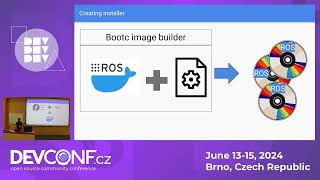
ROS on Fedora IoT - Containerized Deployment for Robotics
Streamline ROS deployment on Fedora IoT using bootable containers. Explore containerized approach, easy image building, and reliable upgrade mechanisms for robotics development.

Nonholonomic Systems with Inequality Constraints
Explore nonholonomic systems with inequality constraints, delving into advanced concepts and applications in control theory and robotics.
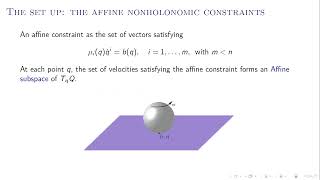
Virtual Affine Nonholonomic Constraints
Explore virtual affine nonholonomic constraints in mechanical systems, examining their mathematical foundations and practical applications in robotics and control theory.
Forward Kinematics and Workspace
Explore forward kinematics and workspace concepts in robotics, understanding their applications and implications in robot motion planning and control.
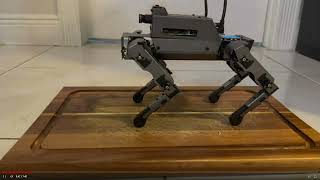
Interacting with AI Robots: Face Tracking, QR Code Recognition, and Security - Demo 2023
Explore AI robotics basics, face tracking, QR code recognition, and robot security vulnerabilities through live demonstrations and practical examples.

Building a Robot with Yocto and ROS
Explore integrating ROS with Yocto Project for robotics development, from simulation to hardware deployment. Learn meta-ros layer basics and overcome challenges in building large-scale platforms.
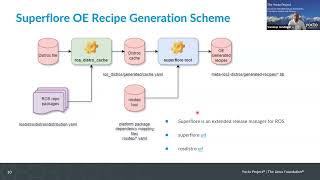
Configuring and Building meta-ros for KR260 - YPS 2023.11
Configure and build Yocto Project with meta-ros (ROS2 Humble) on KR260, including Linux, ROS2 framework, and demo application packaging for embedded systems.
LLaRA: Supercharging Robot Learning Data for Vision-Language Policy
Enhance robotic decision-making using LLMs and VLMs. Learn to formulate actions as conversation pairs and incorporate auxiliary data for improved performance in simulated and real-world tasks.
Hitchhikers' Guide to the Vulniverse
Explore key elements of vulnerability disclosure and management, including CVE, CVSS, CWE, and VEX. Gain insights into communication between security teams and researchers.

Embodied Cognition
Explore the concept of embodied cognition and its implications for understanding human thought processes and behavior.
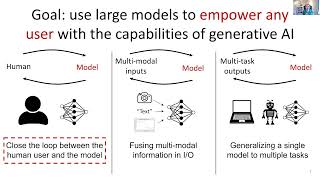
Foundational Models for Robotics: Removing the Engineer from the Loop
Explore foundational models in robotics, empowering users with AI capabilities and revolutionizing human-computer interfaces through autonomous systems and multi-modal properties.