
HumanPlus and MobileAloha - Humanoid Shadowing and Bimanual Mobile Manipulation - Tech Talk 6
Exploración de HumanPlus y MobileAloha: avances en robótica humanoide e imitación de movimientos humanos para manipulación bimano móvil y teleoperación de bajo costo.

VQ-BeT: Behavior Generation with Latent Actions - Research Presentation 4
Explore behavior generation with latent actions in robotics, featuring insights on VQ-BeT methodology and its applications in AI-driven robotic control systems.
ALOHA and ACT: Advancing Robot Learning - Research Presentation 1
Explore ALOHA and ACT methodologies for robotic learning, presented by Alexander Soare. Gain insights into cutting-edge research and advancements in robot manipulation techniques.
Assemble Koch v1.1 - LeRobot Tutorial 1
Learn to assemble the Koch v1.1 robot, a cost-effective and user-friendly modification of the original design. Explore bill of materials, CAD models, and compatibility with v1.0.
Building a Robot Arm with .NET 8, Raspberry Pi, Blazor and SignalR
Learn to build and control a robot arm using .NET 8, Raspberry Pi, Blazor, and SignalR. Explore GPIO control, servo movement, remote operation via Blazor app, and VR interaction with Oculus Quest 2.
Beyond Whack-a-Mole: Scaling Vulnerability Management by Embracing Automation
Explore automated, risk-oriented vulnerability management strategies using SBOM, CSAF, and VEX to streamline processes and align remediation with genuine risk impacts.
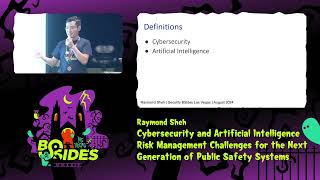
Cybersecurity and AI Risk Management Challenges for Next-Generation Public Safety Systems
Explore cybersecurity and AI risks in next-gen public safety systems. Learn how the tech community can support agencies in responsible adoption of advanced technologies for enhanced emergency response.
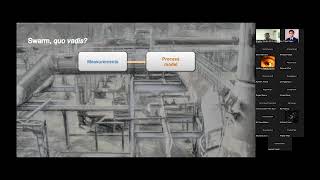
Physics-Assisted Multi-Robot Exploration
Explore cutting-edge techniques for multi-robot systems using physics-assisted approaches to enhance exploration and coordination in complex environments.

Open Source Robotics with Python - Learn Robotics with No Robot Required
Explore robotics simulation using Python, ROS 2, and Gazebo. Learn to develop robot code without hardware, leveraging open-source tools used by professionals in the field.
Letting the Body Find its Way: The Role of Attention in Skilled Movement
Explore the interplay between conscious thought and automatic processes in skilled movement, examining how attention impacts performance and expertise in physical activities.
The Effects of the Yips on Muscle Synergies in Throwing
Explores how the Yips affect muscle coordination in throwing, examining changes in motor control and muscle synergies. Discusses research findings on spatiotemporal patterns in affected baseball players.
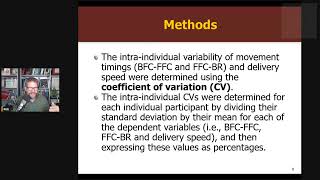
Functional Variability in Cricket Fast Bowling - Maintaining Delivery Speed
Explore how cricket fast bowlers maintain speed through functional movement variability, analyzing biomechanical adaptations and performance optimization strategies.
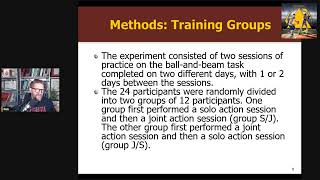
Freezing and Freeing of Degrees of Freedom in Joint Action Learning
Explore coordination in joint actions like piano-carrying, examining freezing and freeing of degrees of freedom across the joint action system and its implications for interpersonal coordination.
Freezing and Freeing Degrees of Freedom in Joint Action Learning
Explore coordination in joint actions like piano-carrying, examining Bernstein's freezing and freeing degrees of freedom theory across collaborative tasks and its implications for motor learning.
Relationship Between the Yips and Motor Imagery Ability in Athletes - Lecture 477
Explore the connection between the Yips and motor imagery in athletes, examining differences in mental visualization and an ecological perspective on this performance issue.
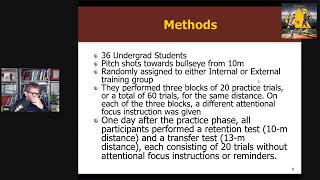
New Research Addressing Limitations in Focus of Attention Literature
Explores recent studies challenging traditional views on attentional focus in motor learning, offering insights into performance enhancement and motivation in sports and physical activities.
The Legacy of Michael Turvey - Contributions to Ecological Perception-Action
Exploring Michael Turvey's influential career and contributions to the ecological approach in perception-action research, highlighting his impact on the field.
Usefulness of Muscle Memory in Skill Acquisition - Lecture 469
Explores the concept of "muscle memory" in skill acquisition, examining its forms and relevance to the ecological approach. Discusses somaesthetic pathologies and their impact on everyday life.
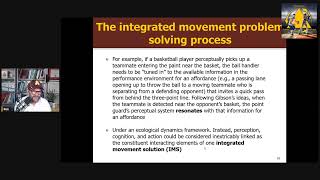
Movement as Problem Solving - Reconceptualizing Sport Behavior
Explore how sports movements can be reconceptualized as problem-solving activities, offering insights into athlete performance and skill development.
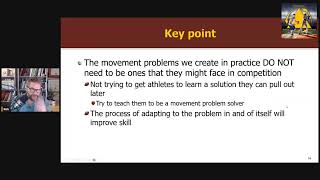
Representative Learning Design and The Ecological Approach to Transfer of Training
Explore ecological perspectives on training transfer, examining key elements for effective practice that translates to improved competitive performance.
Representative Learning Design and The Ecological Approach to Transfer of Training
Explore ecological transfer of training and representative learning design for effective skill improvement in competitive settings.