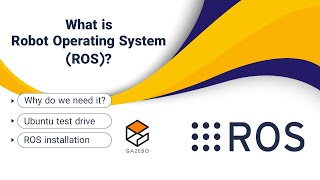
What is Robot Operating System - ROS 101 - ROS Tutorials for Beginners - Lesson 1
Comprehensive introduction to Robot Operating System (ROS), covering its fundamentals, Ubuntu basics, and installation process. Ideal for beginners in robotics and mechatronics.
Stanford Seminar - From Open-Source to Safety-Certified Robotic Software
Exploring the evolution of ROS from open-source to safety-certified software for robotics and automotive applications, discussing challenges, improvements, and future prospects in the field.

Upgrading ROS Projects to the New Gazebo - A Comprehensive Guide
Upgrade your ROS project to the new Gazebo. Learn installation, launch file modifications, URDF changes, topic bridging, ros2_control integration, and world creation for seamless transition.
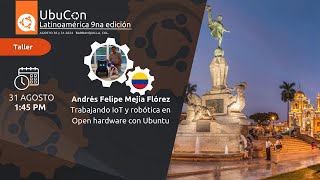
Trabajando IoT y Robótica en Open Hardware con Ubuntu - Simulación en Equipos de Bajo Costo
Aprende a instalar Ubuntu en dispositivos de bajo costo para IoT y robótica, simulando antes de implementar en modelos físicos. Explora el potencial del software y hardware libre en proyectos innovadores.

Explicando el Sistema de un Vehículo Autónomo con Python
Desmitificación del funcionamiento de vehículos autónomos usando Python. Exploración de frameworks como ROS, comunicación entre sensores y conceptos de ingeniería de software para sistemas en tiempo real.
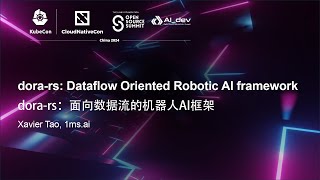
Dataflow Oriented Robotic AI Framework - dora-rs
Explore dora-rs, a Rust-based framework for AI-powered robotics. Learn how it integrates ML models, supports multiple languages, and enables rapid prototyping for research and education.

Isaac Sim 2020.2 - New Features in Omniverse Robotics App
Explore Isaac Sim 2020.2's new features for robotics simulation, including physics enhancements, custom platforms, ROS integration, and advanced visualization tools.
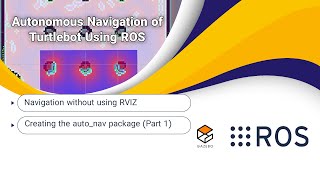
Autonomous Navigation of Turtlebot Using ROS - ROS Tutorials for Beginners
Learn to autonomously navigate a Turtlebot using ROS by creating an auto_nav package and writing custom code, without relying on RVIZ. Practical implementation of navigation concepts for mobile robots.
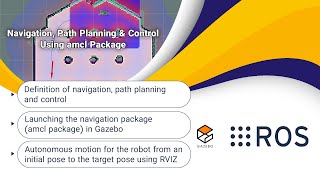
Navigation, Path Planning & Control Using AMCL Package - ROS Tutorials for Beginners
Learn to implement robot navigation, path planning, and control using ROS's amcl package. Practice localizing a robot during motion in Gazebo and setting autonomous movement between points in RVIZ.
ROS Services - Server and Client - ROS 101 - ROS Tutorials for Beginners
Learn to create ROS service clients and servers, exploring the differences between client-server and publisher-subscriber architectures in this hands-on tutorial with practical examples and troubleshooting tips.
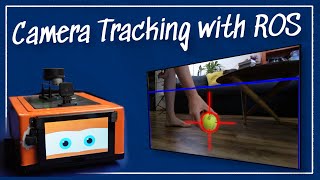
Chasing a Tennis Ball with ROS
Learn to use ROS and OpenCV for ball detection and tracking, enabling a robot to follow a tennis ball in both simulated and real-world environments.

Making Robot Navigation Easy with Nav2 and ROS
Learn to implement robot navigation using Nav2 and ROS, covering setup, simulation in Gazebo, real-world application, AMCL integration, and practical tips for efficient implementation.

Easy SLAM with ROS Using Slam Toolbox
Learn to implement SLAM for mobile robots using ROS and slam_toolbox. Covers setup, mapping, localization, and practical application on real robots. Ideal for beginners in robotics and autonomous navigation.

Easy Wireless Control for Your Homemade Robot
Learn to control homemade robots wirelessly using game controllers. Explore Linux and ROS integration, joystick-to-command conversion, and real-time feedback visualization in RViz.
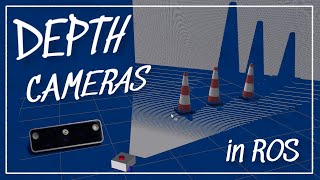
How to Get Your Robot to See in 3D - Depth Cameras in ROS
Learn to integrate depth cameras with ROS for 3D vision in robotics. Covers simulation in Gazebo, real camera setup (OAK-D Lite), and point cloud visualization for enhanced robot perception.

How Do We Add LIDAR to a ROS Robot?
Learn to integrate LIDAR into ROS robots, covering URDF modifications, Gazebo simulation, and real hardware integration. Gain practical insights for enhancing robot perception capabilities.

The Ultimate Guide to Using Motors in Robotics - Including ROS, Raspberry Pi
Comprehensive guide on integrating motors in robotics, covering hardware connections, control methods, and ROS implementation using Raspberry Pi. Includes practical demonstrations and code examples.
Driving Your Virtual Robot
Learn to simulate and control a virtual robot in Gazebo, covering spawning, launch files, control plugins, teleop, friction adjustment, RViz visualization, and obstacle course creation.
Simulating Robots with Gazebo and ROS - Getting Ready to Build Robots with ROS
Learn to simulate robots using Gazebo and ROS, covering installation, robot spawning, joint control, virtual world creation, and sensor integration. Gain practical skills for advanced robotics development.
How Do We Describe a Robot? With URDF! - Getting Ready to Build Robots with ROS
Learn to describe robots using URDF (Unified Robot Description Format) in ROS. Covers links, joints, syntax, xacro for simplification, and a practical example.
The Future of Robotics - Expert Insights from ROSCon 2023
Experts share insights on robotics community involvement, ROSCon experiences, and future trends, offering valuable perspectives for enthusiasts and professionals in the field.