One Analysis a Day Keeps Anomalies Away - Detecting and Analyzing Data Anomalies
Explore Python techniques for data observability, anomaly detection, and root cause analysis in multivariate time series. Learn to distinguish anomalies from data drift and turn insights into opportunities.
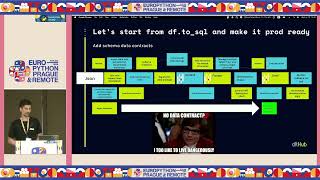
From Pandas to Production: ELT with dlt
Explore data load tool (dlt) to streamline data science workflows, overcome roadblocks, and transition smoothly from exploration to production. Learn best practices for data handling and managing failures with real-life examples.
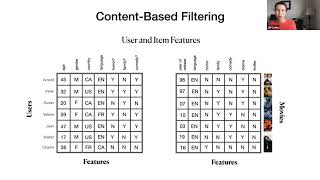
Building a MovieLens Recommender System
Explore recommendation systems and build your own using collaborative and content-based filtering techniques in Python with MovieLens dataset.
Machine Learning with PyCaret - Workshop
Explore rapid prototyping and ML pipeline development using PyCaret, an open-source, low-code machine learning library for Python.
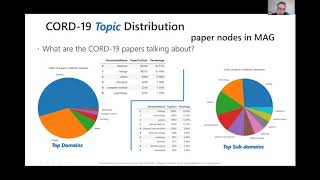
Knowledge Graph Recommendation Systems for COVID-19
Explore knowledge graph recommendation systems for COVID-19, leveraging Python skills to enhance understanding of pandemic-related data and insights.
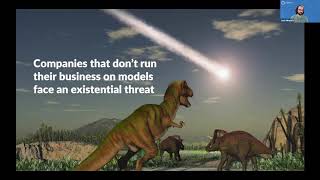
Introduction to Machine Learning with Python
Explore machine learning fundamentals using Python, covering key concepts and practical applications in this hands-on workshop led by a field engineer from Domino.
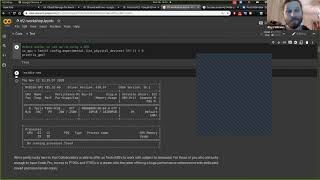
Introduction to TensorFlow - Hands-on Workshop
Explore TensorFlow through hands-on practice, completing an end-to-end tutorial to gain practical skills in building and deploying machine learning models.

Theoretical and Practical Perspectives in Geophysical Fluid Dynamics - Afternoon Session
Explore geophysical fluid dynamics through lectures, talks, and tutorials on eddies, waves, turbulence, and climate modeling. Gain insights from theory, models, and observations in this interdisciplinary meeting.
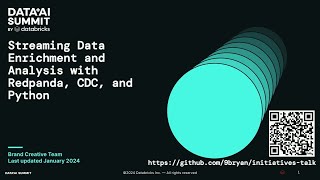
Streaming Data Enrichment and Analysis with Redpanda, CDC, and Python
Explore real-time data enrichment using streaming platforms, Debezium for CDC, and Python-based ML for sentiment analysis. Learn strategies for data aggregation and visualization in modern streaming architectures.
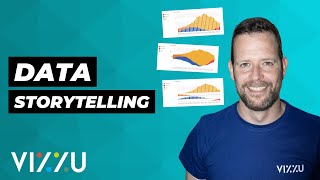
Data Storytelling in Python with Vizzu - Interview with Peter Vidos
Explore data storytelling with Vizzu, a Python tool revolutionizing data visualization. Learn to create impactful charts, animate visualizations, and effectively communicate insights for various audiences.
How to Learn Python - Python Roadmap in 2024
Comprehensive Python guide covering basics to advanced topics. Learn essential skills for software development, data science, and machine learning. Ideal for beginners and professionals seeking to enhance their Python expertise.
Building Data Applications on Databricks in 20 Minutes
Learn to create data apps for non-technical users, enabling data-driven decisions. Explore rapid app development using Python frameworks, data access methods, security, governance, and production deployment on Databricks.
Ten-Times Easier Development Using Databricks Connect and Serverless Spark
Explore seamless Databricks integration with IDEs using Databricks Connect and serverless Spark. Learn to leverage instant, elastic infrastructure for efficient data application development.
Getting Started with Databricks Clean Rooms
Explore privacy-safe data collaboration using Databricks Clean Rooms. Learn to analyze shared data, train ML models, enforce privacy policies, and enable advanced use cases across platforms.
Building a Multimodal Data Lakehouse with the Daft Distributed Python Dataframe
Explore Daft, a next-gen distributed query engine for processing multimodal data at scale. Learn to build a multimodal data lakehouse using familiar dataframe interfaces on existing infrastructure.
Reducing Recruiting Costs Using Databricks Foundation Models
Explore how Databricks Foundation Models and multi-agent approach streamline technical candidate evaluation, reducing recruiting costs and improving efficiency in the hiring process.
Lightning-fast R and Python Library Loading for Databricks Clusters
Discover a productivity hack to load R packages and Python libraries in under 60 seconds when spinning up clusters, eliminating wait times and boosting efficiency in data science workflows.
Maximizing Productivity with Databricks Assistant - Key Strategies and Tips
Discover how Databricks Assistant enhances productivity through AI-powered code creation, optimization, and troubleshooting. Learn to leverage natural language for SQL, Python, and data visualization while ensuring privacy and security.

Exploring Datasets with Python and Pandas
Explore datasets using Python and pandas. Learn essential data analysis techniques for scientists, engineers, and analysts working with diverse datasets.
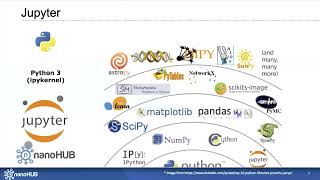
A Guided Tour of Interactive Jupyter Notebooks Powered by nanoHUB
Explore interactive Jupyter Notebooks on nanoHUB. Learn fundamentals, develop code, analyze data, create visualizations, and build GUIs using Jupyter widgets and nanohub-uidl library.
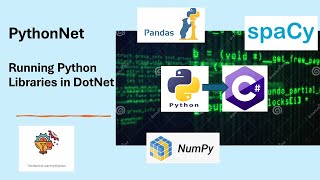
MLOps: Using Python Libraries in DotNet - Spacy, Numpy, Pandas
Integrate Python libraries like Spacy, NumPy, and Pandas into .NET applications using Pythonnet for enhanced machine learning and data science capabilities.