Improving Package Repository Security - From White Papers to Practice
Explore package repository security challenges, modern practices, and collaborative solutions for improving community repositories like PyPI and NPM.
Will Large-Scale Automated Scanning Stop Malware on OSS Repositories?
Explore challenges of automated malware scanning in open-source repositories, focusing on PyPI's experience. Learn why current approaches fall short and discover emerging solutions for effective package security.
Securing Content Distribution with RSTUF, an Incubating OpenSSF Project
Explore RSTUF, an OpenSSF project for securing content distribution. Learn about its implementation, adoption by PyPI and RubyGens, and use in private repositories and Archivista for in-toto attestation storage.
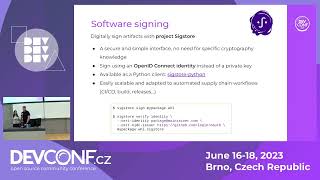
Securing Python Projects Supply Chain
Explore best practices and tools for securing Python projects' supply chain, from development to distribution. Learn about cryptographic signatures, SBOMs, and SLSA attestations.
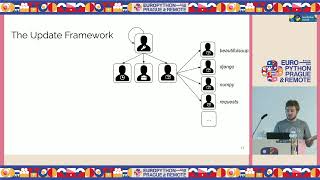
TUF Joins PyPI - Securing Package Delivery with The Update Framework
Explore TUF integration with PyPI using RSTUF, addressing security challenges in package delivery and updates. Learn about PEP 458 and Warehouse implementation.

Project Zen - Improving Apache Spark for Python Users
Discover improvements in Apache Spark for Python users, including redesigned documentation, type hints, PyPI distribution options, and enhanced PySpark features for a more Pythonic experience.
Your Step by Step Guide on Python Libraries Development
Comprehensive guide on advanced Python library development, covering class implementation, package creation, and PyPi upload using practical examples and step-by-step instructions.
PyPI in a Box - Using a Raspberry Pi as a Portable PyPI Server
Learn how to create a portable PyPI server using a Raspberry Pi, enabling offline access to Python packages for areas with limited internet connectivity.
Python Unit Testing and Package Submission - Build with Python 5
Learn Python unit testing techniques, mock print outputs, and update PyPI packages to enhance your development skills and package management abilities.
Building and Publishing a Python Package - How to Distribute on PyPI
Learn to create, structure, and publish a Python package on PyPI, covering setup.py, distribution types, and the upload process in under 15 minutes.
Secure Python Packaging and Release Using Continuous Deployment
Learn to securely package and release Python projects using continuous deployment, covering security improvements, build reproducibility, automated PyPI deployment, and release signing with Sigstore.
The Hitchhiker's Guide to CLIs in Python
Explore the CLI galaxy: history, anatomy, Python packages, and hands-on creation of a CLI using Click. Learn to package and publish on PyPI in this cosmic journey.
Open Source on Easy Mode
Streamline open source project maintenance with automation tools and best practices for packaging, testing, CI/CD, documentation, and community engagement. Focus on the fun parts of development.

Conda - Easier Installs and Simpler Builds
Explore Conda: a cross-platform package manager for Python and other languages. Learn installation, environment management, and package building for improved productivity.

Publish Your Code So Others Can Use It in 5 Easy Steps
Learn to publish Python code effectively with tools like GitHub, Travis CI, and PyPI, enhancing usability and collaboration potential for your open-source projects.
Writing Awesome PyPI Packages in Python
Learn best practices for creating PyPI packages, including project structure, testing, configuration, and tools to enhance development and collaboration.
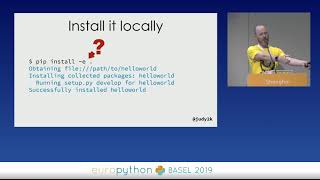
Publish a Perfect Python Package on PyPI
Learn to create and publish a Python package on PyPI, covering project structure, setup files, testing, documentation, and best practices for successful distribution and maintenance.

The Hitchhiker's Guide to CLIs in Python
Explore the history and anatomy of command-line interfaces, discover Python packages for CLI creation, and learn to build, package, and publish your own CLI using Click.

Python Packaging Automation - Auto-Publish to PyPI via Pull Requests
Streamline Python package releases with automated publishing to PyPI via pull requests, improving release frequency and empowering contributors to issue their own releases.

Whose Sign Is It Anyway?
Explore digital signatures' true meaning, implications of key handling policies, and identity concepts in software supply chain security. Dive deep into cryptographic realities and case studies.

Craft Complex Mock Data Using Graph-Based Configuration Files
Master the creation of complex, interconnected mock datasets using Python's graph-data-generator package through JSON configuration files for more efficient development and testing workflows.