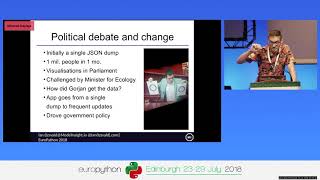
Citizen Science with Python
Explore data-driven humanitarian and healthcare projects using Python, with audience experiments and inspiration for running your own scientific experiments using the Python stack.
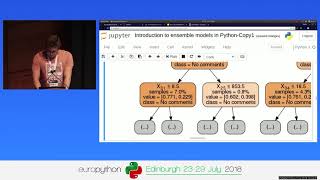
Walking the Random Forest and Boosting the Trees
Explore tree-based ensemble models like Random Forest and Gradient Boosting, understanding their theory and implementation in Python for effective data science applications.
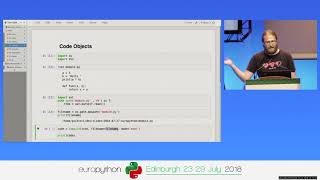
Bytecodes and Stacks - A Look at CPython’s Compiler and Its Execution Model
Explore CPython's inner workings: from code compilation to execution. Learn about tokenization, parsing, bytecode, and the stack-based virtual machine, suitable for Python developers of all levels.
Sprint Orientation
Orientación para participar en sprints de desarrollo colaborativo en Python, explorando oportunidades de contribución y mejora de proyectos de código abierto.

Get Productive with Python in Visual Studio Code
Maximize Python productivity with Visual Studio Code: from basic setup to advanced features like debugging, testing, and collaborative coding. Learn tips and tricks for efficient development.
From Linear Algebra to Machine Learning
Explore the mathematical foundations of machine learning, from linear algebra to optimization, with practical Python implementations using NumPy, SciPy, and TensorFlow.
Change Music in Two Epochs
Explore deep learning applications in music: instrument detection, isolation, and generation. Learn to build synthesizers, create datasets, and adapt models for increasing complexity.
Integration Tests with Super Powers
Aprenda estratégias eficazes para escrever testes de integração robustos usando Pytest, injeção de dependências e Docker Compose, melhorando a manutenibilidade e extensibilidade de suas aplicações.
EduBlocks - Making the Transition to Python Easier
Discover EduBlocks, a drag-and-drop Python 3 tool created by 14-year-old Josh Lowe to bridge the gap between block-based programming and Python, making coding more accessible for students and teachers worldwide.
Python vs Rust for Simulation
Comparison of Python and Rust for simulation engines, exploring performance, simplicity, code efficiency, utilities, and compatibility. Insights for developers choosing between these languages.
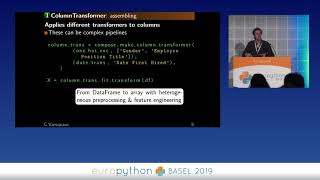
Machine Learning on Non-Curated Data
Techniques for handling missing values and non-normalized categories in machine learning, focusing on practical solutions using scikit-learn and DirtyCat for efficient data analysis without extensive cleaning.
Do We Have a Diversity Problem in Python Community
Exploring gender diversity in the Python community through data analysis, examining representation at conferences, and proposing actionable steps to foster inclusivity and balance.
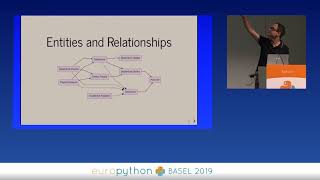
From Days to Minutes, From Minutes to Milliseconds with SQLAlchemy
Optimize SQLAlchemy performance by addressing N+1 queries, improving mass operations, and understanding ORM-database interactions for significant speed improvements.
Image Processing with Scikit-Image and Dash
Explore image processing using scikit-image and Dash. Learn to build interactive applications for transforming, analyzing, and visualizing images with Python tools in various scientific and industrial contexts.
How Software Can Feed the World
Explore how Python-based software supports innovative indoor farming, addressing global food challenges through IoT, real-time monitoring, and edge computing with AI.
Python for Realtime Audio Processing in a Live Music Context
Explore real-time audio processing for live music using Python, leveraging the pyo module to augment acoustic instruments with digital capabilities and create unique sonic experiences.
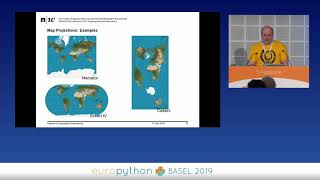
Geospatial Analysis Using Python and JupyterHub
Explore geospatial data processing and visualization using Python, covering vector and raster analysis, deep learning applications, and high-performance computing techniques for efficient spatial data handling.
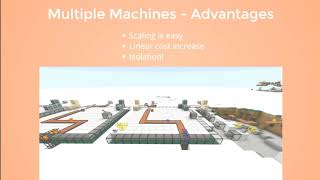
Python's Parallel Programming Possibilities - 4 Levels of Concurrency
Explore Python's parallel programming options: multiple machines, processes, threads, and green threads. Learn implementation techniques, potential pitfalls, and practical examples for each concurrency level.
Unleash the Power of C++ in Python
Explore techniques for integrating C++ libraries with Python, enhancing performance while maintaining simplicity. Learn about language bindings and the Qt project's approach using Shiboken.
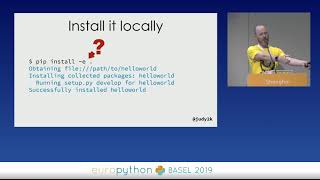
Publish a Perfect Python Package on PyPI
Learn to create and publish a Python package on PyPI, covering project structure, setup files, testing, documentation, and best practices for successful distribution and maintenance.
PEP Yourself - 10 PEPs You Should Pay Attention To
Explore 10 essential Python Enhancement Proposals (PEPs) and their impact on everyday coding, from style guides to advanced features like data classes and assignment expressions.