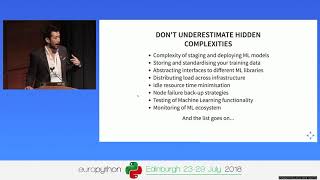
Industrial Machine Learning Pipelines with Python & Airflow
Learn to build scalable, distributed machine learning data pipelines using Airflow with Celery backend. Gain insights on industry challenges, comparisons with other technologies, and practical knowledge for implementation.
Understanding and Applying CQRS
Learn to implement Command Query Responsibility Segregation (CQRS) in Python using Nameko framework to enhance database performance and scalability in high-traffic applications.
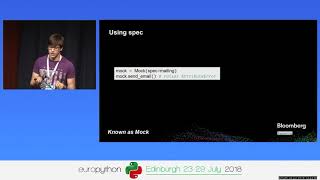
Mocks, Dummies, Stubs & Spies
Explore testing doubles in Python: mocks, fakes, dummies, stubs, and spies. Learn their differences, use cases, and implementation techniques for effective unit testing and dependency isolation.
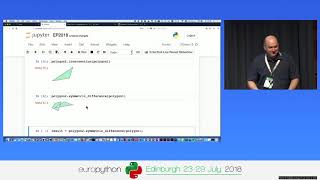
Processing Geodata Using Python and Open Source Modules
Learn to analyze, manipulate, and visualize geospatial data using Python and open-source modules like Shapely, Fiona, rasterio, and GeoPandas. Explore vector and raster data handling, spatial reference systems, and map creation.
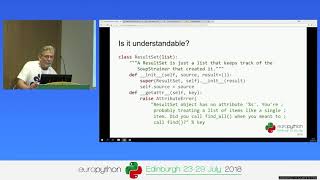
Writing Good Error Messages
Learn to craft clear, actionable error messages for better code readability and user experience. Explore common pitfalls and effective techniques for writing informative error messages in Python.
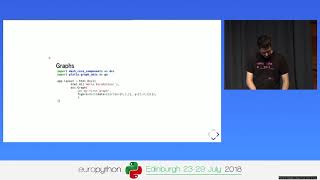
Easy Interactive Data Applications with Dash
Learn to create interactive dashboards and web data applications using Plotly Dash, a Python framework. Discover how to build a small interactive web app with Twitch API data, using only Python.
Exploring the Python AST Ecosystem
Dive into Python's abstract syntax tree ecosystem, exploring tools for visualization, creation, and transformation. Learn practical applications in static analysis and metaprogramming for enhanced code manipulation.
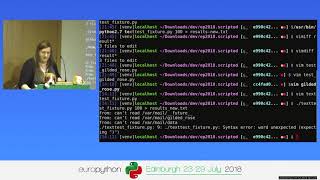
A Tale of Refactoring
Explore a practical approach to refactoring large, complex functions using Python's dynamic features, improving code maintainability and performance through real-world examples.
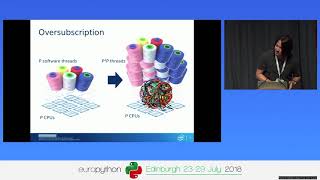
Addressing Multithreading and Multiprocessing in Transparent and Pythonic Ways
Explore advanced Python techniques for efficient multithreading and multiprocessing, including GIL management, static multiprocessing, and thread pool control for optimal performance on multi-core systems.
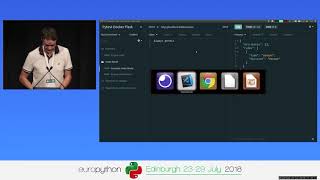
System Testing with Pytest, Docker, and Flask
Learn to combine Pytest fixtures with Docker for high-level integration testing of microservices, and embed mock web services using Flask to control and verify system component interactions.
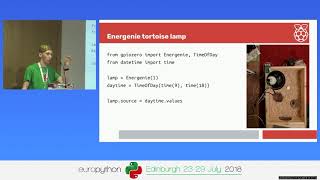
Programming Paradigms for Physical Computing and IoT
Explore multi-paradigm programming for GPIO devices on Raspberry Pi, from simple scripts to complex interactions, using Pythonic code for IoT and physical computing applications.
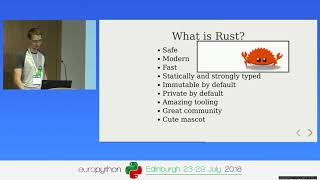
Rust and Python - Oxidize Your Snake
Explore integrating Rust with Python for faster, safer native modules. Learn about PyO3 library, compare it with alternatives, and see how to enhance Python's performance and concurrency.
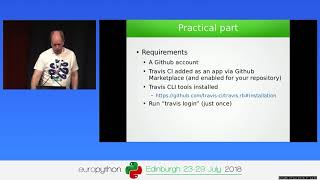
Automating Testing and Deployment with Github and Travis
Streamline open-source project maintenance by automating testing and deployment using Github and Travis. Learn to create an efficient release pipeline, reducing errors and simplifying the process.

How Async and Await Ended Up in Python
Explore the evolution of asynchronous programming in Python, from regular functions to async/await syntax. Learn about iterators, generators, and coroutines while discovering how to write efficient async code.
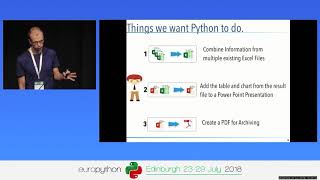
The Boring Python Office Talk - Automate Powerpoint, Excel, and PDF with Python
Discover Python's power to automate office tasks, from creating Excel reports and PowerPoint presentations to manipulating PDFs, enhancing productivity and reducing manual work.
Domain Driven Design Patterns in Python
Explore Domain-Driven Design patterns in Python, learning to model complex domains and implement tactical patterns for robust, maintainable software in large-scale projects.
Python and GraphQL
Explore GraphQL implementation in Python using Flask and SQLAlchemy, covering basics, advanced techniques, and tools for efficient API development and documentation.
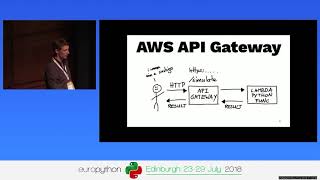
Winning Card Games with 1000+ CPUs
Explore how AWS Lambda and Python concurrency can optimize a genetic algorithm for winning the SushiGo card game, discussing implementation, challenges, and results.
Rehabilitating Pickle
Explore Pickle's security risks, potential defenses, and alternatives for safe Python object serialization in distributed systems.
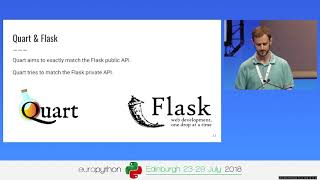
Quart - A asyncio Alternative to Flask
Explore Quart, an asyncio-based alternative to Flask, offering enhanced features like HTTP/2 and websockets while maintaining Flask's API for efficient web development.
Air Quality & Python - Developing Online Analysis Tools
Explore Python-based online tools for analyzing air quality data, integrating libraries like Pandas and NumPy with Django and Plot.ly to create interactive visualizations and support research and education.