Information and Model Misspecification - Classical Statistics vs. Info-Metrics
Explore info-metrics framework for handling model misspecification, contrasting classical methods with innovative approaches using entropy and empirical likelihood in power law distributions.

No Such Thing As Public Opinion - The Paradox of Collective Decision-Making
Explore paradoxes in public opinion polling and voting systems, from budget preferences to election outcomes, using mathematical insights from Condorcet to Arrow's theorem.
The Physics of Brain Network Architecture, Function, and Control
Explore brain network architecture and dynamics using advanced imaging and computational tools. Discover control points, activity trajectories, and network evolution from childhood to adulthood.

Harnessing Chaos and Predicting the Unpredictable with Artificial Intelligence
Explore how Reservoir Computing and AI can predict chaotic systems like weather and brain dynamics, pushing beyond traditional forecasting limits and combining knowledge-free and knowledge-based approaches.

Forecasting Natural Disasters in Complex Earth Systems - SFI Lecture
Explore forecasting natural disasters using satellite data, nonlinear dynamics, and numerical simulations. Learn about ensemble forecasting and pattern methods for predicting extreme events.
Stylish Mathematics: Quantifying Artistic Style Through Computation
Explore the intersection of mathematics and art through computational analysis of style in literature, visual arts, and dance, with applications in authentication and quantification of artistic expression.
The Swine Flu and You: Predicting and Controlling the H1N1 Pandemic
Explore the H1N1 pandemic: its impact, control strategies, and mathematical modeling for prediction and prevention. Learn about public health responses and the science behind epidemic management.
Appealing to Intuitions - The Necessity and Limitations in Mathematics and Ethics
Explore the role of intuitions in reasoning and decision-making, from mathematics to ethics. Discover why we can't eliminate intuitions despite their limitations and paradoxes.
The Future of Terrorism - Patterns, Trends, and Scientific Approaches
Explore patterns and trends in modern terrorism over the past 50 years, examining data-driven insights to understand and potentially forecast future threats and developments.

Sending Secrets: Security and Cryptography in a Quantum World
Explore cryptography's evolution, from Caesar's cipher to quantum computing challenges. Learn about modern encryption, prime numbers, and the potential impact of quantum computers on cybersecurity.
I Get All the News I Need from the Sports Section - Analyzing Streaks in Sports
Explore how statistical analysis challenges the concept of "hot streaks" in sports, revealing that scoring patterns are largely random and that professional sports are becoming increasingly competitive.
The Joy of x - A Guided Tour of Math
Explore the universal language of math and its connections to everyday life with world-class mathematician Steven Strogatz, as he shares insights from his efforts to make mathematics accessible to all.
Physics-Inspired Algorithms and Phase Transitions in Community Detection - 2014 Symposium
Explore physics-inspired algorithms for community detection, including phase transitions, statistical inference, and belief propagation. Learn about innovative approaches to clustering and network analysis.
The Conceptual Framework of Urban Scaling - 2014
Explore the theoretical foundations of urban scaling, examining how cities grow and evolve over time through complex systems analysis and mathematical modeling.
Large-Scale Structure in Networks - 2014
Explore large-scale network structures and their implications in complex systems, focusing on theoretical approaches and practical applications in various fields.
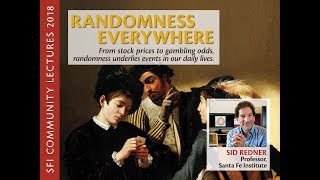
Randomness Everywhere - Understanding Random Walk Models and Their Applications
Explore the fascinating world of randomness with physicist Sid Redner. Discover how random walk models explain everyday phenomena, from stock prices to gambling, and their applications in various fields.
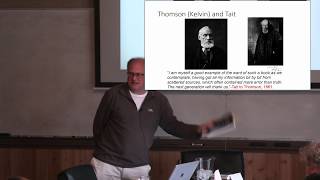
Mandelbrot, 1/f Noise, and The Mind's Eye in Complexity Science
Exploring Mandelbrot's contributions to 1/f noise, long-range dependence, and fractional models. Discusses the impact of cognitive diversity on scientific progress and the importance of visual thinking in mathematics.
Male Mate Choice and Female Ornamentation - A Mathematical Model
Explores mathematical model challenging assumptions about male mate choice and female ornamentation in polygynous species, revealing weak sexual selection on female traits despite common inferences.
On the Foundations of Info-Metrics
Explore the science of info-metrics for modeling and inferring from limited data, with insights on reasoning under uncertainty and insufficient information.
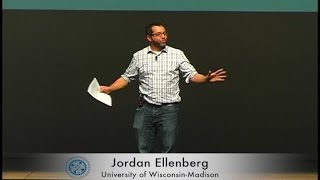
The Unlikely Power of Uncertainty and Contradiction in Mathematics
Explore the power of uncertainty and contradiction in mathematics, and how these concepts can be applied to real-world situations, from disease modeling to political predictions.

Darwin's Extra Sense - Mathematics in Life Sciences
Explore how modern mathematics enhances our understanding of life sciences, bringing an "extra sense" to biological research as envisioned by Charles Darwin.