A-Level Exams - Sample Assessment
Comprehensive practice with sample A-level Pure Mathematics and Statistics & Mechanics exams, aligned with Edexcel's new specification, to prepare students for the rigorous assessment format.
Knotty Problems - Marc Lackenby
Explore knot theory, topology, and unsolved mathematical problems with Professor Marc Lackenby in this engaging lecture on the fascinating world of knots and their applications.
A-Level 2021 Practice Exams
Practice exams for A-level Pure Mathematics and Statistics & Mechanics, featuring Edexcel-style questions to prepare students for 2021 examinations.
Combinatorial Invariance: A Case Study of Pure Math / Machine Learning Interaction - Geordie Williamson
Explore the intersection of pure mathematics and machine learning through the lens of combinatorial invariance, featuring insights on neural networks and their application to mathematical conjectures.
Multivariate Method of Moments: From Sample Complexity to Implicit Computations - 2023
Explore o método de momentos multivariados, sua complexidade amostral e cálculos implícitos na matemática aplicada e industrial, com insights da teoria pura.
Mathematical and Computational Challenges in Quantum Computing - IPAM UCLA
Explore mathematical and computational challenges in quantum computing through workshops and collaborations, focusing on empowering mathematics to impact quantum information science and vice versa.
The Big Mathematics Divide - Between "Exact" and "Approximate" - Sociology and Pure Maths
Explores the divide between exact and approximate theories in pure mathematics, challenging conventional views on arithmetic, algebra, topology, and number theory, including the Riemann Hypothesis.
Is Pure Mathematics Logically Viable? Five Challenges - Sociology and Pure Maths
Exploring five challenges to pure mathematics' logical viability, this talk critically examines the field's foundations and encourages reevaluation of its core principles and practices.
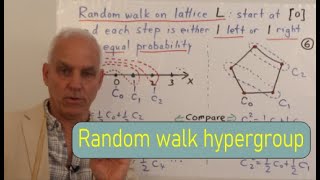
The One Dimensional Random Walk Hypergroup - Diffusion Symmetry
Explore affine transformations, representation theory, and random walks on a 1D lattice. Learn about hypergroups and calculate probabilities in this advanced mathematics lecture.

Curt Jaimungal Interview and Theories of Everything - Sociology and Pure Maths
Exploring diverse topics from physics and mathematics to consciousness and UFOs, this wide-ranging interview delves into theories of everything, sociological aspects of science, and the intersection of academic disciplines.
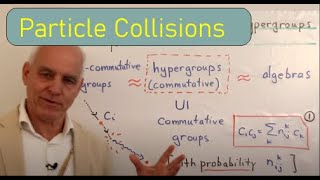
Particle Collisions, Hypergroups and Quadratic Residues - Diffusion Symmetry 3
Explore particle collision models, hypergroups, and quadratic residues in algebraic structures. Learn about fusion rule algebras, complete graphs, and primitive roots in prime fields.
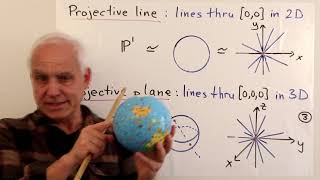
History of Geometry IV - The Emergence of Higher Dimensions - Sociology and Pure Maths
Explore the emergence of higher dimensions in 19th-century geometry, including projective geometry, cyclography, and spaces of lines and curves, revolutionizing our understanding of mathematical spaces.
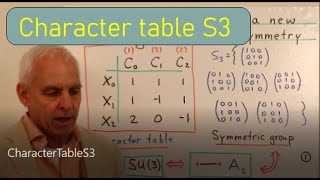
The S3 Character Table - A New Meaning - Diffusion Symmetry
Explore the S3 character table from a diffusion symmetry perspective, uncovering new interpretations in group theory, combinatorics, and algebraic structures.
Emile Borel - Real Number Enthusiast or Skeptic? - Sociology and Pure Mathematics
Explore Emile Borel's contributions to measure theory and his skepticism about real numbers, including normal numbers and the intriguing concept of a "know-it-all" number.
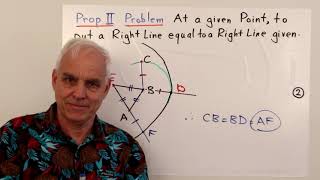
Euclid Book 1 Props I - V - A Critical Review - Sociology and Pure Mathematics - N J Wildberger
Critical review of Euclid's Book 1 Propositions I-V, examining logical foundations and constructions. Explores historical significance and questions modern interpretations of Euclidean geometry.
John Keil's Preface to Euclid - Sociology and Pure Mathematics
Exploration of John Keil's 1723 preface to Euclid's Elements, discussing its historical context and significance in geometry, including comparisons to Isaac Barrow's version.
Sociology and Pure Mathematics - Pure Mathematics Relies on a Fake Arithmetic
Challenges modern pure mathematics' reliance on "fake arithmetic," proposing alternative approaches to calculus without infinite processes and calling for sociological analysis of mathematical practices.
The Perspective Image of a Square III - The Solution
Explore the solution to projecting a square onto a quadrilateral, delving into geometry, perpendicularity, and perspective. Gain insights into mathematical problem-solving and related concepts.
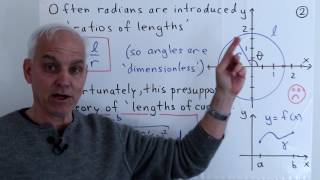
Understanding Uniform Motion - Are Radians Really Necessary? - WildTrig
Explores the concept of radians, questioning their necessity in uniform motion and examining the distinction between pure and applied mathematics in this context.
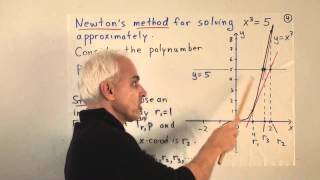
Newton's Method for Approximating Cube Roots - Real Numbers and Limits Math Foundations
Newton's method for approximating cube roots: explore cubes, cube roots, and techniques to find approximate solutions. Learn about Taylor expansion, tangent lines, and advanced methods like the weighted Babylonian and quadratic Newton approaches.
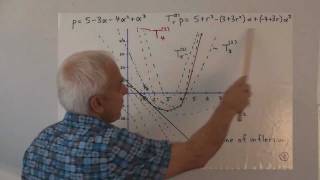
Cubics and the Prettiest Theorem in Calculus - Arithmetic and Geometry Math Foundations
Explore cubic polynomials, their calculus, and tangent conics. Learn about Etienne Ghys' theorem, considered one of the most beautiful in calculus, with an elegant proof provided.