Predicting Intersection Signal Timing
Explore signal control parameters, queueing theory, and dynamic programming for optimizing intersection traffic flow and reducing fuel consumption.
Equilibrium in Queueing System with Strategic Users
Explore strategic user behavior in single-server queueing systems. Learn game theory applications for optimal entry timing in preemptive access and retrial queues.
H-theorems for Queues with Reneging
Delve into measure-valued transport equations and their applications in many-server queues, exploring mathematical modeling techniques for systems ranging from biology to operations research.

System Performance and Queuing Theory - Concepts and Application
Explore queueing theory basics and its application to software systems. Learn to configure systems, predict performance, and identify breaking points using real-world data and metrics.

Managing Bottlenecks Using Diffusion and Reflection
Explore bottleneck management through diffusion and reflection in this lecture by Professor Ruth Williams, addressing stochastic systems and anomalous diffusion.
Time Sampled M/M/1 Queue and Burke's Theorem - Lecture 66
Explore Burke's Theorem and M/M/1 Queue concepts, including reversibility and time sampling, to enhance understanding of queueing theory.
M/G/1 Queue - Expected Busy Period, Waiting Time, and PASTA - Lecture 37
Explore M/G/1 queues, analyzing busy periods, waiting times, PASTA principle, and Little's theorem for enhanced understanding of queueing systems.
Introduction to Continuous Time Markov Chains - Lecture 67
Explore continuous time Markov chains, embedded DTMC, and M/M/1 Queue concepts to enhance your understanding of stochastic processes and queueing theory.
CS885 - Semi-Markov Decision Processes
Explore semi-Markov decision processes, reinforcement learning, and queueing theory. Learn about Bellman's equation and the option framework for advanced decision-making strategies.
Harmony: A Congestion-free Datacenter Architecture
Explore a novel datacenter architecture that guarantees congestion-free message delivery, offering bounded queueing and delays without sacrificing network utilization or performance.
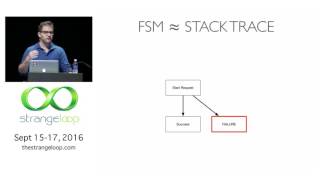
A Frontend Server, Front to Back
Explore the implementation of Fitbit's frontend server, covering queueing theory, software design, GC tuning, and Netty library, with practical insights on building fast, stable, scalable, and extensible systems.

Stop Rate Limiting - Capacity Management Done Right
Explore capacity management alternatives to rate limiting, using Little's Law and concurrency control for better API performance and resource isolation in microservices architectures.
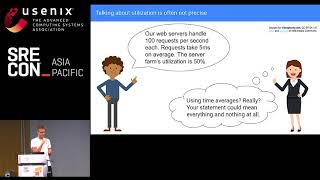
How to Trade off Server Utilization and Tail Latency
Explore the trade-offs between server utilization and tail latency in large-scale systems. Learn queueing theory basics, analyze typical outcomes, and gain practical insights for optimizing system performance.
Responding in a Timely Manner
Explore design patterns and algorithms for building responsive systems that meet predictable response time guarantees, regardless of load or dataset size, even during burst traffic and partial failures.
Using LiveView to Eliminate Constraints on Your Team
Explore how LiveView can eliminate team constraints through theory of constraints, team topologies, and queueing theory insights.
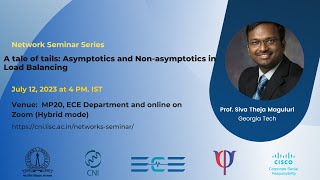
A Tale of Tails: Asymptotics and Non-asymptotics in Load Balancing
Delve into queueing systems analysis, exploring asymptotic regimes, load balancing techniques, and non-asymptotic tail bounds through transform methods and shortest-queue algorithms.
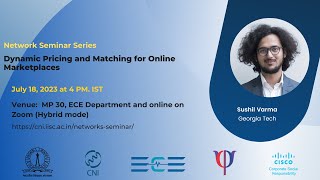
Dynamic Pricing and Matching for Online Marketplaces
Delve into advanced queueing theory and pricing strategies for online marketplaces, exploring bipartite matching networks, max-weight matching policies, and heavy traffic analysis for optimal profit and delay management.