Geometry with Linear Algebra - Wild Linear Algebra A - NJ Wildberger
Explore the connection between linear algebra and geometry, focusing on Pythagoras' theorem and perpendicularity. Learn how linear algebra provides a solid framework for understanding Euclidean and other geometries.
The Area of a Triangle and Archimedes' Formula - Famous Math Problems
Novel approach to calculating triangle area using rational trigonometry, avoiding unnecessary irrationalities in Heron's formula. Presents a clearer solution based on Pythagoras' theorem and Triple quad formula, with practical applications.
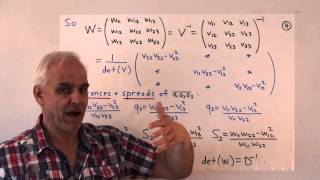
Trigonometry in Elliptic Geometry II - Universal Hyperbolic Geometry - NJ Wildberger
Explore elliptic trigonometry laws, including Spread, Cross, and Dual cross, using linear algebra. Learn proofs for Thales', Pythagoras', and Triple Quad formulas in elliptic geometry.
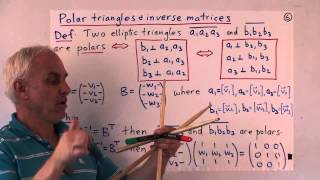
Trigonometry in Elliptic Geometry - Universal Hyperbolic Geometry
Explore elliptic geometry's trigonometry, including projective points, quadrances, and spreads. Learn key laws connecting triangles and their polar counterparts in this fundamental mathematical realm.
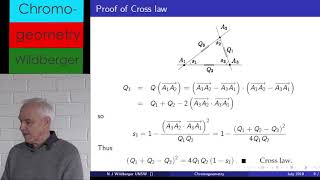
How Chromogeometry Transcends Klein's Erlangen Program for Planar Geometries - N J Wildberger
Discover chromogeometry's three-fold symmetry in planar geometry, unifying Euclidean and relativistic geometries. Explore rational trigonometry, colored Pythagoras theorems, Euler lines, and novel perspectives on conic sections.
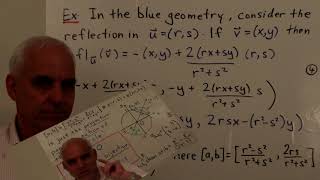
The Group of Blue Planar Isometries - WildTrig: Intro to Rational Trigonometry - N J Wildberger
Explore Euclidean isometries from a rational perspective, focusing on grounded isometries and deriving formulas for projections, reflections, and compositions in planar geometry.
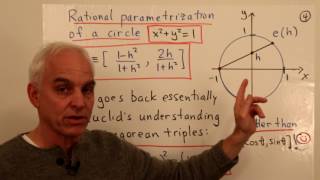
Rational Trigonometry and Mathematics Education - WildTrig: Intro to Rational Trigonometry
Innovative approach to teaching geometry and trigonometry, emphasizing rational methods for Year 9-10 students. Covers shapes, transformations, circle geometry, and challenges traditional concepts.
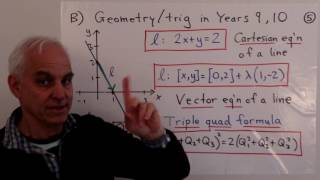
Maths Education and Rational Trigonometry - WildTrig: Intro to Rational Trigonometry
Innovative approach to teaching geometry and trigonometry, emphasizing rational trigonometry for Year 9-10 students. Covers progression from basic shapes to advanced topics, including circle geometry and 'pi'.
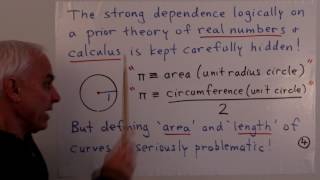
Maths Education and Rational Trigonometry - WildTrig: Intro to Rational Trigonometry
Exploring the challenges in trigonometry education and introducing rational trigonometry as a potential solution to improve mathematical understanding for students.
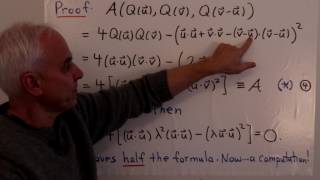
The General Rational Laws of Trigonometry - WildTrig: Intro to Rational Trigonometry
Explore general rational trigonometry laws in a planar setting, deriving elegant algebraic formulas without transcendental functions or real numbers. Learn key mathematical principles efficiently.
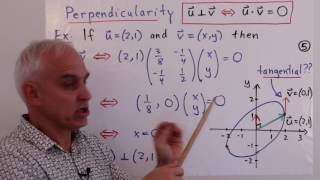
Geometry With a General Dot Product - WildTrig: Intro to Rational Trigonometry - N J Wildberger
Exploring advanced geometry using rational trigonometry and general dot products. Extends metrical geometry beyond chromogeometry, introducing new concepts of quadrance, perpendicularity, and spread.
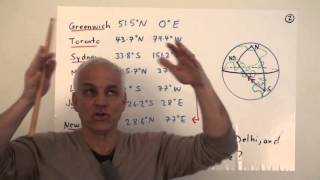
Applications of Rational Spherical Trigonometry II - Universal Hyperbolic Geometry
Explore spherical trigonometry to calculate distance and bearing between two points on Earth, comparing classical and modern rational methods for solving real-world navigation problems.
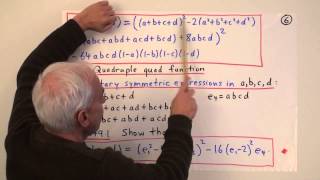
The Circumquadrance of a Cyclic Quadrilateral - Rational Geometry Math Foundations - NJ Wildberger
Explore a rational approach to cyclic quadrilateral geometry, avoiding transcendental quantities and extending to other fields and geometries. Learn Parameshvara's formula and its non-convex counterpart.
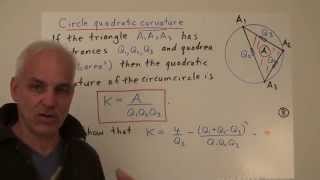
The Triple Spread Formula, Circumcircles and Curvature - Rational Geometry Math Foundations
Explores the Triple spread formula in Rational Trigonometry, relating it to circumcircles and curvature. Connects projective geometry with one and two-dimensional geometries through core circles and quadratic curvature.
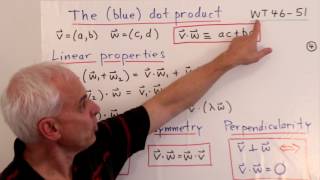
Spreads, Determinants and Chromogeometry - WildTrig: Intro to Rational Trigonometry
Explore spreads, dot products, and chromogeometry in linear algebra. Learn about vector operations, quadrance, perpendicularity, and the fascinating trilogy of blue, red, and green dot products.
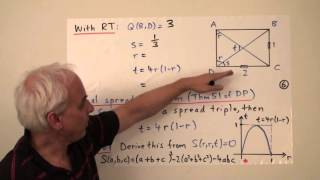
Eight Ninths and the Geometry of A4 Paper - Universal Hyperbolic Geometry
Explore the fascinating geometry of A4 paper, its connection to the spread 8/9, and how Rational Trigonometry provides deeper insights into everyday objects and mathematical concepts.

Rational Trigonometry, Generalized Triangle Geometry and Four-Fold Incenter Symmetry
Explores rational trigonometry and generalized triangle geometry, introducing quadrances, spreads, and chromogeometry. Discusses Euler lines, incenters, and various triangle centers, culminating in a novel result on colored incenters.
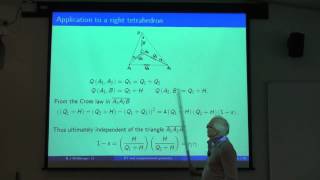
Towards a More Computational Mathematics - Rational Trigonometry and New Foundations for Geometry
Explores a computational approach to mathematics using rational numbers, introducing rational trigonometry and its laws. Covers applications in geometry, spread polynomials, and projective trigonometry.
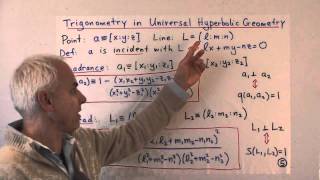
Quadrance and Spread - Universal Hyperbolic Geometry
Introduces algebraic definitions of quadrance and spread in Universal Hyperbolic Geometry, comparing with Rational Trigonometry and exploring main laws and exercises in this advanced mathematical framework.
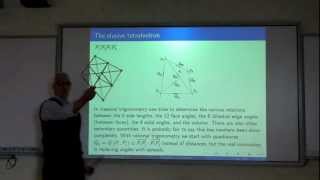
Three Dimensional Geometry, ZOME, and the Elusive Tetrahedron
Explore three-dimensional geometry using rational trigonometry and ZOME construction, focusing on tetrahedron trigonometry and new algebraic relations for a deeper understanding of spatial structures.
Rational Trigonometry in Three Dimensions - Universal Hyperbolic Geometry
Extending rational trigonometry to 3D using vectors and dot products. Explores quadrance, spread, and key trigonometric laws. Introduces solid spread and determinants for three vectors.