
The Rise of the Polis - Ancient Greek History Lecture 5
Explore the emergence of the Greek polis, its significance in ancient society, and the role of the hoplite farmer in shaping this new political and cultural entity.
The Rise of Athens - Ancient Greek History Lecture
Explore ancient Greek history, focusing on Sparta's constitution and alliances, Athens' development, and the emergence of the hoplite class. Gain insights into the contrasts between these influential city-states.

The Rise of the European Middle Classes in the 19th Century - Lecture 9
Explore the diverse 19th-century European middle classes, their rise to power, cultural impact, and societal contributions, from philanthropy to education and birth control advancements.

Nineteenth-Century Cities - Urban Growth and Social Change in Europe and America
Explore 19th-century urbanization, class segregation, and city development through the lens of European history, with a focus on Paris as a case study of urban transformation and social dynamics.
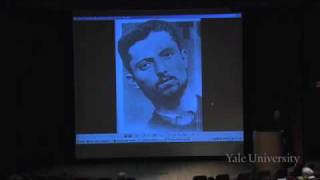
Radicals: Revolutionary Socialism, Syndicalism, and Anarchism in 19th Century Europe
Explorez les courants socialistes du 19e siècle, du réformisme au syndicalisme et à l'anarchisme, en examinant leurs idéologies et leurs tactiques, y compris les origines du terrorisme moderne.

Industrial Revolutions - European Civilization 1648-1945 - Lecture 8
Explore the gradual process of industrialization, its impact on agriculture, urban expansion, and labor practices, including the rise of class consciousness and industrial discipline.

Collaboration and Resistance in World War II Europe - Lecture 23
Explore myths and realities of collaboration and resistance in WWII Europe, examining motivations, actions, and lasting impacts on national memories and historical narratives.

Maximilien Robespierre and the French Revolution - European Civilization 1648-1945
Explore Robespierre's role in the French Revolution, examining his philosophy, the Jacobin-Girondin conflict, counter-revolutionary forces, and the impact of religious sentiment on revolutionary support.

Absolutism and the State in European Civilization, 1648-1945 - Lecture 2
Explore the rise of absolutism in 17th-century Europe, its causes, consequences, and impact on government, military, and culture in this Yale University lecture on European history.

Dutch and British Exceptionalism in 17th Century Europe - Lecture 3
Explore why Britain and the Netherlands resisted absolutism, examining middle-class influence, national identity, anti-Catholicism, and Dutch mercantile culture in shaping their unique political paths.

The Logic of Science - Principles of Evolution, Ecology and Behavior
Explore the evolution of scientific thought, including falsifiability, revolutions, and creativity. Learn how philosophy influences modern scientific approaches and the boundaries of scientific knowledge.
John Brown's Holy War - Terrorist or Heroic Revolutionary?
Explore John Brown's controversial legacy, the Lincoln-Douglas debates, and the Dred Scott decision's impact on pre-Civil War America in this Yale lecture on pivotal events leading to the conflict.

The Home Front in World War I France - Lecture 15
Explore WWI's impact on France: 1917 turning points, social tensions, mutinies, and the war's conclusion, examining the conflict's profound effects on soldiers and civilians alike.
The Origins of World War I - France Since 1871 - Lecture 13
Explore the diplomatic, imperial, and nationalist factors leading to World War I, including shifting alliances, British Empire's role, and mounting tensions in Europe.

The End of Reconstruction - Electoral Politics and the Compromise of 1877
Explore the political dynamics of post-Civil War America, focusing on key elections and the "Compromise of 1877" that ended Reconstruction and restored Southern "home rule."

Days of Jubilee: The Meanings of Emancipation and Total War - Lecture 16
Explore the impact of the Emancipation Proclamation, its effects on the Civil War, and the complex process of emancipation across the South. Gain insights into freed slaves' experiences and the transformation of the Union Army.
Military and Political Turning Points in 1863 - Never Call Retreat
Explore key military events of 1862-1863, including Union victories, the rise of Grant and Lee, and pivotal battles that shaped the Civil War's trajectory and outcome.
A Northern World View: Yankee Society, Antislavery Ideology and the Abolition Movement - Lecture 4
Explores the Market Revolution's impact on antebellum Northern society, including economic changes, cultural shifts, and the intensification of North-South divides, setting the stage for reform movements.
Why the Union Won and the Confederacy Lost in the Civil War - Lecture 18
Exploración profunda de las razones de la victoria de la Unión en la Guerra Civil: recursos, liderazgo, diplomacia y batallas decisivas como Gettysburg y Vicksburg. Análisis de teorías sobre la derrota confederada.
The Rise of Abolitionism and Slave Narratives - Lecture 5
Explore the rise of abolitionism, from slave narratives to radical anti-slavery movements, examining key figures and ideologies that shaped the fight against slavery in antebellum America.
The Known World by Edward P. Jones - Narrative Techniques and Historical Knowledge
Explore Edward P. Jones's "The Known World" through its narrative structure, historical context, and unique approach to storytelling, examining the novel's portrayal of knowledge and truth in American literature.