European History by CrashCourse
In 50 episodes, John Green will teach you about European History to give you an overview of Europe’s history and connection with the world from 1450 to the present.

Intentional Public Disruptions: Art, Responsibility, and Pedagogy, Fall 2017
Explore public disruptions, art, and social responsibility through seminars and workshops. Gain new perspectives on access, privilege, and the global water crisis while engaging in difficult conversations and conceptual explorations.
Prehistoric Art
Explore prehistoric art forms, cave paintings, and ancient artifacts from the Stone Age to Neolithic era, including famous sites like Lascaux and iconic sculptures.
Futurism
Kurzgesagt's YouTube channel focuses on minimalist animated educational content, using the flat design style.
Vincent van Gogh
Explore Vincent van Gogh's life, artistic journey, and masterpieces through his letters, family history, and influential relationships with other Impressionist painters.
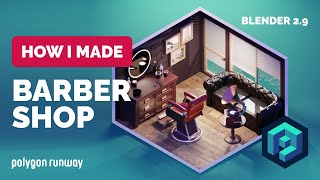
Barber Shop in Blender - 3D Modeling Process
Learn to create a stylized 3D barber shop scene in Blender 2.9. This tutorial covers modeling techniques, balancing stylization with realism, and tweaking proportions for an engaging low-poly illustration.
Germany 1919: The Birth of the Bauhaus
Explore the birth of the Bauhaus in post-WWI Germany, examining its radical approach to arts and crafts training, inspired by diverse influences from occultism to futurism.

Film History
In 16 episodes, Craig Benzine will teach you about film history! This course is based on an introductory college level curriculum, with A History of Narrative Film by David A. Cook as its reference text.

Futurism and Space Exploration
Explore futuristic space concepts: colonization, exoplanets, interstellar travel, and more. Dive into cutting-edge NASA technologies and ponder humanity's cosmic future.
French Art - Rococo & Neo Classicism
Explore 18th century French art movements Rococo and Neoclassicism, examining key artists, works, and stylistic elements that defined these influential periods.

The Language of Art
Explore art categories, from representational to abstract, and delve into iconic works by Picasso, Pollock, and Malevich in this concise visual arts overview.
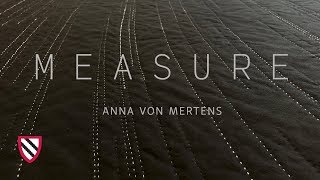
Opening Discussion for Measure - Exploring Henrietta Swan Leavitt's Work
Explore Henrietta Swan Leavitt's astronomical legacy through Anna Von Mertens' artistic interpretation, blending meticulous stitching and graphite marks to reimagine Leavitt's groundbreaking celestial discoveries.
Visual Storytelling and Comic Communication - A Conversation with Scott McCloud
Explore visual storytelling and communication with cartoonist Scott McCloud, delving into comics, literacy, semiotics, and the power of images in this engaging discussion.

Faulkner's As I Lay Dying - Epic Conventions and Character Analysis - Part 2
Explore Faulkner's epic techniques in "As I Lay Dying," examining human-animal connections and resurrection themes through character analysis and literary comparisons.

The Great Gatsby - Experimental Counter-Realism and Animated Objects
Explore Fitzgerald's experimental counter-realism in The Great Gatsby, examining the animation of inanimate objects and their human-like qualities, as well as themes of race and technology.

Faulkner's The Sound and the Fury - Quentin's Narrative and Themes - Lecture 7
Explore Faulkner's narrative techniques, character relationships, and themes of race and sexuality in The Sound and the Fury through an in-depth analysis of Quentin's and Benjy's perspectives.

Hemingway, Fitzgerald, Faulkner - American Modernism and World War I - Lecture 1
Explore Hemingway, Fitzgerald, and Faulkner's works through global geopolitics, experimental narration, and sensory detail, examining their shared preoccupation with World War I's impact on narrative irony.

Hemingway's In Our Time - Analysis of Pain and Violence in Vignettes
Explore Hemingway's "In Our Time" through critical analysis of vignettes, examining themes of pain, violence, and ethnic tensions in the American Midwest using various theoretical perspectives.

T.S. Eliot's The Waste Land: Psycho-Sexual Analysis and Structure - Lecture 12
Explore T.S. Eliot's "The Waste Land" through psycho-sexual analysis, examining key figures, dialogues, and romantic distress. Gain insights into the poem's structure and Ezra Pound's editorial contributions.

Robert Frost - Modern Poetry and Poetic Techniques
Explore Robert Frost's poetry, examining his unique style, poetic project, and use of vernacular language. Analyze "Mowing" and "Out, Out--" to understand Frost's approach to form and sound.

Langston Hughes and African-American Experience in Modern Poetry - Lecture 15
Explore Langston Hughes' poetry as a representation of African-American experience, examining his innovative use of musical forms and his place within the modernist canon.