
Introduction to Ancient Greek History
This is an introductory course in Greek history tracing the development of Greek civilization as manifested in political, intellectual, and creative achievements from the Bronze Age to the end of the classical period.
The Deadly Job of Royal Food Taster
Explore the dangerous role of royal food tasters throughout history, examining their duties, risks, and historical significance in protecting monarchs from poisoning attempts.

Vikings and the European Prospect in 1000 CE - Lecture 22
Explore Viking expansion, trade networks, and cultural impact across Europe and beyond, examining their role in shaping the early Middle Ages and setting the stage for the rise of Western civilization.

Crisis of the Carolingians - The Early Middle Ages, 284-1000
Explore the decline of Charlemagne's empire, examining internal weaknesses, external threats, and the Treaty of Verdun's impact on shaping modern European territories.

The Early Middle Ages, 284-1000 - Charlemagne and the Carolingian Dynasty - Lecture 19
Explore Charlemagne's rise and the Carolingian dynasty's impact on European history, from their overthrow of the Merovingians to the establishment of a new Roman Empire.
Monasticism in the Early Middle Ages - Paradoxes and Evolution
Explore the paradoxes of early medieval monasticism, its evolution from asceticism to communal life, and its unexpected role in preserving learning and scholarship in the West.
Frankish Society in the Early Middle Ages - Merovingian Kingship and Power
Explorez la société mérovingienne : pouvoir, violence et religion dans l'Europe post-romaine. Découvrez comment les liens familiaux et l'Église ont façonné cette période tumultueuse de l'histoire franque.

The Reign of Justinian - Early Middle Ages - Lecture 9
Explore Emperor Justinian's reign, including his military campaigns, legal reforms, and architectural achievements, through the writings of Procopius in this Yale University lecture on Early Middle Ages history.

Transformation of the Roman Empire - The Early Middle Ages, 284-1000
Explore the fall of the Western Roman Empire, examining causes, invading groups, and the debate between gradual decline and catastrophic collapse in this historical analysis.

The Early Middle Ages, 284-1000 - The Splendor of Byzantium
Explore the Byzantine Empire's evolution from 284-1000 CE, covering expansion under Justinian, periods of crisis and contraction, military reorganization, religious conflicts, and territorial gains.
The Early Middle Ages, 284-1000 - The Crucial Seventh Century
Explore the pivotal 7th century in medieval history, examining the Abbasid decline, rise of Islam, changes in Europe and Byzantium, and the Pirenne thesis on Mediterranean disruption.
Islamic Conquests and Civil War - Early Middle Ages, 284-1000
Explore Islamic conquests, their rapid expansion, and internal divisions. Understand factors behind Arab success and the origins of Sunni-Shiite split in early Muslim history.

Mohammed and the Arab Conquests - Early Middle Ages
Explore the origins of Islam, Mohammed's life, and early Islamic development in the context of 7th century Arabia, including key beliefs and its differentiation from other religions.
Clovis and the Franks - Gregory of Tours' Account of Early Medieval History
Explore Gregory of Tours' account of Merovingian kings, focusing on Clovis' rise to power, the Franks' Catholic conversion, and the supernatural's role in early medieval history.
Barbarian Kingdoms in the Early Middle Ages - Lecture 7
Explore the rise of barbarian kingdoms after the fall of Western Rome, their characteristics, and impact on European society during the Early Middle Ages.

Plague Responses and Public Health Measures in Western Society - Lecture 4
Explores community responses to bubonic plague, from panic and persecution to religious revivals and the emergence of public health programs, examining their effectiveness in combating the pandemic.

The Rise of the Polis - Ancient Greek History Lecture 5
Explore the emergence of the Greek polis, its significance in ancient society, and the role of the hoplite farmer in shaping this new political and cultural entity.

Weber's Theory of Class - Foundations of Modern Social Thought
Explore Weber's theory on the shift from status to class in determining life chances, comparing feudal and modern capitalist eras, and examining the interplay between class and status in society.
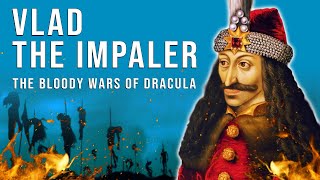
Vlad the Impaler - The True Story of Dracula - History Documentary
Explore the true story of Vlad the Impaler, from his tumultuous childhood to his brutal reign and conflicts with Ottoman Turks and Saxons. Uncover the historical facts behind the legendary figure that inspired Dracula.

Richard the Lionheart - The Greatest King of England? - Medieval History Documentary
Explore Richard I's life, from birth to legendary status. Uncover his crusades, battles, imprisonment, and impact on English history. Separate fact from myth about the Lionheart's reign.

Saladin and the 3rd Crusade - Lies - Extra History
Explore historical inaccuracies and omitted details from the Saladin & 3rd Crusade series, covering topics like Baldwin V's leprosy, city holiness, and Richard's absence impact.