
From Ape to Human - Evolution of Violence and Fertility
Explore human violence, warfare, and fertility patterns throughout history, comparing them to other great apes and examining their impact on population growth and societal development.
Reading Ancient Minds: Metaphor, Culture, and Complexity
Explore how cognitive science and archaeology reveal the impact of conceptual metaphors on human societies, challenging traditional views on cultural influence throughout history.
The Evolution of the Human Family
Explore the evolutionary history of human family structures and their impact on society with insights from anthropology and complex systems research.

Is Our World Broken? - A Perspective on Human Progress and Challenges
Explore humanity's journey from the Big Bang to modern challenges, gaining perspective on our progress and potential for a brighter future.

Ötzi the Iceman and the Copper Age World
Explore the life, death, and world of Ötzi, a 5,300-year-old mummy discovered in the Alps, offering insights into Copper Age society, technology, and human migration in prehistoric Europe.
Desde Cavernícolas hasta Inteligencias Artificiales - La Evolución Tecnológica de la Humanidad
Viaje por la evolución tecnológica humana, desde las cavernas hasta la inteligencia artificial, explorando hitos clave y reflexionando sobre el futuro de la innovación y su impacto en la sociedad.
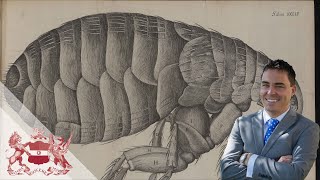
Plagues upon the Earth: The Natural History of Human Germs
Explore the intertwined history of human progress and microbial ecology, from ancient times to COVID-19. Gain insights into infectious diseases' impact on humanity and our ongoing struggle with pathogens.
The Human Cosmos - Humanity's Relationship with the Night Sky
Explore humanity's profound connection to the cosmos, from ancient stargazers to modern scientific breakthroughs, and how celestial awe shapes our art, beliefs, and understanding of the universe.
Introduction to Exponentials
Explore exponential technologies' impact on global challenges and human progress, with insights on digitalization, abundance mindset, and sustainable development goals.
Why We Prevailed - Evolution and the Battle for Dominance
Explore human evolution with experts, examining our species' dominance, Neanderthal interactions, and key factors in our survival. Gain insights on early human migration, communication, and genetic adaptations.
The Good Life and the Honey Bee
Explore the connection between the Good Life and honey bees through Andrew Gough's personal journey, uncovering lost traditions and their potential impact on future generations.
Bananas in Heaven - Yuval Noah Harari
Yuval Noah Harari explores how human imagination and belief in fictional concepts like money and human rights have shaped our dominance as a species and our complex societies.

A New Understanding of Human History and the Roots of Inequality
Archaeologist David Wengrow challenges traditional narratives about civilization's origins, offering new perspectives on social evolution, agriculture, urbanization, and class systems to reshape our understanding of inequality and modern society.
Why Humans Run the World
Historian Yuval Noah Harari explores humanity's rise from insignificant animals to Earth's dominant species, suggesting a surprising reason for our ascent and discussing the implications for our planet's future.

The History of Our World in 18 Minutes
David Christian presents a captivating overview of the universe's history, from the Big Bang to modern times, offering a unique perspective on complexity, life, and humanity's place in the cosmic timeline.

Humankind - A Hopeful History
Historian Rutger Bregman discusses research from various disciplines that challenges pessimistic views of humanity, offering a more optimistic perspective on human nature and societal progress.

人口減少社会のデザイン - 人類史の中のポスト成長・人口減少社会 - チャプター2
Explore how population decline shapes society's future through a historical lens, examining post-growth scenarios and their implications for human civilization in modern Japan.
Technology, time, and cinema | Peter Hildebrand | TEDxYouth@FranklinSchoolOfInnovation
How did people think about time when moving pictures were invented? How did that thinking affect the development of cinema? And how do our cultural concepts related to time affect the ways we think about movies today? This talk traces the history of cinema, from the end of the 1800s to our modern er
Everything you have, you owe to fashion. | Charlene Gross | TEDxPSU
Humans have been wearing clothes for a very, very long time, and it turns out we're really good innovators in the pursuit of fashion. From how the spindle whorl became the wheel to how the loom became the computer, fashion historian Charlene Gross explores the ways textiles have shaped societies and

L'intelligence rhétorique au service de l'histoire | Hugo ROUSSELLE | TEDxArtsEtMétiersParis
L'intervenant met en lumière l'importance de l'intelligence rhétorique et explique sa place au service de l'histoire Doctorant en histoire du droit. Écrivain et président de la fédération francophone de débat This talk was given at a TEDx event using the TED conference format but independently org

Witches, vampires, and fascism | Jason Lin | TEDxMoorestown Friends School
"Witches, Vampires, and Facism" explores common themes in what we today consider atrocities in history. It seeks to explore how circumstance can make witchhunters and fascists out of ordinary people, and how we are still haunted by those same circumstances today. Jason Lin is a junior at Moorestown